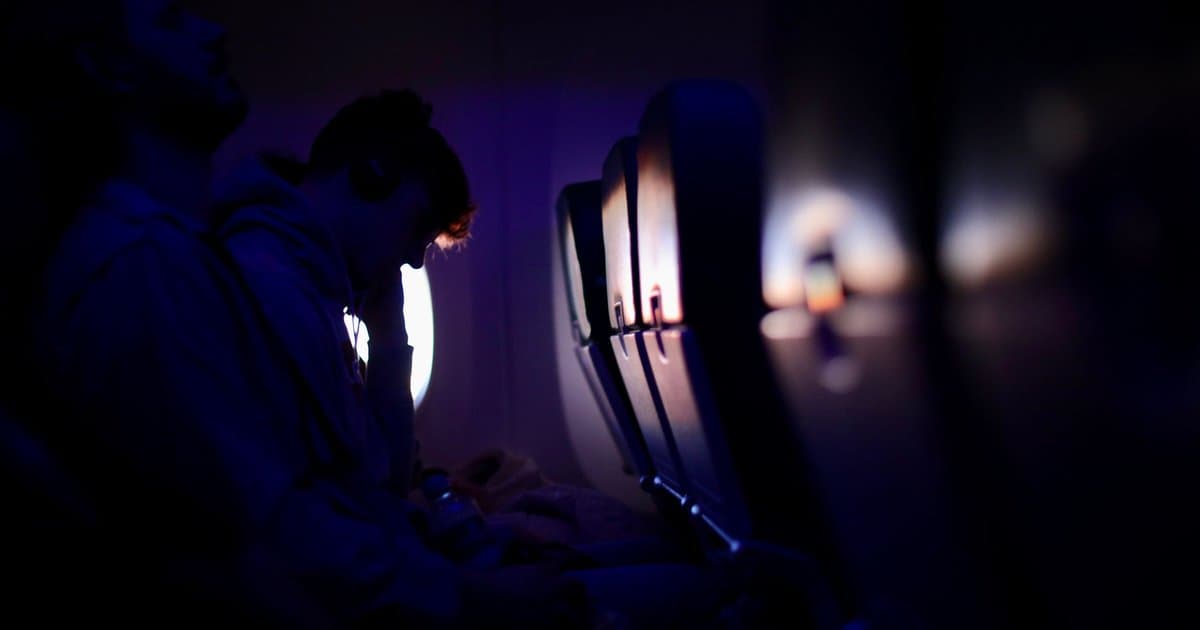
On a night flight, the cabin lights usually drop to a dim glow just before takeoff and again before landing. Most passengers barely notice, or they assume it is meant to help people rest. The real reason is safety, and it is far more deliberate than it looks. Flight crews dim the lights so your eyes are ready for the dark in case something goes wrong. It is a small step tied to the most dangerous minutes of any flight. Once you know the logic, the routine makes a lot of sense.
Human eyes do not adjust to darkness instantly. Walk from a bright room into a dark one and you are nearly blind for a while before shapes appear. Full adjustment can take many minutes, and it starts over every time you return to bright light. On a plane, that lag is a serious problem during an emergency. If the cabin is brightly lit and the power suddenly fails, everyone is left stumbling in the dark. Dimming the lights ahead of time keeps your eyes already tuned to the lower light.
The timing is not random either. Takeoff and landing are when most serious incidents happen, not the smooth cruise in between. Pilots sometimes describe the risky window as the first few minutes after takeoff and the last several before landing. That is when the plane is low, slow, and close to the ground with little room to recover. Crews prepare the cabin for those minutes on purpose. Dim lights are one piece of a larger checklist built around that danger.
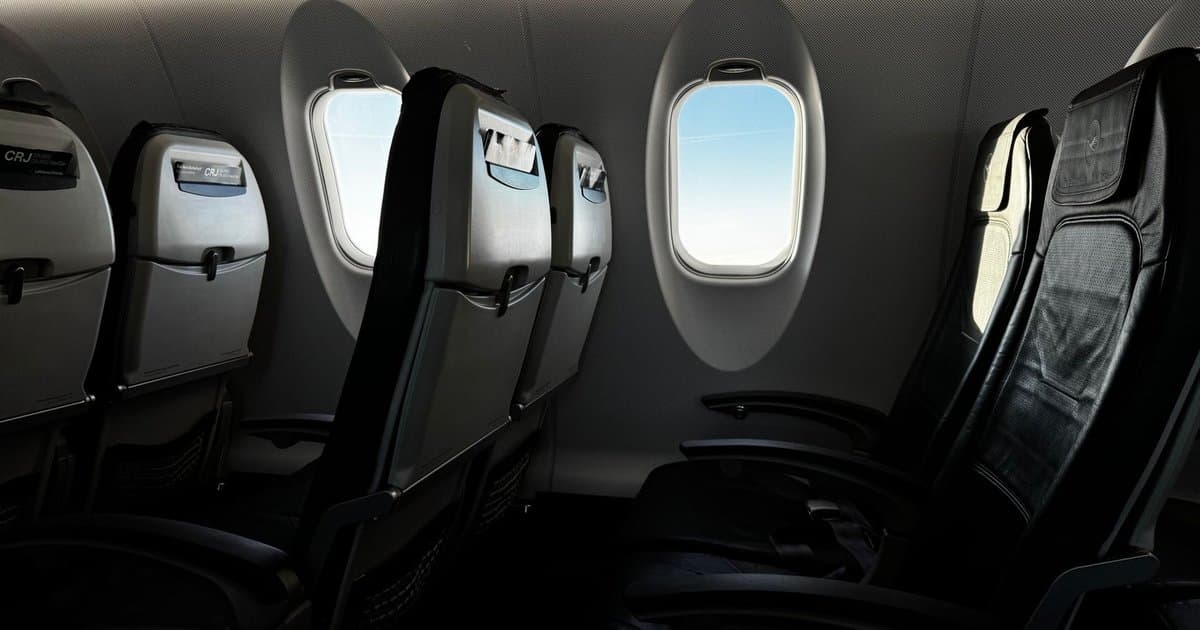
The same thinking explains the other requests you hear before landing. Flight attendants ask you to raise your window shades, and that is not busywork. Open shades let you and the crew see outside, judge the conditions, and spot fire or debris after an impact. They also let rescuers on the ground see into the cabin from the outside. Raising the shades and dimming the lights work together to connect what is inside the plane with what is outside it. Both help people make fast decisions if seconds ever matter.
Stowing your tray table and putting your seat upright follows the same rule. In an evacuation, every clear path to the aisle counts. A lowered tray or a reclined seat can slow the person behind you when they are trying to get out. Upright seats also put your body in a stronger position if there is a sudden jolt. None of these steps assume a crash is coming. They just remove small obstacles before the riskiest part of the trip.
During the day, crews often skip the heavy dimming because the cabin is already bright from the windows. Your eyes are matched to daylight, so there is far less to adjust for. At night, the difference between a lit cabin and the dark outside is huge, which is why the dimming stands out. That is why you mostly notice it on evening and overnight flights. The goal is to shrink the gap between the light your eyes are used to and the light they might suddenly face. A smaller gap means a faster reaction.
It helps to remember that airlines plan for problems that almost never happen. Commercial flying is one of the safest ways to travel, and the vast majority of trips are completely uneventful. The dimming, the shades, and the seatbelt reminders are habits built from decades of studying rare accidents. Crews run the same steps every single flight so the actions are automatic if they are ever needed. Practice on a calm night is what makes a response fast on a bad one. Routine is the whole point.
There is a hard number behind all of this preparation. Before an airliner can carry passengers, the maker has to prove the full plane can be emptied in ninety seconds. That test is run with half of the exits blocked, to mimic a real emergency where some doors cannot be used. Ninety seconds is not much time to move a few hundred people out of a crowded cabin. Every habit the crew drills, from dim lights to clear aisles, exists to protect that narrow window. A passenger who can see, move, and reach an exit without fumbling is the whole goal. Shave a few seconds off the confusion and you may save lives. That is why these small steps are treated so seriously.
So the next time the lights fade before you land, you can read it as the crew simply doing its job. It is not a mood setting, and it is not a signal that anything is wrong. It means the plane is entering the phase that demands the most attention, and the cabin is being set up for a clean, fast exit that will very likely never be used. Your eyes are quietly being prepared for a worst case that stays hypothetical. That is a good trade for a few minutes of softer light. Safety often looks that boring from a seat in the back.