Flying is one of the safest ways to travel, and the plane itself is not the thing to worry about. The quieter risk on a long flight is something simpler. It is sitting still for hours at a time. Long trips can raise your chance of a blood clot forming deep in the veins of your leg. Doctors call it deep vein thrombosis, and travelers sometimes call it economy class syndrome. It is not common, but it is real, and a few small habits can push the odds back down.
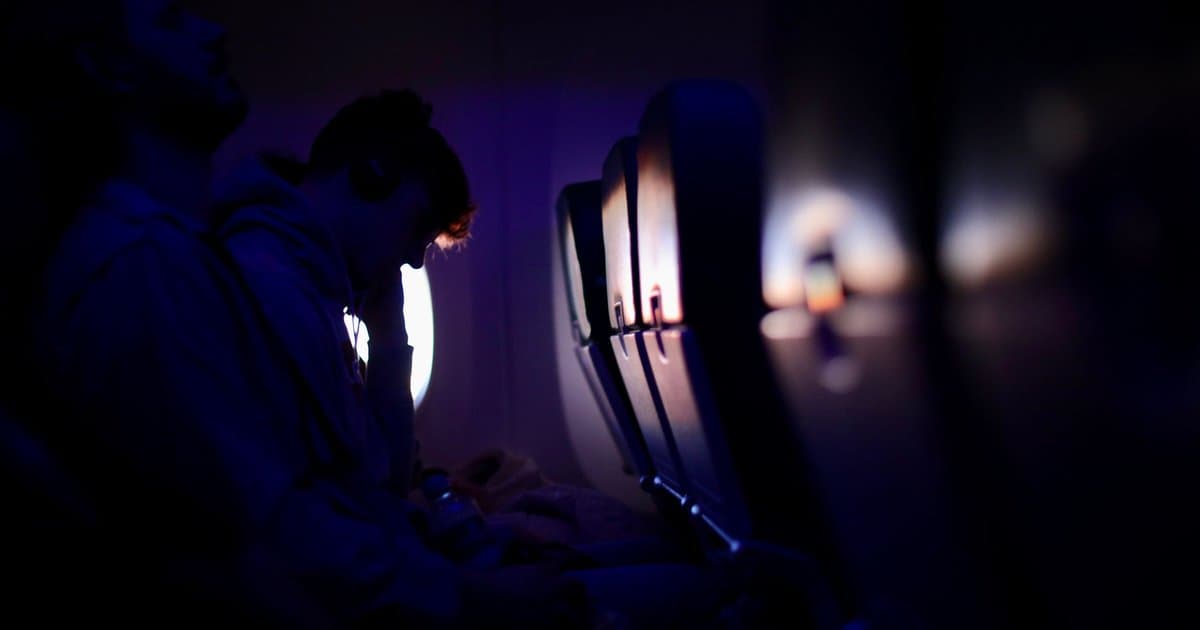
Here is what actually happens in your legs. When you sit folded into a seat for hours, blood pools in your lower legs and the flow slows down. Slow, still blood is more likely to form a clot. The dry cabin air, plus any alcohol or coffee, pulls water out of you and thickens the blood a little more. A clot in the calf can make the leg feel sore, swollen, or warm. The greater danger is if a piece of that clot breaks free and travels to the lungs, which is a medical emergency.
The research puts real numbers on it. Flights longer than about four hours raise clot risk by roughly two to four times compared to staying home. The risk climbs higher on the longest hauls, the eight, ten, and twelve hour trips. Even so, the overall odds stay low for a healthy person, on the order of one clot for every few thousand long flights. So this is not a reason to fear flying or cancel a trip. It is a reason to take a few easy steps and pay attention.
The risk is not spread evenly, and some travelers should be more careful than others. Your odds run higher if you are over sixty, pregnant, or recently gave birth. They also rise if you take birth control or hormone therapy, have had a clot before, are living with cancer, or recently had surgery. Body size plays a part too, since a seat that does not fit well can press on the legs. A window seat adds a small amount of risk, mostly because people in them get up and move the least.
The good news is that prevention is cheap and simple. The single best thing you can do is move. Get up and walk the aisle every hour or two when the seatbelt sign allows it. In your seat, flex your calves, circle your ankles, and press your feet into the floor to keep blood moving. Drink water through the flight and go easy on alcohol and caffeine. Wear loose, comfortable clothing, and if you are in a higher-risk group, ask about graduated compression socks.
Know the warning signs, because a clot can show up during the flight or days after you land. Watch for swelling, pain, tenderness, warmth, or redness in one calf or thigh, usually just one leg rather than both. If a leg symptom shows up along with sudden shortness of breath, chest pain, or a racing heartbeat, treat it as an emergency. That combination can mean a clot has reached the lungs, and every minute counts. Do not wait it out or assume it will pass on its own.
It helps to keep all of this in perspective. The vast majority of people fly long distances with no trouble at all. This is not about scaring anyone away from the airport or a dream trip. It is about a handful of habits, moving and drinking water, that erase most of the added risk for very little effort. If you fall into one of the higher-risk groups, a quick talk with your doctor before a long trip is smart. For everyone else, awareness is most of the battle.
So the plane is not the threat. The stillness is. A few slow laps of the aisle and a bottle of water will do more for your legs than any lucky seat assignment ever could. Know where you fall on the risk scale, keep your blood moving, and stay hydrated from takeoff to landing. Do that, and a long flight stays exactly as safe as it should be. The best travel habits are usually the plain ones you can start on your very next trip.