Book a flight to Los Angeles and your ticket says LAX. Fly to Chicago and you might see ORD, which shares no letters with the city at all. It seems random, like someone drew the codes out of a hat. Once you know the history, though, the odd letters start to make sense. Each three letter code carries a small piece of aviation history. The stories behind them are stranger than the codes themselves.
Start with that X in LAX. In the early days of flying, airports used only two letters, so Los Angeles was simply LA. As air travel grew after the war, two letters ran out of room for every new airport. The industry moved to three letter codes in the 1940s to make space. Rather than invent something new for cities that already had a two letter tag, officials just added an X to the end. That is why Los Angeles became LAX, Portland became PDX, and Phoenix became PHX.
Chicago's ORD has a different and better story. O'Hare International sits on land that was once called Orchard Field, home to a factory that built planes during the war. The airport took its code, ORD, from that name, Orchard. Years later, in 1949, the field was renamed to honor a Navy pilot named Butch O'Hare. The name on the terminal changed, but the old code stuck around. Millions of travelers now type ORD without ever knowing they are spelling out an orchard.
Some codes are missing letters you would expect for a different reason. In the United States, the Navy claimed all codes starting with the letter N for its own use. That is why cities with an obvious N name had to look elsewhere. Newark could not be NEW, so it became EWR instead. The letters W and K were set aside for radio stations, which knocked out even more options. So an airport often had to pick around whole groups of letters that were already spoken for.
Geography adds another layer to the puzzle. In Canada, most major airports start with the letter Y, which is why Toronto is YYZ and Vancouver is YVR. The reason traces back to old radio and weather station codes from decades ago. Once the Y pattern was set, new Canadian airports followed it. Travelers crossing the border often notice their codes suddenly all begin with the same letter. It is a small quirk that a whole country now carries.
Other codes are simply frozen in time. Some airports keep letters tied to an old name that no one uses anymore. Orlando's MCO points back to McCoy Air Force Base, which once sat on the site. Chicago Midway uses MDW, and plenty of smaller fields carry codes tied to a founder or a nearby town long forgotten. The airport changes, the neighborhood changes, but the three letters rarely move. They become a kind of time capsule you can hold in your hand.
It helps to know there are two code systems, not one. The three letter tags you see on tickets and bag tags come from a global travel group and are meant for passengers. Pilots and air traffic controllers use a separate four letter system for the same airports. That is why the code a captain files is not always the one on your luggage. The passenger version is built to be short and easy to read at a glance. The two systems run side by side without most travelers ever noticing.
There is a reason nobody bothers to fix the confusing ones. Airport codes are printed on tickets, bag tags, and flight plans all over the world. Change one and you risk lost luggage, missed connections, and a mess of paperwork across dozens of systems. The cost of a cleaner code is not worth the chaos. So the quirks stay in place, protected by how much trouble it would be to change them. Here, stability beats tidiness every time.
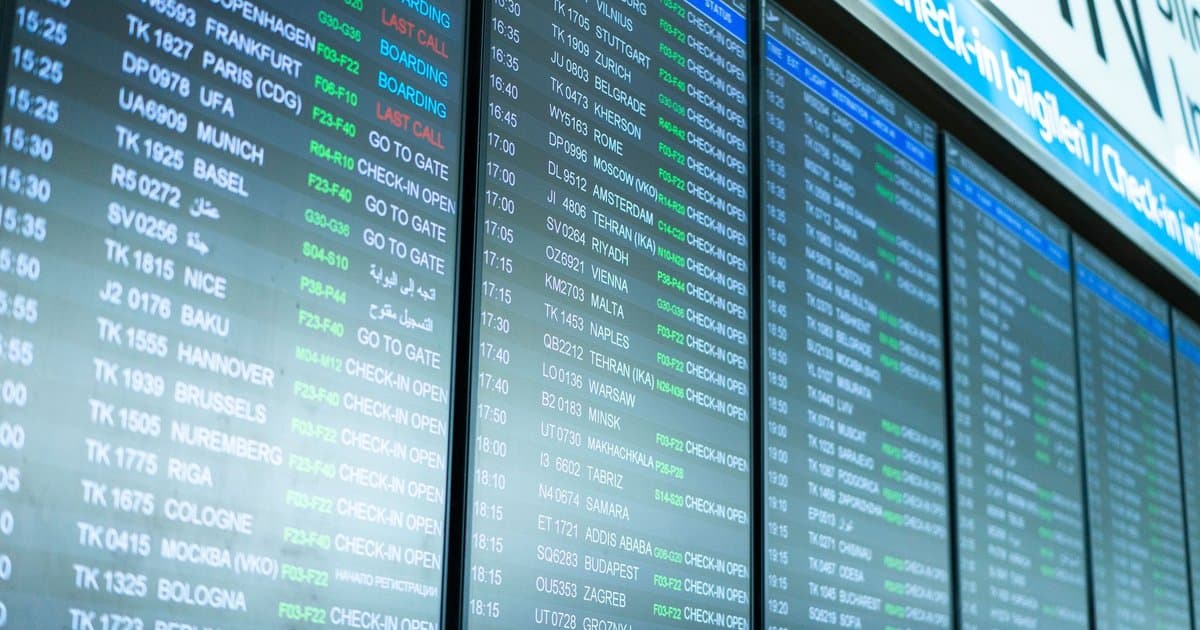
So the codes are not random after all. They are the result of old two letter tags, wartime factories, reserved letters, and rules that never got undone. The next time you scan a departure board, try reading the codes like little clues. Some spell out a forgotten field, some dodge letters claimed long ago, and some just carry a spare X. Each one survived because changing it was more trouble than it was worth. That is history you can hold in your boarding pass.