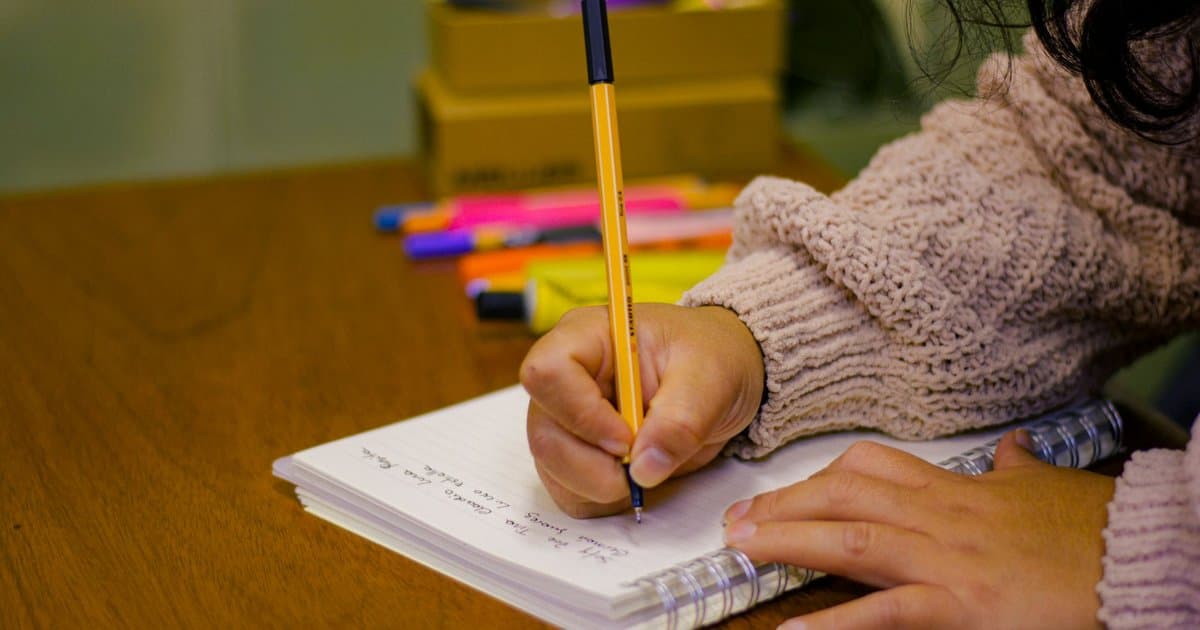
It is one of the most confusing things a parent can watch. Your child reads a page out loud smoothly, hits every word, sounds like a strong reader, and then cannot tell you a single thing about what just happened in the story. You ask a simple question about the page and get a blank look or a guess. It feels like they were paying attention right up until the moment you checked. Teachers see this constantly, and it has a name, and it is far more common than most families realize. Reading the words and understanding the words are two different skills, and a child can be good at one while struggling badly with the other.
Reading is really two jobs stacked on top of each other. The first job is decoding, which is turning the letters on the page into spoken sounds and words. The second job is comprehension, which is holding those words in your mind, connecting them, and building meaning out of them. A child who decodes well has learned the code that maps letters to sounds, and that is a real and important achievement. But decoding well can hide a comprehension problem, because the smooth sound of the reading makes everyone assume the meaning is landing too. The mouth is doing its job while the mind is not, and the fluent voice masks the gap.
Teachers call this pattern word calling, where a child names the words correctly without processing what they mean. Picture reading a paragraph in a language you can pronounce but do not speak, like sounding out a menu in a beginner language class. You could say every word aloud and still have no idea what you ordered. That is close to what word calling feels like from the inside for a child. Their attention is fully spent on getting the words out, which leaves nothing left over for meaning. The reading sounds finished, but the understanding never started.
Two things usually sit underneath the problem, and the first is vocabulary. A child cannot understand a sentence built out of words they do not know, no matter how cleanly they pronounce those words. The second is background knowledge, which is everything a reader already understands about the world before opening the book. A passage about a farm makes sense to a child who knows what a barn and a harvest are, and stays fuzzy for a child who does not. Comprehension is not a single muscle, it is the sum of the words and the world a child brings to the page. This is why reading widely about many topics builds comprehension more than drilling reading itself ever could.
The reason this slips past so many families is that fluency looks like success. We are trained to praise the child who reads smoothly and to worry about the one who stumbles. But smoothness only proves the decoding is working, and it says nothing about whether meaning is being made. A slow, halting reader might understand every word deeply, while a fast, confident reader understands almost nothing. If you only listen to how the reading sounds, you will misjudge both children. The sound of reading and the substance of reading are not the same thing.
Checking for this is simple and takes only a minute. After your child reads a short section, close the book and ask them to tell you what happened in their own words. Ask who the story was about, what they wanted, and what went wrong, and listen for whether the retelling makes sense. Ask what a specific word meant, and see if they can explain it or only repeat it back. If the retelling is thin, scrambled, or missing, the meaning did not land, even if the reading sounded perfect. Doing this a few times a week turns reading from a performance into a conversation.
Fixing the gap is less about more reading drills and more about meaning. Talk about books before, during, and after reading, and stop to ask what a word means or why a character did something. Read above their level to them out loud, since a child can understand stories far richer than the ones they can decode alone. Build knowledge through trips, documentaries, questions, and everyday conversation, because a child who knows more understands more. Keep the pressure low and the curiosity high, so reading stays something to think about rather than something to get through. The goal was never a smooth voice, it was a mind that grabs hold of what the words are actually saying.