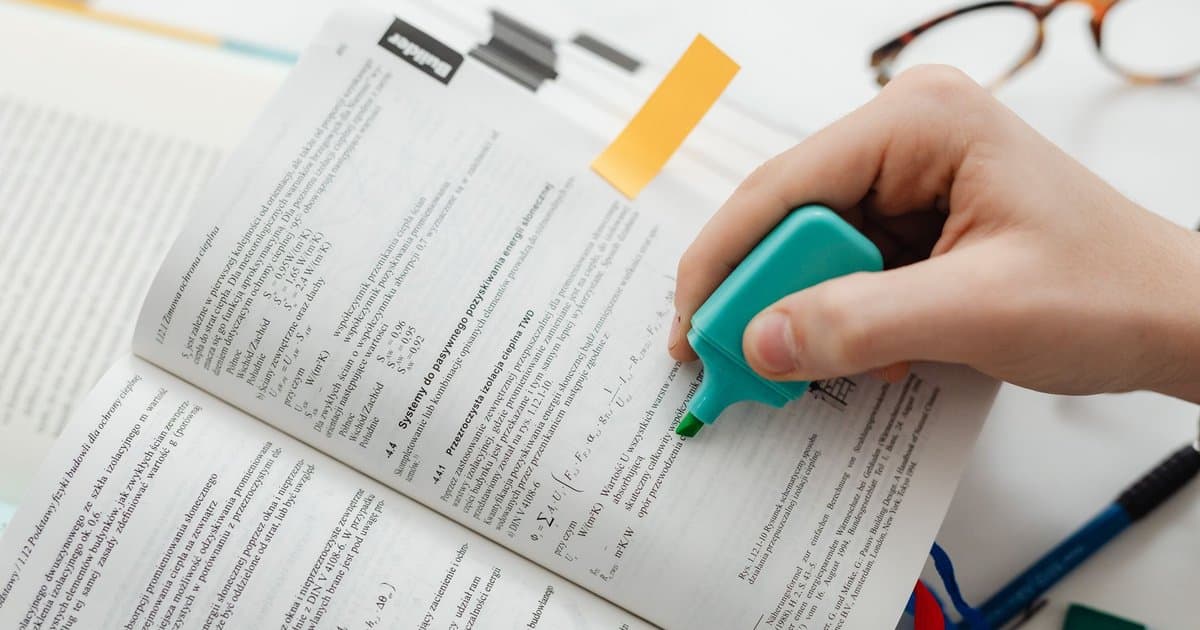
Walk into any library during finals and you will see the same scene. Students bent over textbooks, dragging bright yellow lines across page after page, feeling productive with every stroke. The highlighter is the most trusted study tool in the world, and it is also one of the weakest. Reviews of how people learn rank highlighting and rereading near the bottom for building lasting memory. That is a hard thing to hear when it is the method you have leaned on your whole life. But the reason it fails is the same reason it feels so good. Once you see that gap clearly, it can change how you study almost anything.
Highlighting feels like learning because it produces a powerful illusion. When you color a sentence and read it again, the words start to feel familiar, and your brain mistakes that familiarity for understanding. This is called the illusion of fluency, the sense that because something is easy to recognize, you must already know it. But recognizing information on the page is a completely different skill from pulling it out of your head when the page is gone. On the test, in the meeting, or in real life, nobody hands you the highlighted sentence. You have to produce the answer from memory, and recognition simply does not train that. That is the gap between feeling ready and actually being ready.
The evidence on this is not subtle. When researchers compared common study techniques, highlighting, underlining, and rereading landed in the low-effectiveness group, while two other methods stood out far above the rest. Those two were testing yourself and spacing your practice over time. The finding held across ages and subjects, from grade-school facts to complex material. What separates the winners from the losers is effort. The weak methods let you passively pass your eyes over information, while the strong methods force your brain to work. That work is exactly what builds durable memory, and easy studying skips it.
The most powerful of those methods is retrieval practice, which simply means testing yourself. Instead of rereading a chapter, you close the book and try to recall what it said, then check what you missed. That act of straining to remember, even when you get it wrong, strengthens the memory in a way that rereading never does. Researchers call it the testing effect, and it is one of the most reliable findings in the science of learning. The moment of struggle you feel when you cannot quite recall something is not a sign of failure. It is the sound of learning happening. Comfortable review skips that struggle and skips the benefit with it.
Spacing is the second half of the equation, and it explains why cramming lets you down. Your memory naturally fades along a predictable curve, dropping fastest right after you learn something. When you review that material again just as it starts to slip, you interrupt the forgetting and push the memory a little deeper each time. Cramming everything into one long session feels efficient, but the information leaks out almost as fast as it went in. The same total study time, broken into shorter sessions across several days, produces dramatically better retention. Spacing feels slower and less satisfying in the moment, which is exactly why so few people do it. The calendar, not the highlighter, is where the real work happens.
Switching your approach does not require new tools, only a new habit. After you read a section, close the book and write down or say out loud everything you remember, then open it back up to catch what you missed. Turn key ideas into questions on flashcards and quiz yourself, putting the ones you get wrong back into the pile. Work practice problems and old exam questions instead of only reviewing solved examples. Try teaching the material to someone else, because explaining it forces you to retrieve and organize it. And spread these sessions out over days rather than piling them into one long night.
The larger point reaches far beyond students. Anyone learning a new skill at work, a language, a certification, or the details of a new field falls into the same trap of confusing familiarity with mastery. If your study leaves you feeling smooth and confident, that is a warning sign, not a victory, because comfort usually means you were only recognizing, not recalling. The methods that work feel harder, slower, and less pleasant, and that difficulty is the whole point. Trade the highlighter for a blank page and honest self-testing, and you will remember more from an hour than you used to get from an entire week. Recognition is cheap and fades fast. Recall is harder to build and much harder to lose.