Ask anyone to name a berry and they will say strawberry, blueberry, raspberry. It feels obvious. Here is the twist that trips people up. In the eyes of botanists, a strawberry is not a berry at all, and neither is a raspberry or a blackberry. Meanwhile a banana is a berry, and so is a grape, a tomato, and a hot pepper. The words we use in the kitchen and the words scientists use in the lab simply do not line up, and the reason behind it is kind of great.
To a botanist, a berry is not about size or sweetness. It is about how the fruit is built from the flower. A true berry grows from a single flower with one ovary, and it holds its seeds on the inside, wrapped in soft flesh. Usually it has a thin skin, a fleshy middle, and seeds sitting right there in the flesh. Grapes fit that description to a tee. So do blueberries and cranberries, which is why those two get to keep their berry name honestly.
Now take the banana. It grows from a flower with a single ovary, and its soft body holds tiny seeds inside, those little dark specks running down the center. That structure checks every botanical box for a berry. The banana you buy is a tamed version, bred to have seeds so small you barely notice them, but they are still in there. So by the rules, the banana is a textbook berry, even though nobody would ever toss one into a fruit salad and call it one. The same logic pulls in tomatoes, grapes, kiwis, and even eggplants and peppers.
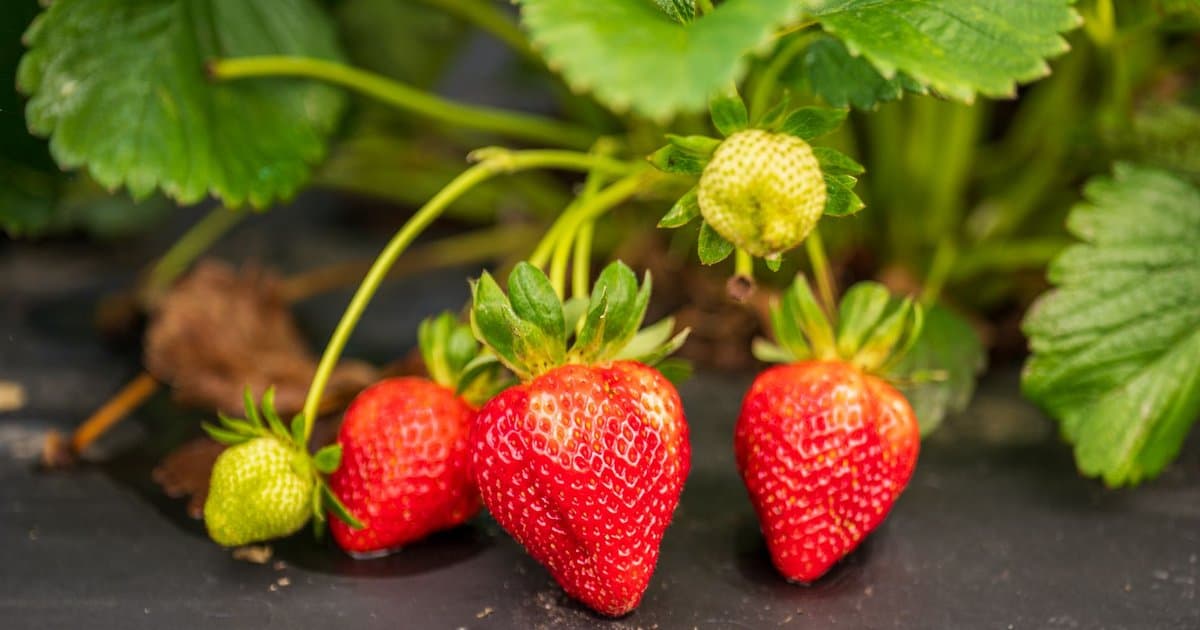
The strawberry breaks the rules in a way that catches people off guard. Look closely at one and you will see little seeds dotted all over the outside. Those tiny specks are the actual fruits, and each one formed from its own separate part of the flower. The red, sweet part you love is not the fruit at all. It is a swollen piece of the plant that carries the real fruits on its surface. Because it comes from a flower with many ovaries instead of one, a strawberry gets called an aggregate fruit, not a berry.
Raspberries and blackberries fall into that same outsider group for a slightly different reason. Each little bump on a raspberry is its own mini fruit, called a drupelet, and a whole raspberry is a cluster of them stuck together. That makes it an aggregate fruit too, built from one flower with many parts. A blackberry works the very same way. So the three fruits most people picture first when they hear the word berry are all technically not berries. It is almost funny how backward the everyday names turned out to be.
So why the mismatch in the first place. The kitchen names came first, long before anyone was studying flowers under a microscope. People looked at a fruit, and if it was small, round, soft, and good to eat off the bush, they called it a berry. That is a fine, useful rule for a cook or a forager. Botanists came along later and drew a much stricter line based on how the fruit forms. Both systems make sense inside their own world, they just answer different questions, one about eating and one about growing.
Once you start pulling this thread, it keeps going. Watermelons, pumpkins, and cucumbers are a special kind of berry called a pepo, with a hard rind on the outside. That is right, a watermelon has more claim to the berry name than a strawberry does. Citrus fruits like oranges and lemons are their own berry type, named for that leathery, oily peel. Avocados grow from a single ovary with one big seed inside, which lands them in berry territory as well. The category is far wider and stranger than the grocery aisle ever lets on.
Does any of this change how you eat. Not one bit. A strawberry is still a strawberry, and you should still pile them on your plate. The fun is in seeing how a single plain word can mean two different things depending on who is using it. Science does not exist to ruin your fruit salad. It just looks at the same object you do and asks a deeper question about how it came to be. Next time someone calls a strawberry a berry, you can smile, because now you know the banana in the bowl has the stronger claim.