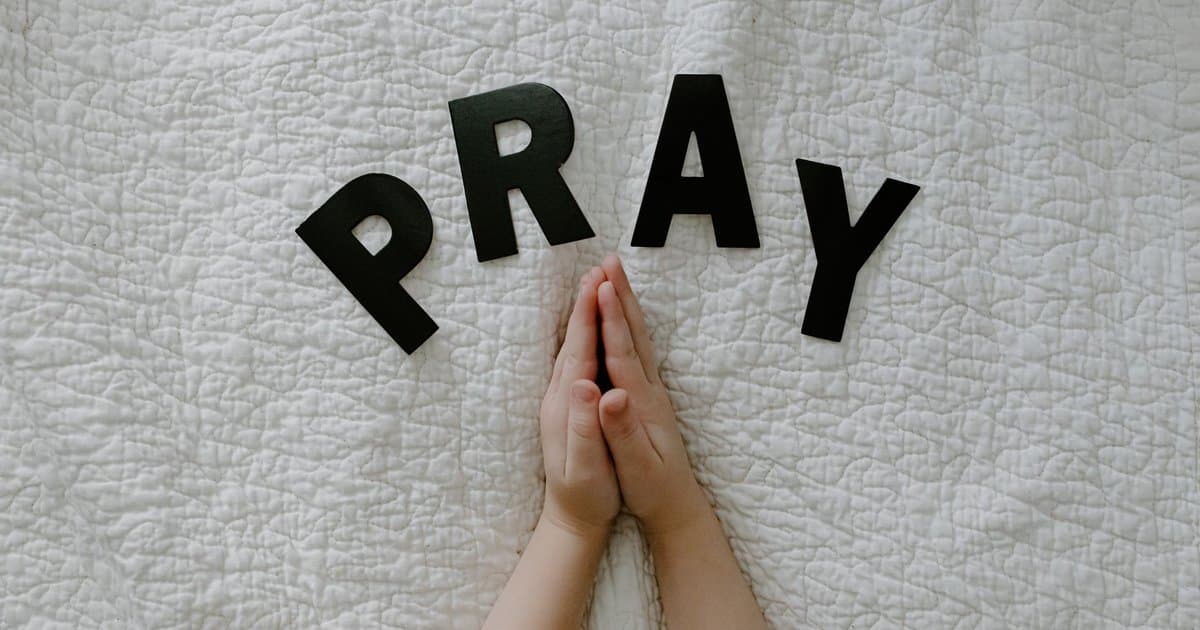
Most people who grew up praying learned to close their eyes without ever being told why. It is one of those habits passed down so quietly that we assume it must be a command written somewhere in scripture. Look closely, though, and you find that the Bible never actually instructs anyone to shut their eyes to pray. In fact, some of the most striking prayers in scripture happen with eyes wide open and lifted toward heaven. So the practice is not a rule handed down from a single verse, which makes the real reasons behind it more interesting, not less. It turns out that closing your eyes does something practical, something relational, and something quietly spiritual all at the same time.
The most obvious reason is also the plainest one. We live in a world engineered to grab our eyes, and our attention tends to follow wherever they land. A phone lighting up, a person walking past, or a stack of dishes in the sink all pull the mind away from the words we are trying to pray. Shutting your eyes removes the single biggest source of distraction in one small motion. It is the same reason people close their eyes to savor the first bite of good food or to feel a piece of music more deeply. Take away the visual noise, and whatever is left finally gets your full weight and attention.
It helps to know that scripture shows a wide range of postures for prayer, and closed eyes is only one option among many. People in the Bible prayed standing, kneeling, lying face down, walking along roads, and with hands or eyes raised toward the sky. Jesus looked up to heaven before he broke bread and before he called Lazarus out of the tomb. The tax collector in one of his parables would not even lift his eyes, while others prayed with faces turned openly upward. The point running through all of it is that God never tied the act of prayer to one required body position. The posture is a tool that serves the heart, not a password that unlocks the answer.
There is a deeper reason that closed eyes feel so right to so many people. Prayer is a turning of your attention away from the visible world and toward a God you cannot see with your eyes. Closing them is a small physical way of admitting that the most real thing in the room is the one you are not looking at. It shifts your focus from the outer world to the inner one, where you actually meet God and listen. For a moment you stop scanning and managing the room around you and start attending to something the eyes were never built to show you. The body simply follows the heart's direction, and in that moment the heart is turning toward heaven.
Closing your eyes also carries a note of humility that words alone can miss. When you shut out the world, you are admitting that you do not have everything handled and that you need to hear from someone wiser than yourself. It is a posture of surrender, a way of stepping out of the driver's seat for a few honest minutes. There is a reason so many people naturally bow their heads at the very same time. Lowering the eyes and the head together is one of the oldest languages the body has for reverence and dependence. You are making yourself small on purpose in front of the one you are speaking to.
None of this makes praying with open eyes wrong, and it is worth saying so clearly. Some of the most important prayers you will ever pray happen with your eyes very much open. You pray while driving through heavy traffic, while sitting beside someone in a hospital room, or while walking through a hard conversation you never saw coming. A soldier, a surgeon, and a parent watching over a sleeping child all pray without shutting anything at all. The habit of closed eyes is a gift for focused, set apart prayer, not a fence that keeps God out the rest of the time. He hears the open eyed prayer whispered in the middle of a busy afternoon just as clearly.
So the honest answer to why we close our eyes is that no verse commands it, and yet the practice is quietly full of wisdom. It hushes the loudest source of distraction, it turns the heart toward a God the eyes cannot locate, and it teaches the body a language of humility. Those are good reasons, and they are worth keeping in your life. But hold the habit loosely enough to remember what it is actually for. The goal was never closed eyes as a rule to obey. The goal was an open heart, and closing your eyes is simply one of the oldest ways people have found to get there.