Most of us say it without thinking. The prayer winds down, the voice softens, and out comes amen, the signal that the talking to God is finished. Children learn it as the word that means you can open your eyes now. For a lot of people it functions like a spoken period, a way to mark the end of one thing and the start of the next. But amen was never meant to be a full stop. It carries a meaning that is closer to a promise than a goodbye, and once you know it, the word stops being a reflex and starts being a choice.
The word comes from Hebrew, from a root spelled aman, and the root is where the depth lives. Aman carries the sense of something firm, steady, and reliable, the kind of thing you can lean your weight on without fear it will give way. It is the same family of words that gives Scripture its language for faith and belief and trust. When the Bible speaks of believing God, it is drawing on this same idea of leaning on something solid. So amen is not a soft word or a leftover ritual. At its root it means this is firm, this is trustworthy, this is something I am willing to stand on.
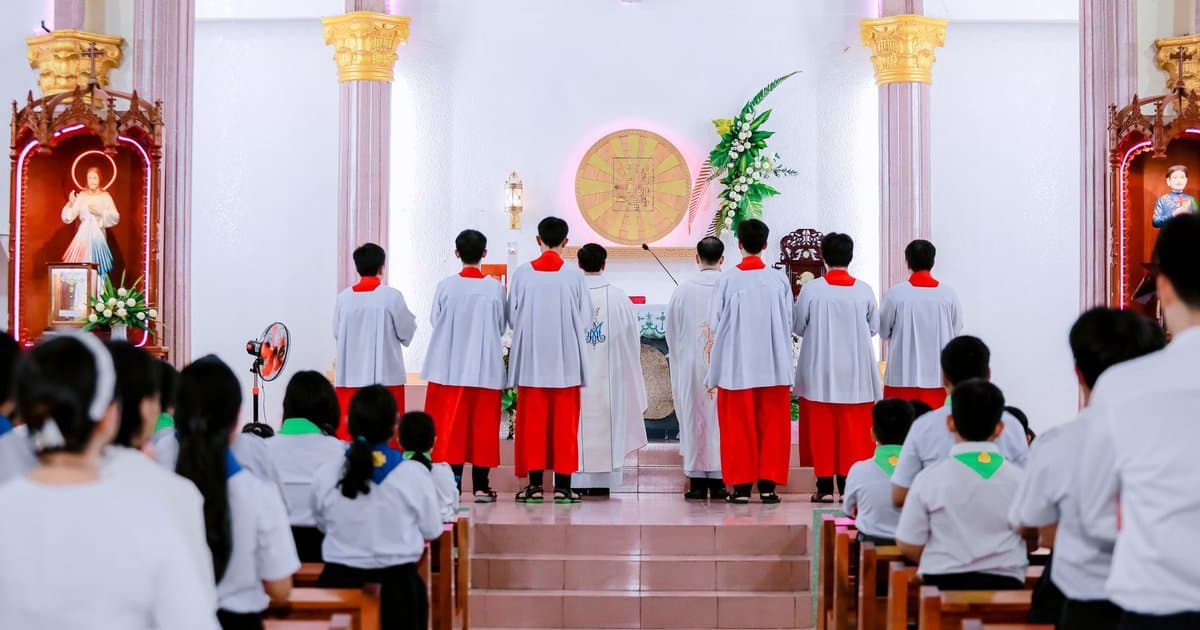
In ancient worship, amen was less a private closer and more a public agreement. When a leader prayed or pronounced a blessing, the gathered people answered amen out loud, and that answer meant something specific. They were saying so be it, let it be true, we agree with what was just spoken. It turned a one man prayer into the prayer of a whole room. The word let ordinary people put their name on words they did not speak themselves. Saying it was a way of stepping into the prayer and making it your own rather than just listening to someone else pray.
You can watch this happen across the Old Testament. In Deuteronomy, the people answer amen after each blessing and each warning read aloud to them, sealing their agreement with the covenant. The book of Nehemiah shows a crowd lifting their hands and answering amen as the law is read. Several of the Psalms end with amen, sometimes doubled for weight, closing a song with a note of settled trust. In each case the word does the same job. It is the human yes to what God has said, a way of adding your own signature at the bottom of the page.
The way Jesus used the word is one of the quiet surprises of the Gospels. Most people said amen at the end of a statement, agreeing with words already spoken. Jesus flipped it and put it at the front. When you read him saying truly, truly I tell you, the underlying word is amen, amen. He opened with the word of certainty instead of closing with it. He was not agreeing with someone else, he was staking his own authority on what came next. It is a small grammatical move with a large claim buried inside it, and readers in his own day would have caught the weight of it immediately.
Part of what makes amen remarkable is how little it changed as it traveled. It moved from Hebrew into Greek, then into Latin, then into English and countless other languages, and along the way it stayed almost exactly the same. Very few words survive that kind of journey intact. Across churches that share almost nothing else in common, people still close their prayers with the same handful of sounds that worshippers used thousands of years ago. That continuity is its own kind of witness. It ties a person praying quietly today to a long line of people who leaned on the same word.
All of this changes what it means to reach the end of a prayer. Saying amen is not clearing your throat to move on. It is agreement, and it is trust, and it is a small act of putting your weight down on what you just asked or confessed or hoped. When you say it, you are declaring that you meant the words, that you are willing to stand behind them, that you believe the One you spoke to is firm enough to hold them. That is a heavier thing than a period at the end of a sentence. The next time the word comes out on its own, it is worth slowing down long enough to actually mean it.