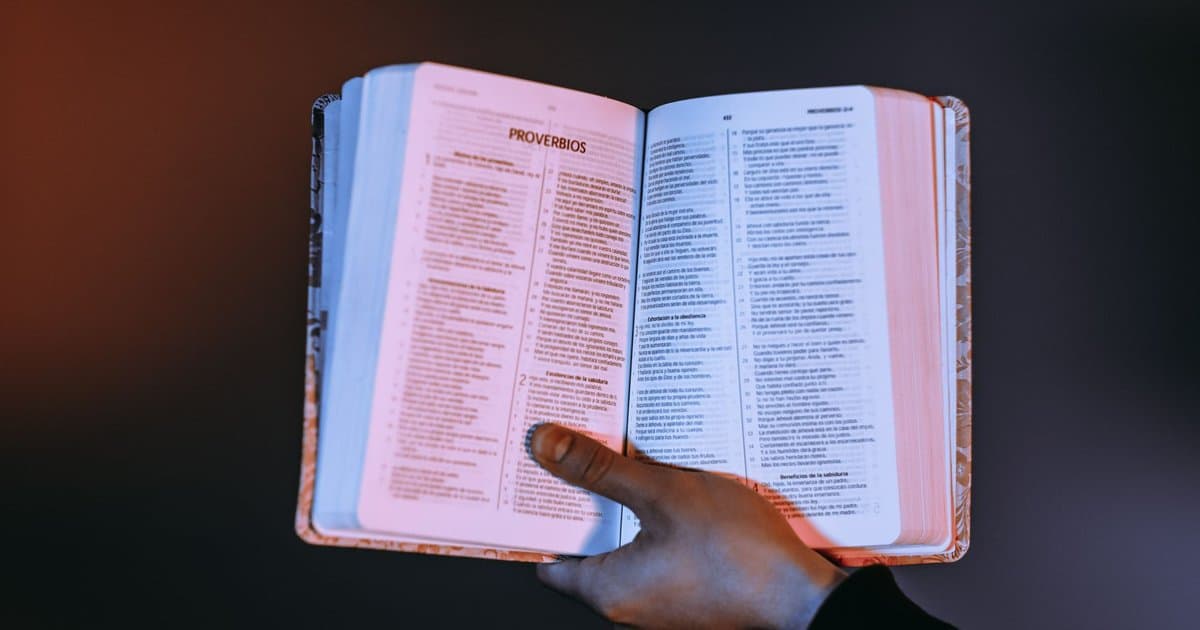
Ask a room full of churchgoers where the phrase God helps those who help themselves comes from, and most will place it somewhere in the Bible without hesitation. Surveys have actually tested this, and a striking share of people believe it is Scripture, often ranking it among the book's central teachings. It is not there. The line traces back to ancient Greek thinking and was made popular in English by Benjamin Franklin in Poor Richard's Almanack. It sounds biblical, it gets quoted like it is biblical, and it appears nowhere in the actual text.
This happens more than people expect, and the reasons are worth understanding. Over centuries, folk wisdom, proverbs from other sources, and lines from famous preachers get repeated so often alongside real Scripture that the border between them wears away. A saying gets attached to a general sense of faith, then to the Bible specifically, then it hardens into something people are willing to argue about. The phrase feels true and sounds old, so it earns a credibility it was never actually given. Once that happens, correcting it can feel almost rude, as if you are questioning the faith itself rather than a simple misattribution.
Take cleanliness is next to godliness. Many people would swear it is a verse, and it carries the cadence of one. It comes from a sermon by John Wesley in the eighteenth century, and even he was quoting an older proverb when he said it. There is nothing wrong with the sentiment on its own terms, but it is a preacher's line, not a command from Scripture. The distinction matters because when we treat a human saying as the word of God, we hand it an authority it should not carry, and we can end up defending a tidy house with the same energy we should save for far weightier things.
Some of these are not made up so much as slightly bent, and the small bend changes the meaning. People say money is the root of all evil, but the actual verse in First Timothy says the love of money is a root of all kinds of evil. Money itself is not condemned in that line, the craving for it is, and that is a very different teaching. One version tells you wealth is inherently corrupt. The other tells you that what your heart does with wealth is the real issue. Drop three words and you have replaced a careful lesson about the heart with a blanket judgment the writer never actually made.
Another common one causes real pain, which is why it is worth naming carefully. Many people repeat that God will not give you more than you can handle, usually to someone in the middle of grief or crisis. The verse they are half remembering is about temptation, not suffering, and it promises a way through, not that hardship will always stay within your limits. Life routinely hands people far more than they can handle on their own, and telling a struggling person otherwise can leave them feeling that their inability to cope is a personal failure. The comfort was built on a verse that does not say what the saying claims.
None of this is an argument for reading less or trusting Scripture less. It is the opposite. The reason to know which lines are real is so the actual text can speak without a layer of folk sayings talking over it. When you can tell the difference between a proverb Franklin wrote and a verse Paul wrote, you read with more care, and you stop defending positions the Bible never took. Faith that is built on what the text actually says stands on firmer ground than faith propped up by phrases that only happen to sound holy on the surface.
The simplest habit here is to look things up before you build a belief on them. If a saying is doing heavy lifting in how you see God, other people, or yourself, it is worth finding the chapter and verse. Sometimes you will find it right there, and it will mean even more for having been checked. Sometimes you will find that the words you have leaned on for years belong to a preacher, a poet, or a founding father instead. Either way, you end up closer to the real thing, and closer to the real thing is always the point.