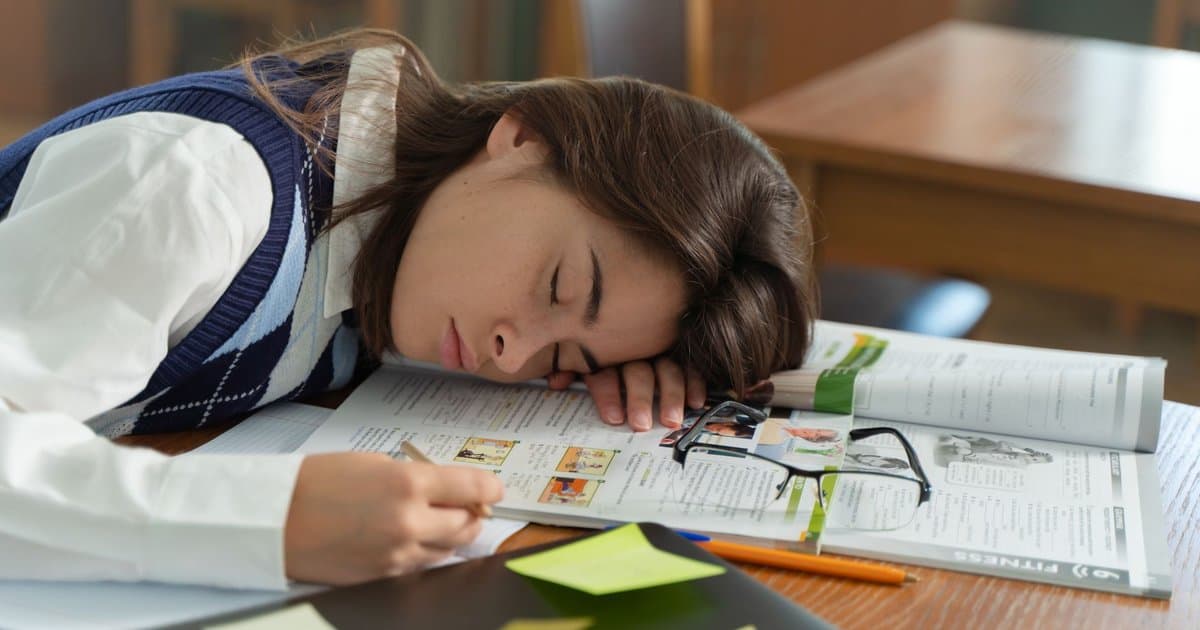
If you live with a teenager, you have probably watched one drag through a morning like they are moving underwater. Parents tend to read that as laziness or as the result of staying up too late on a phone. There is some truth in the phone part, but the bigger story is biological, and it is not something the teen chose. During the teenage years, the body's internal clock shifts later, so the natural pull toward sleep does not arrive until well after most adults are tired. That single change sets off a chain of problems that leaves a generation of kids running on empty before the day even starts.
The shift has a name in sleep research, and it is consistent across cultures and households. Around puberty, the timing of melatonin release moves later in the evening, which means a teen who is told to be asleep by ten often cannot actually fall asleep until eleven or midnight. Their brain is simply not producing the signals for sleep yet. This is why telling a teenager to just go to bed earlier so often fails, because you are asking them to sleep against their own chemistry. The result is not stubbornness. It is a mismatch between when their body is ready to sleep and when the household expects it.
Now layer school start times on top of that biology. Many high schools begin around seven thirty or eight in the morning, which forces students out of bed at a time that fights their natural rhythm. A teen who cannot fall asleep until midnight and has to wake at six is losing hours of sleep every single night during the years their brain and body need it most. That deficit does not stay contained to feeling tired. It shows up as trouble concentrating, lower mood, slower reaction time, and a harder time managing emotion. Researchers who study school schedules have found that later start times track with better attendance, better grades, and fewer car accidents among young drivers.
The packed schedule finishes the job. Between classes, homework, a part-time job, sports practice, and the social life that matters enormously at that age, the modern teenager has very little unclaimed time. When everything that has to get done pushes into the evening, the only place left to find more hours is sleep. So they trade rest for one more assignment or one more conversation, night after night, without realizing how much it compounds. A single short night is survivable, but a string of them builds into a debt the body keeps a running tab on. By the weekend they are not sleeping in because they are lazy, they are trying to pay back what the week took.
Screens deserve their place in the story without becoming the whole explanation. The light and the constant stimulation from a phone in bed do push the sleep signal even later and make it harder to wind down. A teen scrolling at midnight is real, and it makes a real problem worse. But blaming the phone alone lets the bigger structural causes off the hook, and it turns the conversation into a fight about devices instead of a fix for sleep. The phone is one lever among several, and pulling it helps most when the other pieces are addressed too. Treating it as the single villain usually just produces an argument and very little extra rest.
It helps to understand what the lost sleep is actually costing, because the effects reach past a sleepy first period. Sleep is when the teenage brain consolidates what it learned and settles the emotions that run high at that age. A chronically short-slept teen is not just tired, they are more prone to low mood, irritability, and impulsive choices. Their immune system takes a hit too, which is part of why exhausted kids seem to catch everything going around. None of this is a moral failing, and none of it gets fixed by a lecture about responsibility. It gets better when the sleep gets better, which is why the cause is worth taking seriously.
So what actually helps a tired teenager. Protecting a consistent wake time, even on weekends, keeps the body clock from drifting further out of sync. Getting bright light in the morning and dimming screens in the last hour before bed nudges the rhythm in the right direction. Where families have any say in it, pushing back start times or trimming an overloaded schedule gives back the hours that matter. Most of all, it helps to stop treating teen tiredness as a character flaw, because the kid is not failing at sleep. The system around them is built against the way their body works right now, and naming that honestly is the first step to fixing it.