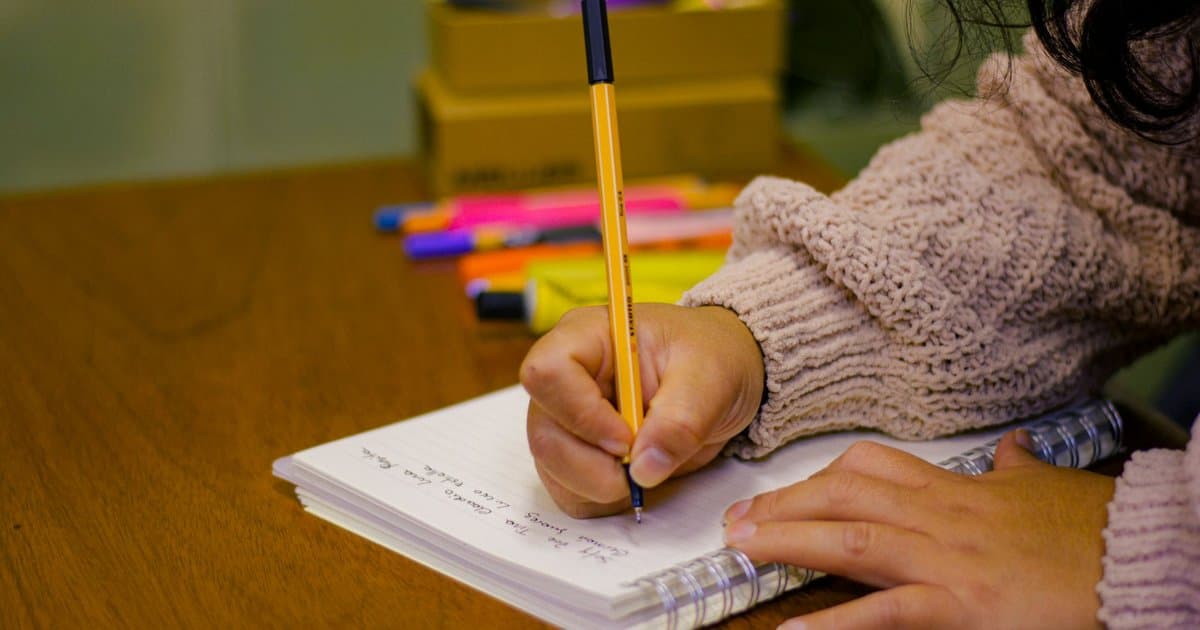
There is a quiet turning point in school that most parents never hear named. It happens around the end of third grade, and it changes the rules of the entire game. For the first three years, school teaches children how to read. After that, school assumes they can read and uses that skill to teach everything else. Math word problems, science chapters, history readings, and test directions all lean on it. A child who has not caught up by that line does not just struggle in reading class. They start to fall behind in every subject at once.
Teachers have a phrase for this shift. Up to third grade, kids are learning to read, sounding out words and building the basic machinery. From fourth grade on, they are reading to learn, using text as the tool for everything else. The classroom stops slowing down to teach children how to decode words. Lessons speed up and assume the words on the page are no longer the hard part. For a child still wrestling with the words themselves, the whole day turns into a wall.
One long study put a stark figure on the stakes. Children who are not reading with skill by the end of third grade are about four times more likely to leave high school without a diploma. When that reading gap is paired with growing up in poverty, the odds get worse still. This is not a small nudge in outcomes. It is one of the strongest early signals researchers have found for who finishes school and who does not. A single skill, measured at age eight or nine, echoes for a decade.
The reason the gap widens is that reading feeds on itself. A strong reader understands more, so reading feels good, so they read more, and the skill grows. A weak reader understands less, so reading feels like a chore, so they avoid it, and they fall further back. Every year the strong readers pull ahead while the strugglers lose ground. Researchers call this a compounding effect, where an early edge snowballs. The distance between the two groups is smallest in the early grades and widest by the end.
This is not a rare problem tucked into a few schools. On national tests, roughly a third of American fourth graders read below the basic level. That means millions of kids cross the third grade line without the skill the next grades demand. Many of them are bright and capable in every other way. They simply never got the early reading support that would have set them up. The scale of it is easy to miss because struggling readers often go quiet rather than act out.
The hopeful part is that reading trouble is one of the most fixable problems in school when it is caught early. Clear phonics teaching, where children learn how letters map to sounds, has strong evidence behind it. Screening young students to spot trouble before it hardens makes a real difference. Small group tutoring, even a few focused sessions a week, can move a child a long way. The catch is timing. The same help that works wonders in first grade works far slower in sixth.
Waiting is the expensive choice, in every sense. A child who reaches middle school behind in reading needs more hours, more specialists, and more effort to close the same gap. Frustration builds, and many kids decide they are simply bad at school, which is rarely true. Behavior problems and dropping out often trace back to reading struggles no one caught in time. The dollars follow the same path, since late help costs far more than early help. Society pays either way, just later and at a higher price.
For a parent, the useful question is what falling behind actually looks like day to day. A child who guesses at words from the first letter, avoids reading out loud, or reads so slowly that meaning slips away may need a closer look. Dreading homework that involves reading is another quiet signal worth noticing. The strongest thing a family can do costs nothing, which is to read together often and talk about the words. Asking a teacher directly whether a child is on grade level, and requesting a screening if the answer is unclear, puts the issue on the table early. None of these steps require a specialist or a budget. They only require paying attention while the window is still open.
None of this is meant to scare a parent whose child is a little behind. Kids move at different speeds, and a slow start is not a sentence. The point is that third grade is the moment to pay attention, not the moment to relax. If a child is not reading with ease by then, that is the signal to ask for screening and support right away. The window is widest early and narrows fast. Reading is the one skill that quietly decides how open the rest of school will be.