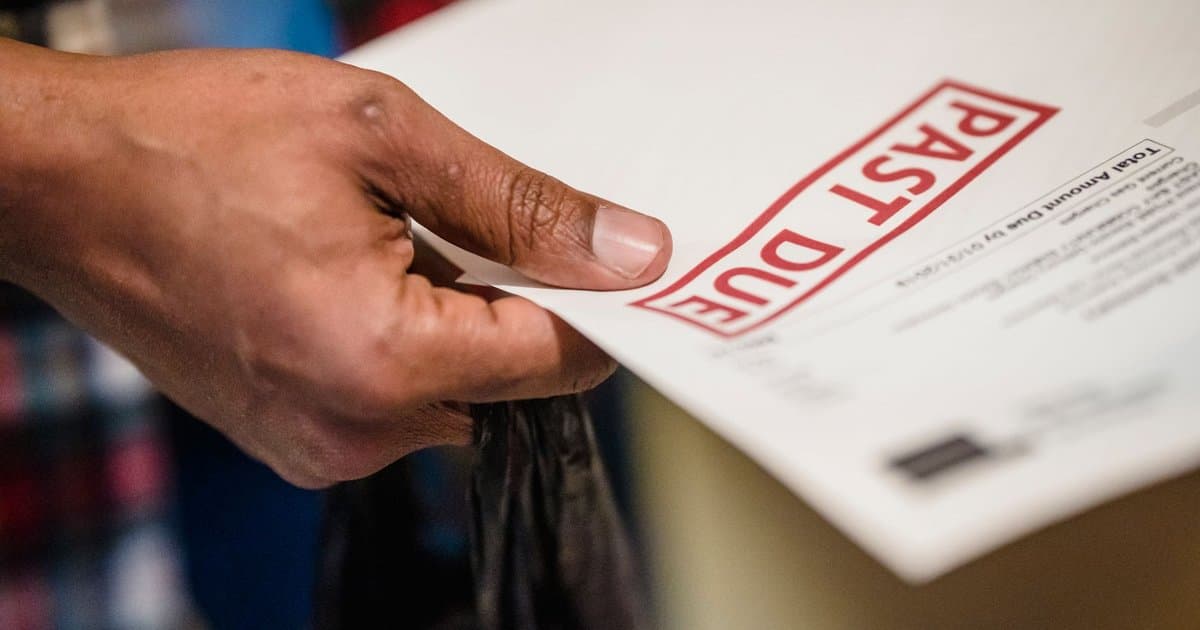
A person finishes three years of coursework, leaves school owing a parking fine and a library charge, and years later applies for a job that wants proof of the credits. The school says no transcript until the balance clears. The balance is small, but the credits are worth thousands of dollars and months of work, and none of it can be shown to anyone. This practice has a name. It is called transcript withholding, and for a long time it operated almost entirely out of public view.
The scale is larger than most people assume. A widely cited 2020 study from the research group Ithaka S and R estimated that around 6.6 million former students in the United States were affected, with roughly 15 billion dollars in unpaid balances behind the holds. Many of those debts are small. Institutional research over the years has repeatedly found that a large share sit under a thousand dollars, and a meaningful number sit under a few hundred. The debt is minor. The consequence attached to it is not.
The consequence compounds in a specific way. Without a transcript you usually cannot transfer the credits to another school, so finishing the degree elsewhere means paying to retake courses you already passed. You may not be able to prove a credential to an employer or a licensing board. Some graduate programs will not process an application at all without an official record. So the hold blocks the exact activities that would raise your income enough to pay the balance. That circular quality is why critics started calling these stranded credits.
Schools defend the practice on straightforward grounds. Unpaid institutional charges are real money, community colleges and regional publics run on thin margins, and the transcript hold is one of the only collection tools available once a student has left. Sending small balances to a collection agency costs money and damages the former student's credit, which many administrators consider worse. The counterargument is that the tool works by taking something the student already earned and paid for in part, and that the harm falls hardest on people who left school for financial reasons in the first place.
Policy has moved, though unevenly. States began passing limits several years ago. California acted in 2019, and Ohio, Louisiana, Minnesota, Illinois, New York, Colorado, and Washington followed with laws of varying strength. Some ban the practice outright. Others only restrict holds below a dollar threshold, or require the school to release a transcript when the request is for a job application. Because the rules are written state by state, two former students with identical situations can get opposite answers depending on where the school sits.
The federal government narrowed it further. Department of Education rules that took effect in July 2024 bar institutions from withholding transcripts for terms that were covered by federal student aid. The logic is that federal money already paid the institution for that period, so the school cannot hold the record of it hostage over unrelated charges. That closed a large share of cases. It did not close all of them, because a balance tied to a term with no federal aid, or charges outside the covered period, can still support a hold at many schools.
For anyone sitting under a hold right now, there are practical steps worth taking before assuming the balance must be paid in full. Ask the registrar in writing for an itemized statement showing what the charge is and which term it belongs to. Compare that term against any federal aid you received, because the federal rule may already cover it. Check whether your state has a law and what it requires. Ask the bursar directly about a payment plan, a hardship waiver, or a partial release for employment purposes, since many schools have quiet discretion they do not advertise. Old charges may also be past the state limitation period for collection even when the hold is not.
There is a documentation habit that prevents the whole problem. Request an official transcript at the end of every academic year while you are still enrolled and in good standing, and keep a copy. Save your course syllabi and final grade reports too, because a transfer credit review sometimes accepts them as supporting evidence. Settle small charges before you withdraw rather than after, since leverage disappears the moment you stop being a current student. None of this is exciting, and all of it is cheaper than retaking a semester.
The larger question is still open. A transcript is a record of work a person performed, and using that record as collateral for an unrelated debt is a choice institutions made rather than a rule of nature. The trend in both state and federal policy has been to narrow it, and the narrowing has come fast. Until it closes entirely, the burden of knowing the rules falls on the people least equipped to carry it. Knowing them is the only defense available.