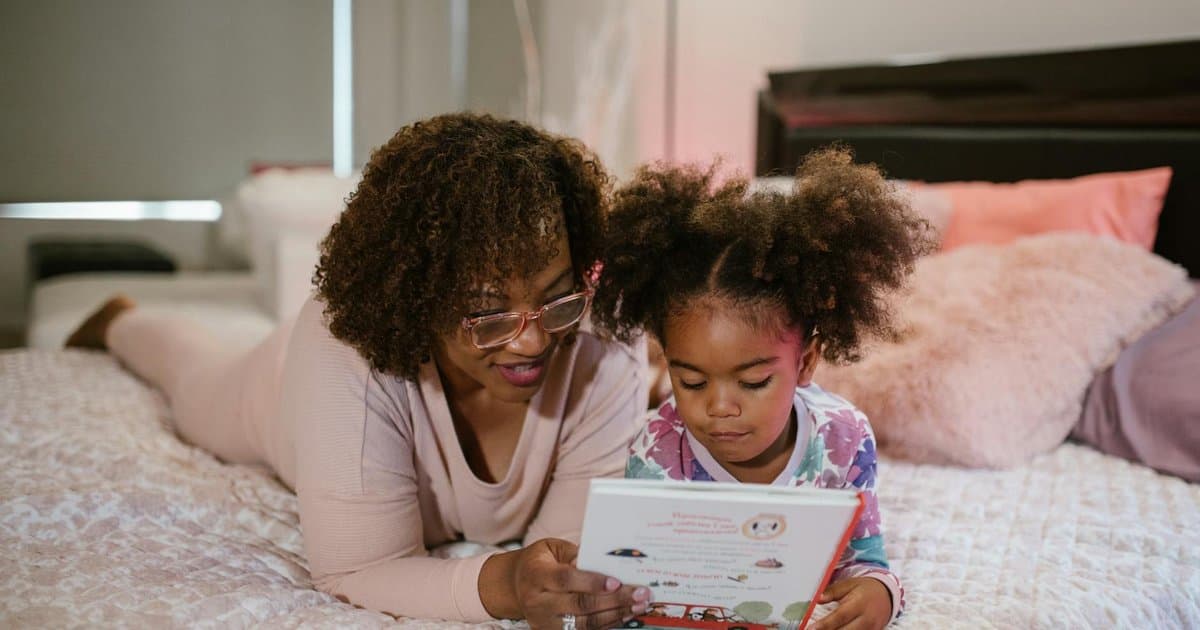
Reading aloud to a child looks like one of the gentlest, most optional parts of raising them. It feels like a bedtime nicety, the kind of thing you do when there is extra time and skip when the day got away from you. The stakes hide behind how pleasant the activity seems. What is actually happening during those minutes is some of the most important brain building a young child will ever receive. When reading aloud disappears from a home, the cost does not show up that night. It shows up years later in a classroom, and by then it is much harder to repair.
The first thing reading aloud builds is vocabulary, and the gap it prevents is enormous. The language in books is richer and more varied than the language of everyday conversation. A child hears words in a story that would almost never come up while getting dressed or eating lunch. Over thousands of pages, those words accumulate into a deep reservoir the child can draw from later. A child read to regularly arrives at school having heard millions more words than a child who was not. That head start shapes everything that follows.
Attention is the second thing at stake, and it is harder to rebuild than vocabulary. Following a story from beginning to end trains a child to hold a thread of meaning over time. They learn that ideas connect, that a problem early in the book gets resolved later, and that paying attention is rewarded. This is the exact skill schoolwork will demand of them constantly. A child who never practiced sustained attention during stories struggles to sit with a math problem or a written passage. The muscle was supposed to be built early, during something enjoyable.
Reading aloud also teaches a child what reading is for before they can read a single word themselves. They learn that the marks on the page carry meaning, that you move left to right, and that turning a page brings something new. Most importantly, they learn that books are a source of pleasure rather than a chore. A child who associates reading with warmth and closeness approaches learning to read with enthusiasm. A child who never had that experience often meets reading as a cold, difficult task. The emotional foundation matters as much as the academic one.
The stakes are not equal across all children, which makes this more than a personal choice. Kids from homes with fewer books and less reading aloud tend to start school already behind, and that gap often widens instead of closing. Teachers can do a great deal, but they cannot fully replace thousands of hours of early language exposure that never happened. This is one of the quiet engines of inequality in education. The good news is that the intervention is free, available to almost every family, and genuinely enjoyable. A library card and twenty minutes a day can change a trajectory.
Parents sometimes stop reading aloud once a child can read on their own, and that is a costly mistake. A child can listen to and understand books well above their own reading level for several years. Reading aloud to an older child keeps stretching their vocabulary and comprehension while their independent reading catches up. It also keeps the shared experience alive, which protects the relationship and the habit at the same time. Stopping too early surrenders years of benefit that were still available. The activity earns its keep long past the early grades.
None of this requires special skill or expensive materials, which is part of why it gets neglected. You do not need to perform voices, read with perfect expression, or finish a whole book in one sitting. You need a book, a few minutes, and the willingness to do it consistently. Consistency matters far more than polish, because the benefits come from accumulation over time. Ten minutes every day does more than an hour once in a while. The simplicity is exactly what makes the habit so easy to undervalue.
The lesson is to treat reading aloud as a foundation rather than a luxury. The minutes feel small and skippable in the moment, but they are quietly deciding how prepared a child will be when school turns serious. Skipping it does not announce its cost, which is precisely what makes it dangerous. Protect the habit the way you would protect any investment in your child's future, because that is what it is. The payoff arrives years later in confidence, comprehension, and a child who actually enjoys learning. That return is worth guarding.