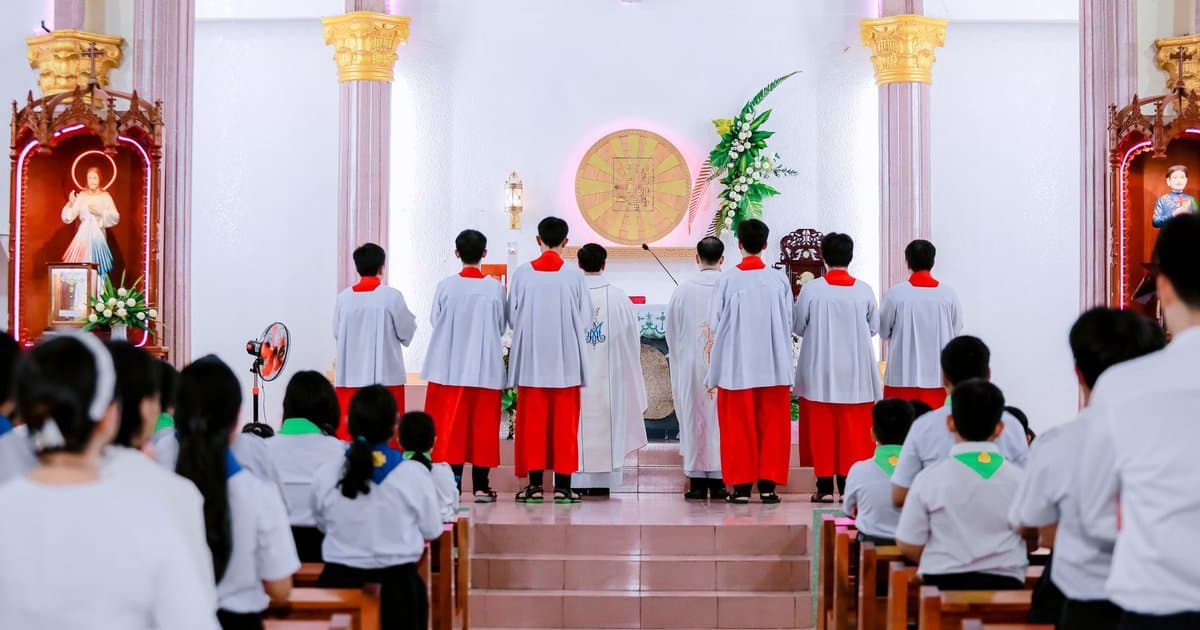
A lot of people measure their church life by attendance. They show up most Sundays, sit in roughly the same spot, sing the songs, listen to the message, and head home feeling like they did the faithful thing. That is a good habit and worth keeping, but it is easy to mistake it for something it is not. You can do all of that for ten years and still not have a single person in that building who knows what you are carrying. Attendance is presence in a room. Community is presence in someone's life. The two can look identical from the parking lot and feel completely different from the inside.
The early church described in the book of Acts was not built on weekly attendance. They met in homes, shared meals, sold possessions to cover each other's needs, and lived close enough to know who was struggling. When the New Testament talks about the church it almost never pictures rows of strangers facing forward. It pictures a body, with parts that depend on one another, where the suffering of one is felt by all. That kind of life cannot happen in a sanctuary alone. It happens around tables, in living rooms, in the ordinary back and forth of people who have decided to actually know each other. The Sunday gathering points toward that life, but it was never meant to be the whole of it.
The honest reason most of us stop at attendance is that it is safe. You can sit in a service for an hour and risk nothing. Nobody learns about your marriage, your doubts, your money trouble, or the thing you are ashamed of. You stay a friendly face, and a friendly face cannot be disappointed or let down or asked for too much. Real community costs more than that. It asks you to be known, which means being seen at your worst as well as your best. That is uncomfortable, and discomfort is exactly why so many people keep their faith at arm's length and call regular attendance enough.
What you lose by staying at the edge is the very thing the gathering was supposed to lead you toward. When life falls apart, and it will, a room full of acquaintances cannot hold you. The people who show up with meals, who sit with you in the hospital, who pray over you when you have no words left, are people who knew you before the crisis. That kind of help does not appear out of nowhere on your hardest day. It is built slowly, in seasons when nothing is wrong, through the small and unglamorous work of letting people in. You cannot withdraw from an account you never paid into, and community works the same way.
The path from attendance to community is not complicated, but it does require a decision. It usually means joining something smaller than the main service, a group that meets midweek, a class, a serving team, anything that puts you in a room small enough to be known. It means saying yes when someone invites you to a meal even when you would rather go home. It means being the one who asks a real question and then actually listens to the answer. None of this is dramatic. It is a series of small moves toward people, repeated until strangers slowly become the kind of friends who show up. The first step is almost always the hardest, and it is almost always worth it.
There is nothing wrong with faithful attendance, and this is not a call to do less of it. It is a call to let it lead somewhere. Sitting in the service every week is a fine beginning, but it was always meant to be a beginning. The goal of gathering was never to fill a seat, it was to belong to a people. If you have been showing up for years and still feel like a visitor, the answer is not to try harder at attending. The answer is to take the risk of being known, to step into a smaller room, and to let a few people close enough to actually walk with you. That is where faith stops being a private routine and becomes a shared life.