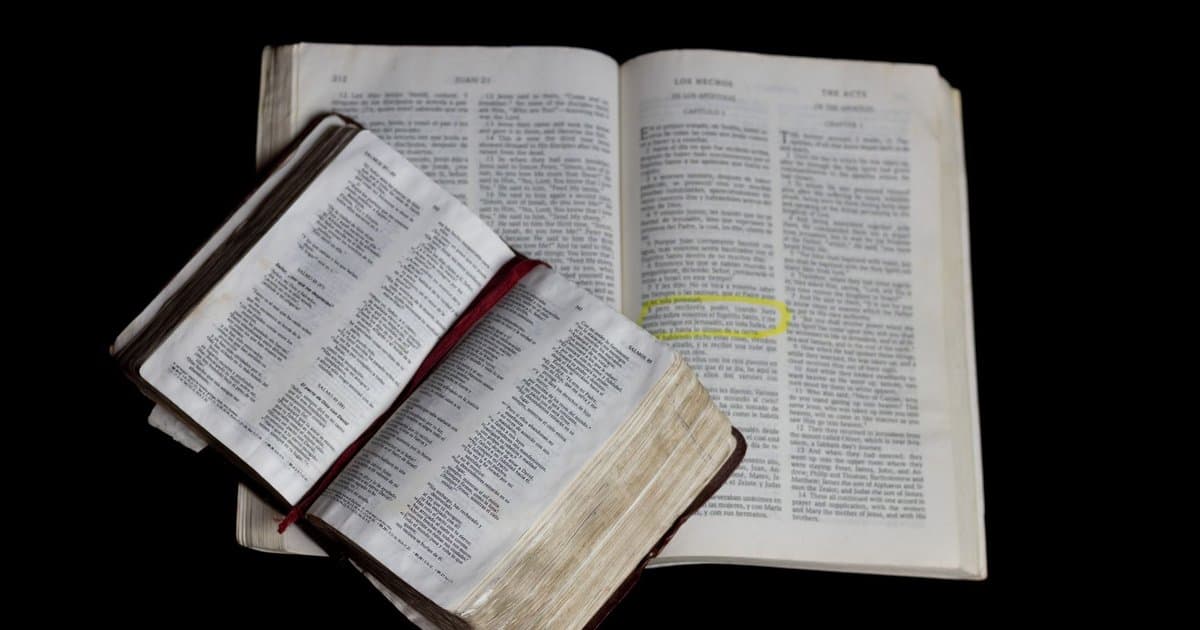
If you have ever set two Bibles side by side and flipped to the table of contents, you may have noticed something odd. One lists sixty-six books. Another lists seventy-three. A third, from an Orthodox church, lists even more. For a book that so many people treat as fixed and settled, that is a strange thing to discover. It raises a fair question that most people never get a clear answer to. Why do some Bibles have more books than others, and who decided what belongs?
The books at the center of the difference are usually called the Apocrypha by Protestants and the deuterocanonical books by Catholics. They include titles many readers have never opened, like Tobit, Judith, Wisdom, Sirach, Baruch, and First and Second Maccabees, along with some extra sections added to Esther and Daniel. These are not strange or secret writings. They were part of the religious world of the centuries just before Jesus, and they deal with history, prayer, and wisdom. The disagreement is not about the New Testament, which all these traditions share. It is entirely about which books belong in the Old Testament.
To understand the gap, you have to go back to how the Old Testament reached the early church. Long before Christianity, Jewish scholars in Egypt translated the Hebrew scriptures into Greek, because Greek was the common language of the wider world at the time. That Greek collection, known as the Septuagint, included the extra books. Meanwhile, the Hebrew tradition eventually settled on a shorter list that did not include them. So from very early on there were two respected collections in circulation, one broader and one narrower, and both were used by faithful people.
The first Christians spoke and read Greek, and the Septuagint was the version most of them knew. When the writers of the New Testament quoted the Old Testament, they very often quoted from that Greek collection. As a result, the broader set of books stayed in common use across the church for centuries. Early Christians read them, copied them, and included them in their Bibles without much controversy. For a very long stretch of church history, having those books present was simply normal, even if some leaders questioned their exact standing.
The clean break came during the Reformation in the sixteenth century. Reformers like Martin Luther wanted to return the Old Testament to the shorter Hebrew list, arguing that the church should follow the canon the Jewish tradition had settled on. Luther did not throw the extra books away. He gathered them into a separate section and described them as useful to read, though not equal to the rest of scripture. Many early Protestant Bibles still printed them in that middle section. Over time, most Protestant publishers dropped them entirely, which is why a typical Protestant Bible today holds sixty-six books.
The Catholic Church answered in the other direction. At the Council of Trent in the middle of that same century, it formally affirmed the deuterocanonical books as full scripture, which is why a Catholic Bible carries seventy-three. The word deuterocanonical simply means second canon, a way of saying these books were confirmed later than the ones no one disputed. Orthodox churches went further still and kept an even wider collection, including a few writings that neither Catholics nor Protestants use. So the different counts are not random. Each one reflects a real decision made by a real community about which ancient books carried authority.
For a regular reader, the honest takeaway is that the disagreement is narrower than the numbers make it sound. Every one of these traditions shares the same New Testament and the same core of the Old Testament, including the law, the prophets, and the Psalms. No major belief about who God is rises or falls on the disputed books alone. If you want to understand the world Jesus was born into, reading something like First Maccabees is worth your time no matter what tradition you come from. The count on the contents page is a piece of history worth knowing. It is not a reason to doubt the book in your hands.