Visit three churches in the same city and you can hear the same prayer three ways. One congregation asks forgiveness for debts. Another asks forgiveness for trespasses. A third says sins. Then comes the ending, where some churches roll straight into "For thine is the kingdom, and the power, and the glory, forever" while others stop cold at "deliver us from evil" and let the silence sit. Anyone who grew up in one tradition and married into another has stumbled through that moment out loud. The differences are real, they are old, and none of them come from a disagreement about what Jesus meant.
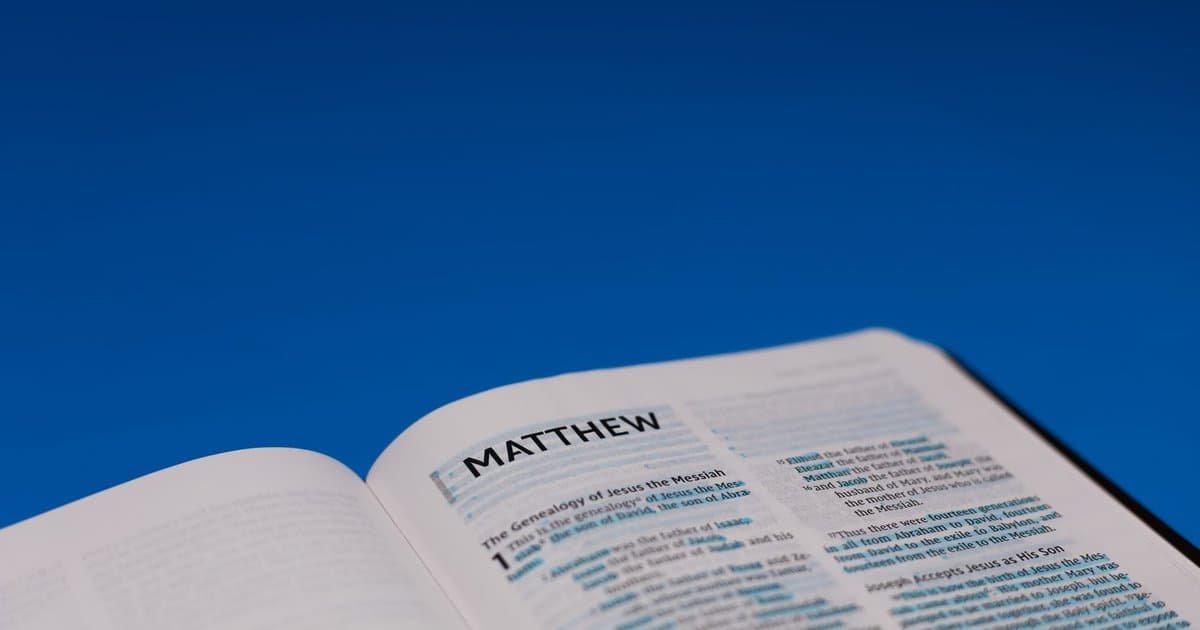
Start with the fact that Scripture gives the prayer twice, and the two versions do not match. Matthew 6 places it inside the Sermon on the Mount, longer and more structured, with seven petitions. Luke 11 gives a shorter version, prompted by a disciple asking to be taught to pray the way John taught his disciples. Matthew includes "Thy will be done, on earth as it is in heaven" and "deliver us from evil." The earliest manuscripts of Luke do not. Most churches recite Matthew's version because it is fuller and because the liturgical tradition settled there early, but the two accounts are why the prayer has never had one fixed wording even in the original languages.
The debts and trespasses split traces to the Greek. Matthew uses a word for debts, opheilemata, which is a financial image of something owed and unpaid. Luke uses the ordinary word for sins, hamartias, in the first half of the petition while keeping the debt language in the second half. Both are doing the same theological work through different pictures. Sin as debt was familiar to a first century Jewish audience, where moral obligation and financial obligation shared vocabulary, and the image carries a weight that the word sin has partly lost through overuse. Translators who chose debts were being literal with Matthew. Translators who chose sins were being literal with Luke.
Trespasses came from a different door. William Tyndale, translating into English in the 1520s, used trespasses in his rendering of the passage that follows the prayer in Matthew 6, where Jesus explains that if you forgive others their trespasses your Father will forgive you. That word carried into English worship through the Book of Common Prayer in 1549, and once a phrase enters the liturgy people recite week after week, it stops being one option among several and becomes the way the prayer sounds. Anglican, Methodist and Roman Catholic congregations praying in English inherited that line. The Geneva Bible and later the King James Version rendered Matthew's petition as debts, and Presbyterian and Reformed churches that formed their practice around those translations kept it.
The ending has the most interesting history. The line beginning "For thine is the kingdom" does not appear in the oldest and most reliable Greek manuscripts of Matthew, including Codex Sinaiticus and Codex Vaticanus. It shows up in later Byzantine copies, the manuscript family behind the Textus Receptus and the King James Version. A short form of it appears in the Didache, an early Christian teaching document, attached to the prayer for use in worship. The likely explanation is that congregations added a doxology because Jewish prayer ended with praise, and scribes copied into the text what people were already saying. Protestant churches reciting from the King James tradition kept it. Catholic practice keeps it too, but separates it in the Mass with a short prayer in between.
There is one modern change worth knowing about. In 2018 and 2019, Italian and French bishops approved revised wording for the petition rendered "lead us not into temptation," moving toward "do not let us fall into temptation," a change Pope Francis supported. The reasoning was pastoral rather than textual. The Greek can be read as asking God not to bring us into a time of testing, and the older English phrasing suggests to many modern ears that God actively leads people toward sin, which no branch of Christian teaching has ever held. English speaking Catholics still say the familiar line, so most Americans have not encountered the revision. It is a useful example of how the prayer keeps getting adjusted for clarity in the ordinary language people speak.
None of this should unsettle anyone, and for most believers it does the opposite. The variations are not competing theologies. They are the fingerprints of a prayer that has passed through Aramaic speech, Greek text, Latin liturgy, English reformers and centuries of congregations saying it together until the words wore smooth. Debts, trespasses and sins all name the same condition and ask for the same mercy. The doxology adds praise to a prayer that already assumes it. When two people say it differently at a wedding or a funeral, they are not praying two prayers. They are praying one prayer in two accents, which is a fair description of the church itself.