Almost everyone has heard the rule that eating after a certain hour makes you gain weight, as if calories consumed at nine in the evening behave differently from the same calories at noon. It is one of the most repeated pieces of food advice there is, and it is mostly wrong. Your body does not have a clock that flips a switch and starts storing everything as fat once the sun goes down. What actually drives weight change is the total amount of energy you take in compared to the amount you burn over time. The hour on the clock does not change that math. But the late night reputation did not come from nowhere, and understanding the real story is far more useful than obeying a rule that misses the point.
Start with the basic biology, because it clears up the confusion fast. A calorie is a unit of energy, and your body processes the energy in food whether you eat it at breakfast or at midnight. Your metabolism does not shut down at night. It keeps running while you sleep to power your heart, your lungs, your brain, and every repair process your body does in the dark. The idea that food eaten late just sits there and converts straight to fat is not how digestion works. Over a full day and week, what matters is the sum, not the schedule. If your total intake matches what your body uses, you hold steady, regardless of when those calories landed.
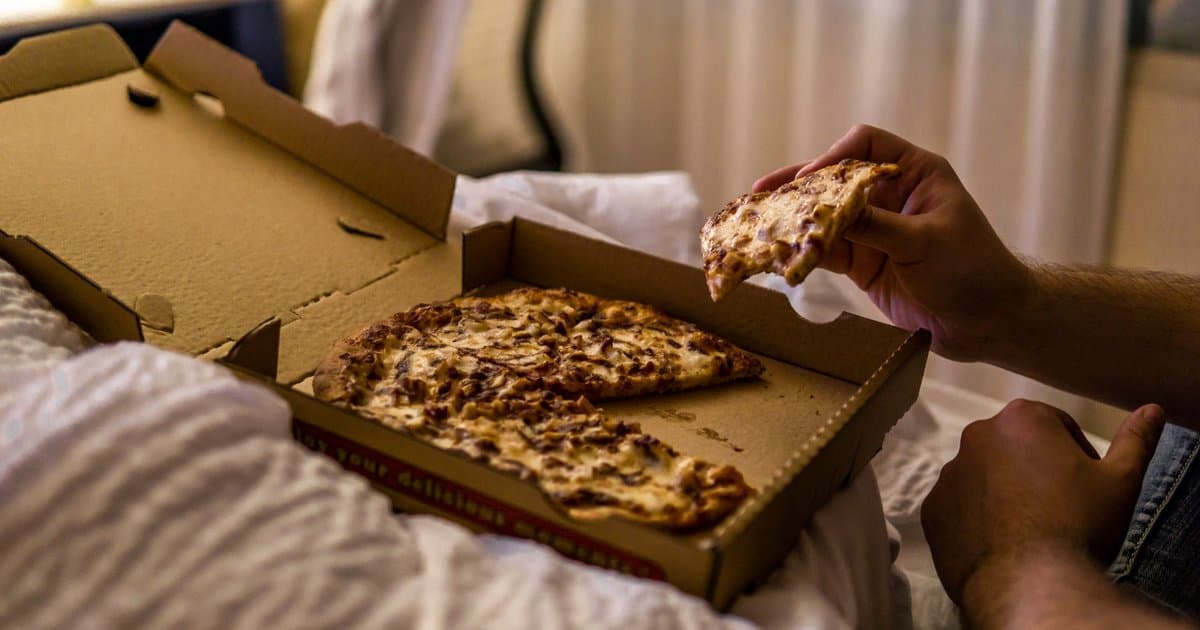
So why does late eating get blamed so consistently? Because of what tends to come with it, not because of the timing itself. Think about what people actually eat late at night. It is rarely a balanced plate. It is chips, ice cream, leftover takeout, cereal eaten standing at the counter, the snacks that are easy to grab and easy to overdo. Late night eating is usually mindless eating, done in front of a screen, when you are tired and your judgment is low. You are not measuring anything and you are not really hungry in the true sense. Those calories pile up fast and they pile up on top of a full day of eating, which is the actual problem. The clock just happens to be nearby when it happens.
There is also a real driver underneath a lot of late snacking, and naming it helps. When people are short on sleep, the body's hunger signals get thrown off. The hormones that tell you when you are hungry and when you are full drift out of balance, pushing you toward more food and toward the rich, salty, sugary stuff in particular. So someone staying up late is often hungrier than they would be rested, and craving exactly the foods that are easy to overeat. The lateness and the overeating share a common cause, which is being tired and depleted, rather than the time on the clock causing the weight gain directly.
This matters because the common rule sends people chasing the wrong fix. They white knuckle a hard cutoff time, feel guilty when they slip, and never address what is actually happening, which is too much total food and not enough sleep. If you want to manage your weight, the honest levers are the boring ones. Pay attention to your overall intake across the day. Build meals that actually fill you up, with protein and fiber and some real volume, so you are not ravenous by night. Protect your sleep, because rest quiets the cravings before they start. Those moves do far more than staring at the clock ever will.
If late eating is genuinely a problem for you, it is usually worth asking why you are eating then rather than banning it outright. Are you skipping meals during the day and arriving at night starving? Are you eating out of boredom or stress rather than hunger? Are you simply not sleeping enough? Fixing those root causes tends to dissolve the late night habit naturally, without a rigid rule you will eventually break. And if you are genuinely hungry at night, a sensible snack is fine. A small portion of something with protein will not undo your progress.
The takeaway is freeing once you accept it. You do not need to fear the kitchen after dark. You need to pay attention to how much you eat overall, what you reach for, and whether you are getting enough rest to keep your appetite honest. The clock was never the enemy. It was just standing next to the real one. Manage the total and protect your sleep, and the hour you eat stops mattering nearly as much as you were told it did.