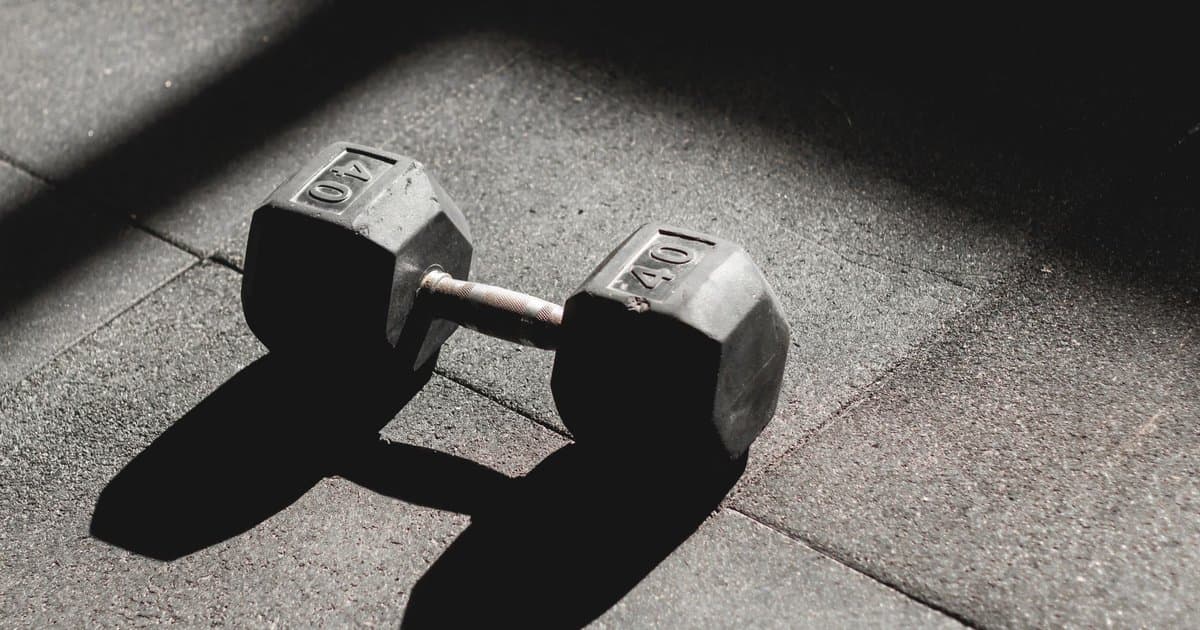
There is a belief in most gyms that a set only counts if you take it to the point where the weight stops moving. People treat failure as proof that they worked hard, and anything less feels like they cheated themselves. The logic seems solid because effort should equal results, and nothing looks more effortful than a bar pinned to your chest. But the research over the last several years tells a different story, and so does the experience of people who have trained for decades without wrecking themselves. Training to failure on every set is not the price of growth. In a lot of cases it is the thing slowing your growth down.
Muscle grows in response to hard, challenging sets, but the key word is challenging, not catastrophic. Studies comparing lifters who stop a couple of reps short with lifters who grind to failure keep finding similar muscle growth between the two groups. The difference shows up in everything around the muscle. Going to failure spikes fatigue, beats up your joints and connective tissue, and slows your recovery for the next session. So you pay a much higher cost for the same or slightly worse result. When you stop one or two reps short, you keep almost all the growth and shed most of the damage. That trade is heavily in your favor over a full training week.
The idea you want to understand is reps in reserve, which simply means how many more reps you could have done if you had to. If you finish a set and you genuinely had two clean reps left, that is a great working set for building muscle. You felt the tension, you challenged the muscle, and you stopped before your form broke down and your joints took the hit. Failure, by contrast, usually arrives after your technique has already started slipping, which is exactly when injury risk climbs. The last ugly rep you fought for is often the one that tweaks your back or your shoulder. That single rep can cost you weeks, and weeks off erase far more progress than a few extra reps ever added.
There is also a math problem with constant failure that people miss. Training is not about one heroic set, it is about the total quality work you can repeat session after session. If your first set to failure leaves you so gassed that the next three sets collapse, your total productive volume for that muscle drops. Stopping short lets you keep your strength up across all your sets, so you do more good work overall. More quality sets across the week beats one destroyed set every time. The lifters who look like they train forever do, because they leave the gym able to come back strong instead of crawling out wrecked.
None of this means you should coast. Effort still matters, and a set with five reps left in the tank does nothing for you. The skill is learning to push into the hard zone while keeping a small margin, and that margin is what protects your form, your joints, and your next workout. A good rule for most of your sets is to stop when the bar speed slows and you know you have one or two honest reps left. You can test true failure now and then on a safe movement to calibrate what your reserve feels like. But it belongs at the edges of your training, not at the center of it.
This also changes how you should think about the last set of a movement. That is the one spot where pushing close to the limit can make sense, because there are no more sets left to protect. On your earlier sets, hold the margin and bank clean, strong reps. On the final set, you can dig a little deeper as long as your form is still solid. Pay attention to bar speed as your honest gauge, since reps slow down well before they truly fail. When the speed drops sharply and your technique starts to wobble, that is your signal to rack it and walk away.
Train hard, train often, and let the weight and the reps climb over time. That slow climb, called progressive overload, is what actually drives growth, and you cannot keep climbing if you are always recovering from the last beating you gave yourself. Stopping short is not soft. It is the move that lets a hard worker keep working for years instead of months. Leave a rep or two in the tank, show up again in two days fresh, and watch what consistency does that grinding never could. The goal was never to prove you could fail. The goal was to build, and building rewards the person who can keep going. Protect the work and the work compounds. Wreck yourself chasing one heroic set and you start over from behind. Choose the long game every single time you walk in the door.