A cast iron pan is supposed to get better with age, yet plenty of people fight a sticky surface for years. They scrub, they reseason, they consider throwing the whole thing out. The frustrating part is that the pan is rarely the problem. Cast iron sticks because of a few habits, and once you fix them the surface starts behaving the way it was always meant to. Understanding why the food grabs the metal is the difference between a pan you dread and one you reach for first. The good news is that every cause has a simple cure you can start using tonight.
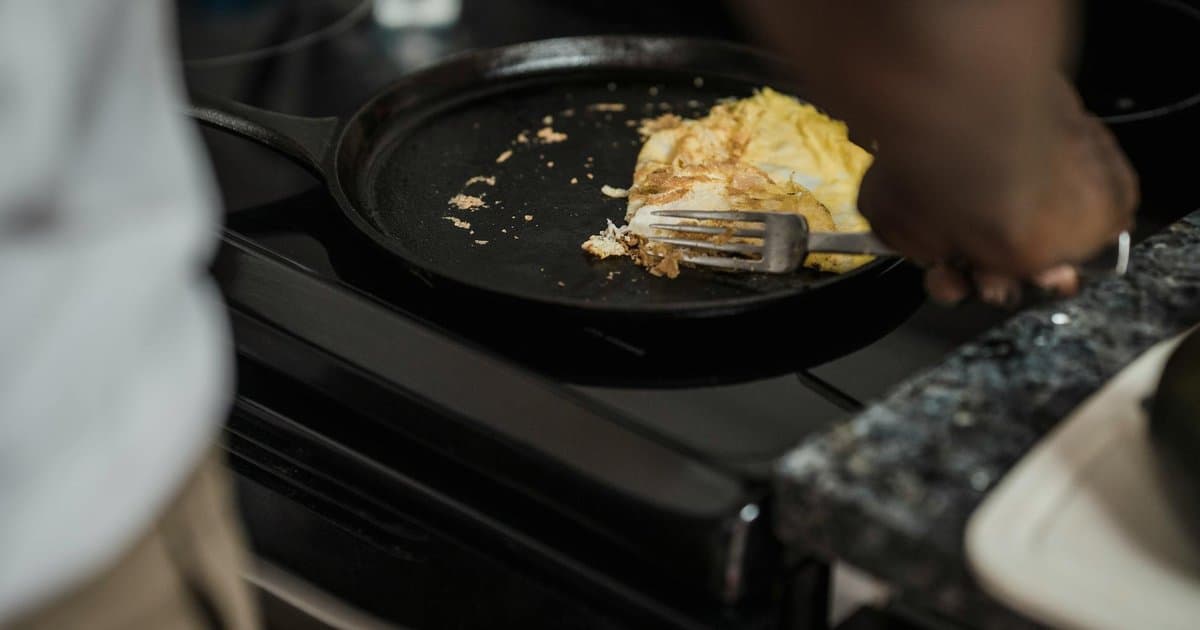
The first reason is heat, or more often the lack of it. People drop food into a pan the moment it lands on the burner, before the metal has come up to temperature. Cast iron is slow to heat, which is exactly why it cooks so well once it gets there. A cold or unevenly heated pan lets proteins bond directly to the surface, and that bond is what you feel when an egg or a piece of fish refuses to move. Give the pan three to five minutes over medium heat and test it with a drop of water that should dance and skitter across the surface. A properly preheated pan releases food on its own once a crust forms, with no scraping required.
The second reason is fat, and most people use too little of it. A well seasoned pan still needs a real layer of oil or butter to create the barrier between food and metal. A thin smear is not enough, especially for eggs, lean fish, or anything starchy that wants to grab. Add the fat after the pan is hot, let it shimmer for a moment, and then add your food so it meets a slick surface. People also move the food too soon, fighting the natural crust before it has formed and releases. Patience does most of the work here, since food that is ready to flip will lift cleanly when you stop forcing it.
The third reason lives in how the pan is cared for between meals. Seasoning is a thin layer of polymerized oil baked onto the iron, and harsh treatment strips it away. Soaking the pan, running it through the dishwasher, or scrubbing with steel wool can pull off the very coating that keeps food from sticking. Wash it warm with a soft brush, dry it fully on the stove so no water sits in the pores, and wipe a tiny amount of oil across the surface. That last step rebuilds the seasoning a little with every use rather than letting it wear thin. A pan treated this way grows smoother and more nonstick the longer you own it.
If your pan still sticks after you fix the heat, the fat, and the care, the seasoning underneath may simply be too thin or patchy. Strip it back and reseason by coating the pan in a very thin layer of oil and baking it upside down in a hot oven for about an hour. Repeat that two or three times and you build a hard, even base that resists sticking for years. From there the daily habits keep it strong without any extra effort on your part. A cast iron pan rewards attention and punishes neglect, which is the whole reason cooks have trusted it for generations. Treat it well and it may outlast every nonstick pan you ever buy.