A new nonstick pan feels like a small miracle. Eggs slide, cleanup takes seconds, and you barely need any oil at all. Then, somewhere around the one or two year mark, the magic fades. Food starts to grab, the surface looks dull, and you find yourself scraping at a pan that used to release everything without a fight. The instinct is to blame the pan for being cheap, but the truth is that most nonstick coatings die from how they are used, not from bad luck. Four habits do the bulk of the damage, and once you know them you can make a pan last far longer than the average one ever does.
The first and most common killer is high heat. Nonstick coatings are a thin polymer layer, and that layer begins to break down when it gets too hot, generally somewhere above 500 degrees. An empty pan left on a high burner can blow past that temperature in just a couple of minutes. This is why the habit of cranking the flame to preheat a nonstick pan is so destructive, since there is no food or liquid in there to absorb the energy. The coating loses its slickness, can discolor, and in extreme cases gives off fumes you do not want in your kitchen. Nonstick was designed for low and medium heat, so searing a steak or blasting a stir fry belongs in stainless or cast iron instead.
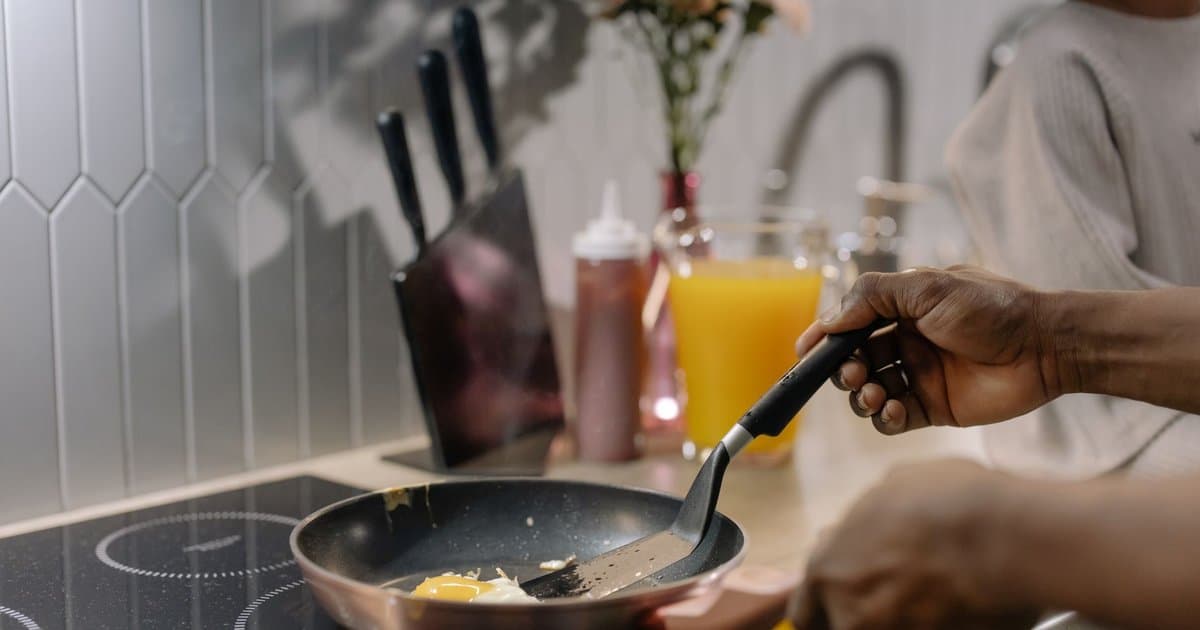
The second reason is physical damage from metal and rough handling. That coating is only a few thousandths of an inch thick, so a metal spatula, whisk, or fork drags across it like a blade. Each scratch gives food a place to stick, and once the surface is broken the damage tends to spread outward from there. Stacking pans directly on top of one another in a cabinet does the same quiet harm, grinding the coating every time you shift them. Cutting anything in the pan, even a cooked omelet, is asking for a permanent gouge. Wooden and silicone tools solve this completely, and slipping a paper towel or cloth between stacked pans protects them in storage.
The third culprit is the one almost nobody suspects, and it is aerosol cooking spray. Those sprays contain more than just oil, including propellants and additives like lecithin that leave a faint sticky film behind. At cooking temperatures that film bakes onto the surface and turns into a gummy, varnish like residue that ordinary washing will not remove. Layer after layer, it builds into a tacky coating that sits on top of the nonstick and makes the whole pan grab, which is the exact opposite of what you wanted. Ironically, the product sold to stop sticking is often what ruins the pan that already resisted it. A small amount of regular oil or butter, added to the pan rather than sprayed, sidesteps the problem entirely.
The fourth reason lives at the sink and inside the dishwasher. Dishwasher detergent is far more caustic than dish soap, and the long cycle of heat and harsh chemicals wears the coating down load after load. Steel wool and abrasive scrubbing pads do the obvious damage, carving into a surface that is meant to be treated gently. There is also thermal shock to watch for, since blasting a screaming hot pan with cold water can warp the metal base so it no longer sits flat on the burner. A warped pan heats unevenly, which cooks your food unevenly and stresses the coating in the bargain. Hand washing with a soft sponge, after the pan has cooled, is slower by a minute and kinder by years.
Even with flawless care, no nonstick pan lasts forever, and it helps to hold realistic expectations. Most traditional coatings are good for somewhere between one and five years of regular use, depending on quality and how often the pan sees the stove. The coating simply thins with time, and eventually even a careful cook notices food starting to cling. The clear signal to retire a pan is visible damage to the surface itself, especially flaking or peeling where the coating has begun to lift. Once it reaches that stage, no amount of oil or scrubbing brings it back, and cooking on a flaking surface is not worth it. Treat a nonstick pan as a tool with a lifespan rather than a permanent fixture, and replacing one stops feeling like a personal failure.
Put the four habits together and the care routine becomes simple. Keep the heat at medium or below, and never preheat the pan empty on a high flame. Stick to wooden or silicone utensils, and never cut food directly on the surface. Skip the aerosol spray and reach for a little oil or butter instead. Wash by hand with a soft sponge once the pan has cooled, and keep it out of the dishwasher entirely. Do those few things and a modest pan will outlast an expensive one that gets abused, which is a better return than any upgrade sitting on the store shelf.