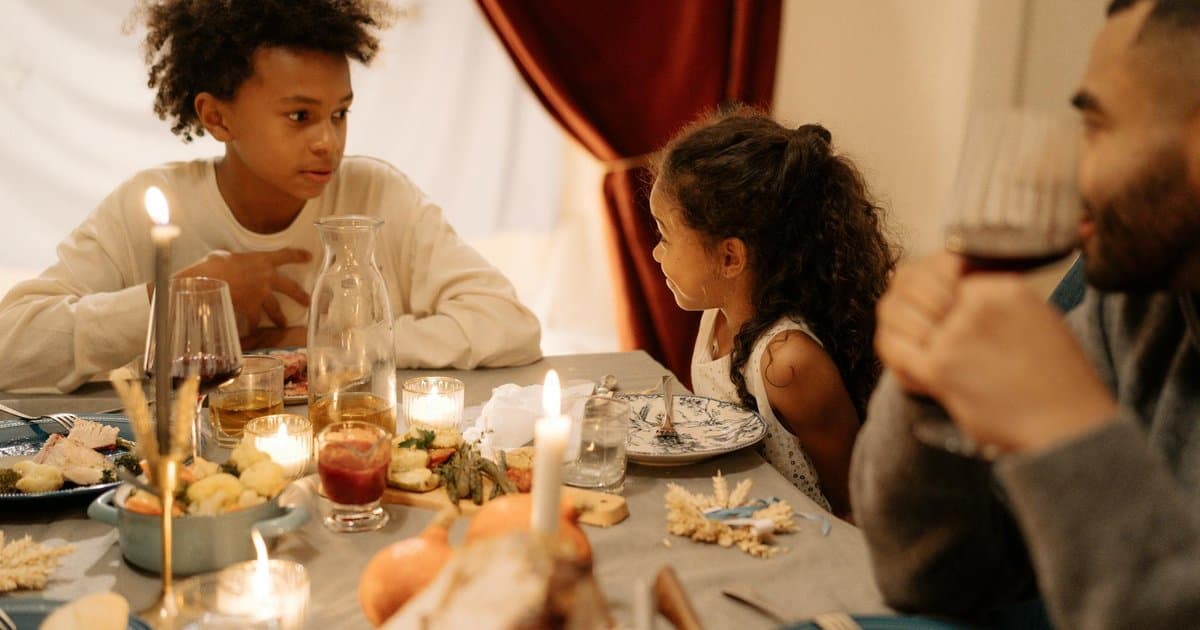
Ask researchers what separates households where kids seem to thrive, and one answer keeps surfacing. It is not income, tutoring, or the right zip code. It is whether the family sits down and eats together on a regular basis. Study after study across decades has tied frequent shared meals to better outcomes for children, from larger vocabularies to steadier moods. The effect holds even after researchers account for money and parents' education. Something about the table itself seems to do real work. Researchers keep testing the link from new angles, and it refuses to disappear. That alone should make any parent pay attention.
Part of the answer is simply talk. A shared meal is one of the few stretches of the day when a family is in one place, facing each other, without a task pulling everyone apart. Young children hear new words in the back and forth of normal conversation, which is why dinner talk links so strongly to vocabulary. Older kids get a low pressure window to mention the thing that happened at school before it grows into something heavier. Parents pick up on small shifts in mood that a rushed morning would hide. None of this is scheduled, and that is exactly why it works. The talk is not a lesson, it is just life happening in earshot of a kid who is always listening. That casual exposure does more than most planned activities ever could.
The table also gives a household rhythm, and kids lean on rhythm more than they let on. A meal that happens most nights becomes a fixed point children can count on, even when the rest of the day feels chaotic. That predictability is quietly steadying for a developing brain. Sharing food is also one of the oldest signals of belonging humans have, and children feel it even if they could never name it. They learn that they have a seat, that someone saved a place for them, and that the group pauses to be together. Over years, that daily proof of belonging adds up. A child who knows the table will be there tomorrow carries a quiet confidence into the rest of the day. It is hard to overstate how much that steadiness matters during the messy years of growing up.
The benefits are not only warm and fuzzy. Teens who eat regularly with family show lower rates of risky behavior, including substance use, and report fewer symptoms of depression and anxiety. The meal is not magic, but it creates steady contact, and steady contact is where parents notice problems early. It is far easier to spot a kid who is struggling when you sit across from them five nights a week. The conversation also models how adults handle stress, disagreement, and repair in real time. Kids absorb those patterns long before they can explain them. A parent who is present at the table becomes a safe place to bring the hard stuff later. That trust is built slowly, one ordinary meal at a time.
It helps to drop a few myths that keep families from even trying. The meal does not have to be dinner, it does not have to be home cooked, and the conversation does not have to be deep. A bowl of cereal eaten together on a slow morning carries more weight than a fancy dinner spent staring at phones. Perfection is the enemy here, because the families who wait for the ideal setup usually never start. The kids are not grading the food. They are noticing whether the adults keep showing up.
The honest objection is time, and it is a fair one. Sports, shift work, long commutes, and packed calendars make a sit down dinner feel impossible some weeks. But the research points to frequency and presence, not to a perfect spread. Breakfast counts, a weekend lunch counts, and takeout eaten together at the table counts just as much as a home cooked meal. What matters is that screens go down and people actually face each other for a while. Three or four real meals a week already moves the needle. The bar is far lower than guilt would have you believe. Consistency beats grandeur every single time.
A few small choices make the habit hold. Pick a realistic target instead of an ideal one, since a meal you can keep beats a meal you resent. Put phones in another room so the table is the only thing competing for attention. Ask open questions that need more than a yes or no, and let silences sit without rushing to fill them. Pull kids into the cooking and cleanup so the meal belongs to everyone, not just the cook. The goal is not a perfect dinner, it is showing up most days, at the same table, for the people who live there. Years from now, the kids will not remember the menu, but they will remember that someone always pulled up a chair.