It feels like common sense. Cold slows down spoilage, so the fridge should keep your bread fresh longer than a spot on the counter. Milk lasts longer cold, so bread should too. Except it does not work that way, and a loaf tucked into the refrigerator often turns dry and firm faster than one left out. Bakers have known this for a long time, and the reason has almost nothing to do with moisture leaving the bread. It has to do with what the starch inside the bread is quietly doing at cold temperatures.
To understand it, you have to separate two things people lump together. Stale is not the same as moldy, even though both ruin a slice. Mold is about bread growing something it should not, which really does slow down in the cold. Staling is different. Staling is the bread turning hard, dry, and crumbly while the actual water content barely changes. A stale slice can hold nearly as much water as a fresh one and still feel like cardboard. So the fridge can fight mold and lose the war on staleness at the same time, which is exactly what happens.
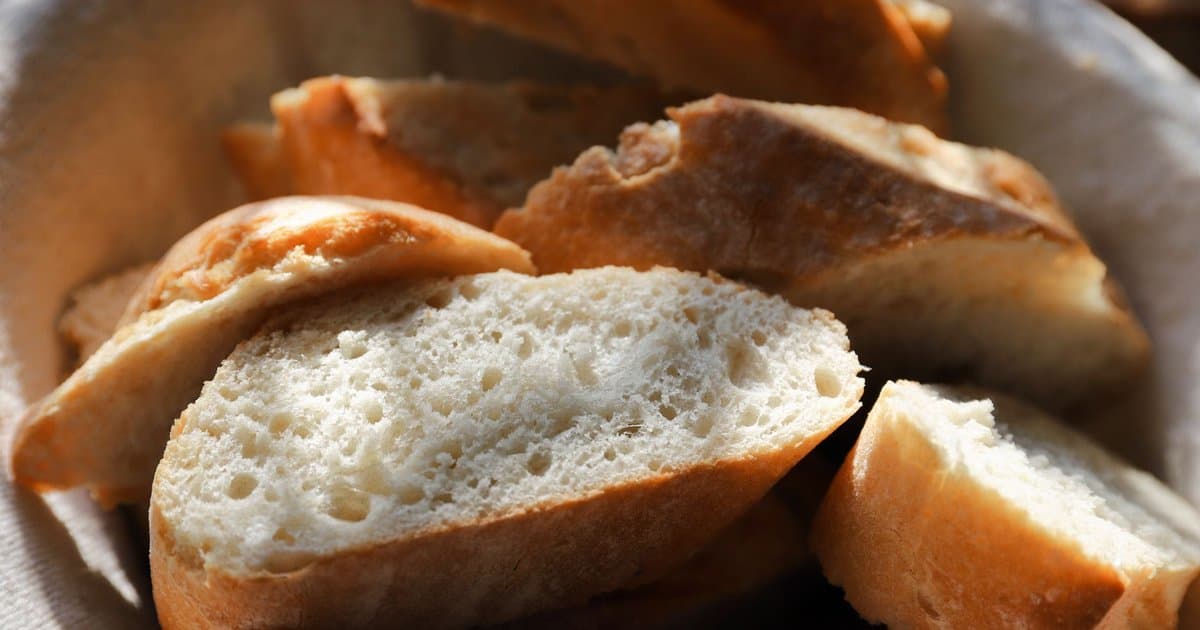
The culprit is a process called starch retrogradation, and the name sounds more complicated than the idea. When bread bakes, the starch granules swell and soften as they soak up water, which gives fresh bread its tender, springy bite. As the loaf cools and sits, those starch molecules slowly recrystallize, tightening back into firmer structures and squeezing out the water they were holding. That stiffening is what your mouth reads as stale. The bread has not really lost water to the air. It has locked that water away where you can no longer taste it as softness.
Here is the part that flips your instinct. Retrogradation does not happen fastest at room temperature or in the freezer. It happens fastest at cool refrigerator temperatures, right around where your fridge sits. Cold, above freezing, is the sweet spot for starch to recrystallize quickly. So the fridge is not a neutral holding place for bread. It is closer to an accelerator, speeding up the exact process that makes a loaf go firm and dry. That is why a sandwich loaf can feel days older after a single cold night than it would have on the counter.
The freezer, oddly, is the better cold option, and this trips people up. When bread freezes, the water inside turns solid so fast that the starch never gets the chance to recrystallize. The staling process essentially pauses. That is why a loaf can sit in the freezer for weeks and come out close to fresh once it thaws, while the fridge would have wrecked it in two days. If you buy more bread than you can finish, slice it first and freeze it in a sealed bag. You can pull out what you need and toast it straight from frozen.
There is also a reason toasting revives a stale slice, and it ties directly back to the science. Heat can partly reverse retrogradation by melting those recrystallized starch structures and loosening them again. Warm a stale slice in a toaster or a low oven and it softens up, at least for a little while. The effect does not last, since the starch simply recrystallizes again as it cools, but it buys you one good round. This is why day-old bread makes excellent toast even when it is disappointing plain. The heat is briefly undoing the very thing the cold sped up.
So the honest answer to what to do is simpler than the chemistry. Keep bread you will finish within a few days at room temperature, sealed against the air in a bag or a bread box. Skip the fridge entirely, because it delivers the worst of both worlds, firm bread that still grows old. For anything you cannot eat quickly, go straight to the freezer and lock the freshness in place. Understanding what is actually happening turns a small daily annoyance into a habit that saves food and money. The bread was never asking for cold. It was asking to be left alone or frozen solid.