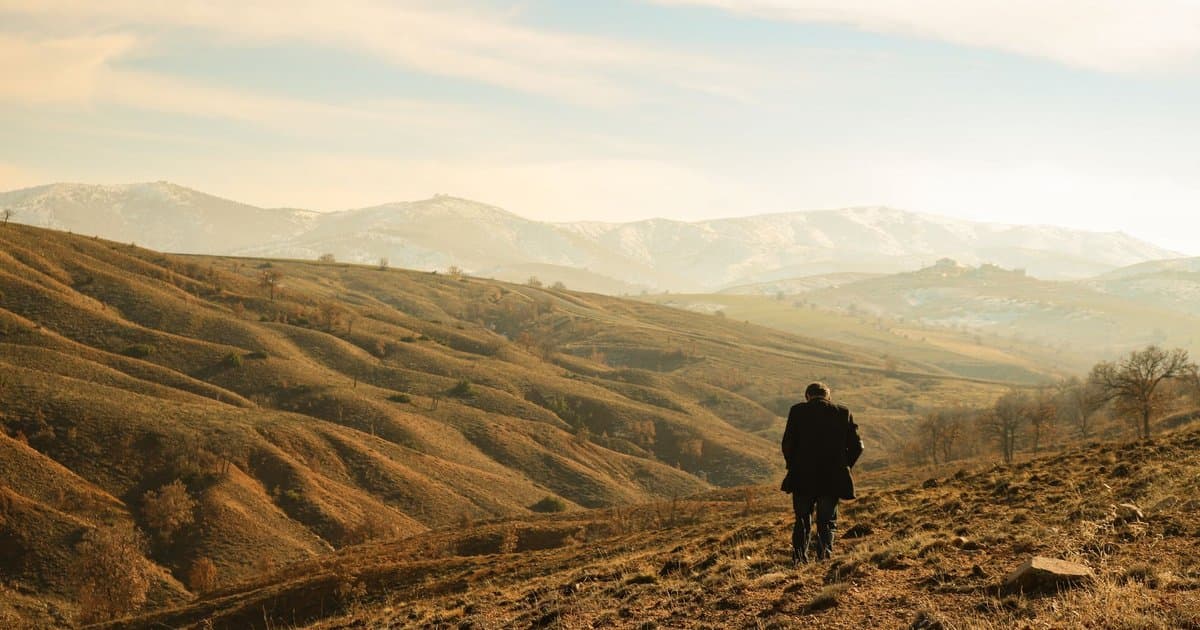
If you read the Gospels looking for a pattern, one shows up fast. Right when the crowds get largest and the demands get loudest, Jesus disappears. Mark says it plainly, that very early in the morning, while it was still dark, he got up, left the house, and went off to a solitary place to pray. Luke notes that he often withdrew to lonely places. This was not a one-time retreat after a hard week. It was a rhythm, repeated again and again, woven into the busiest stretch of his public life. The man with the most reason to keep working chose instead to keep stepping away.
That choice cuts against almost everything we are taught about productivity. We treat solitude as a luxury, something you earn after the real work is done, if there is time left over. We fill every gap with noise, a screen, a podcast, a quick scroll, because silence feels like waste. The Gospels point in the opposite direction. The withdrawing was not a break from the work. It was the source of it. Before the big decisions, before choosing the twelve, before the hardest hours, the pattern was the same. He got alone with the Father first, and the action came out of that.
There is a reason solitude does this kind of work in a person. When you are surrounded by people, you absorb their expectations, their urgency, their opinions about who you should be. Some of that is good and some of it is noise, but all of it is loud, and it crowds out the quieter voice you actually need to hear. Stepping away does not make you selfish or cold. It clears the channel. It lets you remember who you are before the demands rename you. For Jesus, that meant staying anchored in his identity as the Son even as the crowds tried to make him into something they wanted instead.
This is harder now than it has ever been. The phone in your pocket is built to make sure you are never truly alone with your thoughts. Every quiet moment has an off-ramp into distraction, and we take it almost without noticing. So if solitude is going to happen, it has to be chosen on purpose, the same way Jesus chose it before dawn while the house was still asleep. That might mean a walk without earbuds, ten minutes in the car before you go inside, or the first part of the morning before anyone needs you. The form matters less than the decision to actually be alone, with no input but prayer.
What you find in that space is rarely dramatic. There is no guarantee of a feeling, a sign, or a sudden clarity. Often it is just quiet, and your own restless mind learning to settle. But over time the practice does something. It builds a center that the noise of the day cannot move. People who pray alone consistently tend to carry a steadiness into their relationships and their work that constant connection never produces. They are harder to rattle because their sense of who they are does not depend on the last thing someone said about them. That steadiness is the fruit of the hidden hours.
It also reframes what prayer is for. We often treat prayer as a list of requests, a way to hand God our problems and ask him to fix them. The solitude of Jesus suggests something deeper was happening in those early mornings. Prayer alone is less about getting answers and more about being formed, about letting your wants get reordered until they line up with something larger than your own agenda. That kind of formation cannot happen in a hurry or in a crowd. It needs time, repetition, and the quiet that lets you actually hear yourself think and pray. The withdrawing was not Jesus stepping away from his mission. It was him returning to the only place where the mission stayed clear.
So the question the Gospels put to us is simple and uncomfortable. If the one person who could have justified working without rest still kept slipping away to pray, what makes us think we can skip it? The withdrawing was not weakness or avoidance. It was strength being refilled at its source. Most of us do not need more input, more advice, or more noise. We need the thing we keep avoiding, which is to be still and alone long enough to hear something true. The invitation is older than every distraction we have built, and it still stands.