Granola has one of the strongest health reputations in the whole grocery store, and a lot of that reputation is not earned. It looks wholesome, with its oats and clusters and pictures of berries on the box, and it sits comfortably in the part of your brain that files it next to plain oatmeal and fresh fruit. So you pour a bowl, feel good about the choice, and head into your morning expecting it to carry you. Then by mid morning you are starving and a little foggy, reaching for whatever is closest, and you cannot figure out why a healthy breakfast left you running on empty. The answer is on the label, and once you see it, you cannot unsee it.
The first thing the label reveals is sugar, often a startling amount of it. Many popular granolas pack between ten and twenty grams of added sugar into a small serving, which can rival a bowl of frosted cereal you would never call healthy. The clusters that make granola so satisfying to crunch are usually held together with honey, syrup, or sugar, because that is what makes oats clump and turn golden. So the very texture that signals quality is often a sign of how much sweetener went in. You are not eating plain toasted oats. You are frequently eating oats glued together with the same stuff that makes candy work, dressed up in rustic packaging.
The second thing the label reveals is the serving size, which is where the real trick lives. Granola is dense and heavy, so the official serving is often a quarter cup or a third of a cup, an amount that looks almost stingy in a normal bowl. Almost nobody actually eats that little. A realistic bowl is two or three times the listed serving, which means the sugar, the calories, and the fat all multiply by the same factor. Suddenly your wholesome breakfast is carrying as many calories as a dessert, and you never felt like you overdid it because the box told you the portion was small. The number on the front of the package was technically true and practically useless.
The third issue is what that sugar does to your morning energy, and this is why you crash. A breakfast heavy in fast sugar sends your blood sugar up quickly, which feels great for about an hour. Your body responds by pulling that sugar out of your blood, and the drop that follows often overshoots, leaving you lower than where you started. That dip is the foggy, hungry, slightly cranky feeling that hits before lunch. So the granola does not actually fail to feed you. It feeds you in a spike and a crash, which is a worse pattern than a smaller breakfast that releases its energy slowly. The crunch felt substantial, but the staying power was never there.
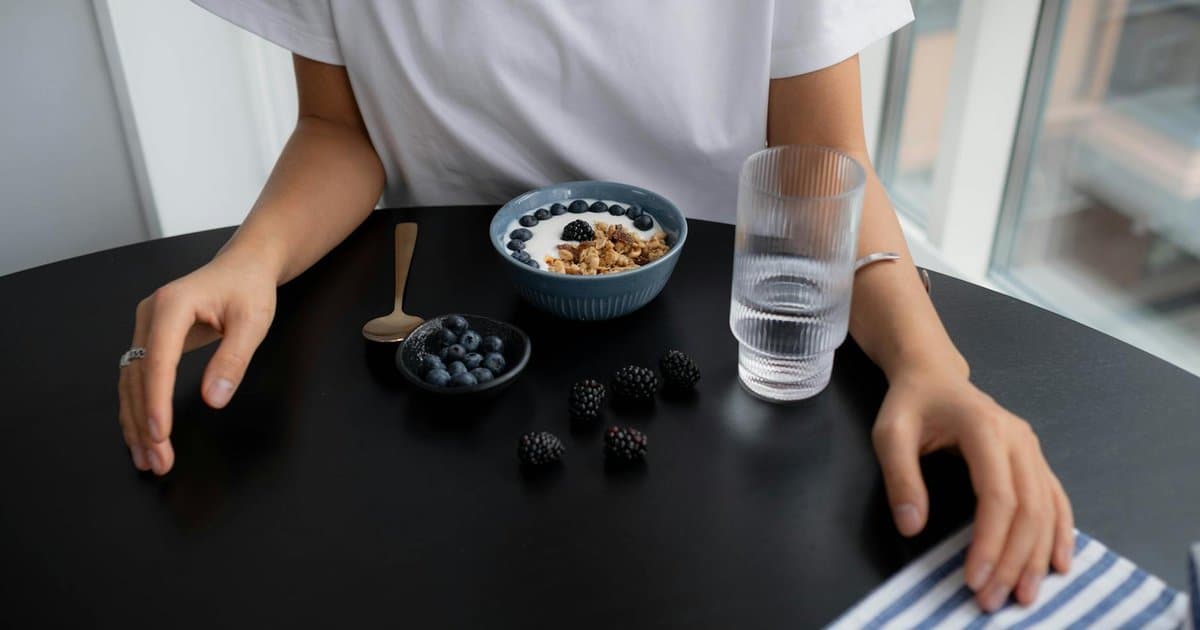
None of this means granola is the enemy or that you have to give it up. It means you have to read it like the processed food it usually is rather than trusting the health halo on the front. Turn the box around and look at two things first, the grams of added sugar and the actual serving size. Aim for options with single digit added sugar, and be honest with yourself about how much you really pour. A good move is to use granola as a topping rather than the whole meal, a couple of spoonfuls of crunch on top of plain yogurt or oatmeal that brings real protein and fiber to the table. That way you get the texture you love without building your morning on a base of sweetener. You can also lean toward granolas where nuts and seeds sit near the top of the ingredient list, since those bring fat and protein that slow the sugar down and help you feel full. A handful of plain nuts or a spoon of seeds stirred into the bowl does the same job and costs far less than the premium box promising the world on the front.
The larger lesson reaches well beyond one cereal. A surprising amount of food earns a healthy reputation from its packaging, its placement, and a few buzzwords, while the label tells a different story underneath. Words like natural, wholesome, and made with oats are marketing, not nutrition, and they are designed to stop you from flipping the box over. The most useful habit you can build is a small one. Before you trust a food's reputation, read the ingredients and the real serving, and let the actual numbers decide. Do that with your granola and you may keep it, swap it, or simply eat less of it, but at least the choice will be yours instead of the box's. A breakfast that actually holds you until lunch is worth far more than one that looks the part and leaves you raiding the cabinet by ten. Once you start reading labels this way, the whole cereal aisle gets a lot easier to navigate.