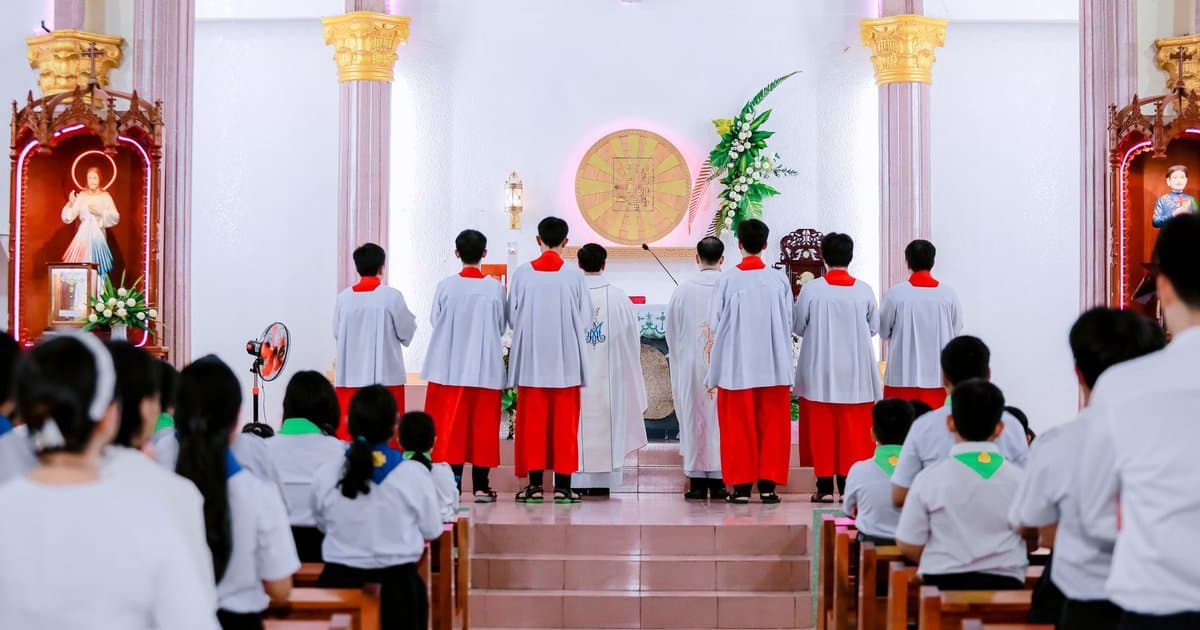
It usually does not happen as a decision. One week you are tired, the next there is a trip, and then watching online from the couch starts to feel like the same thing. The teaching is there, the music is there, and you can even pause it to refill your coffee. For a season that may be all you can manage, and there is grace in that. But months turn into a habit, and the habit quietly reshapes what faith feels like, because the parts of gathering you cannot stream are often the parts that were holding you up. It is worth naming what slips away before it is gone, since the loss is slow and easy to miss.
The first thing you lose is being known. A screen lets you receive without ever being seen, and that sounds restful until you realize no one there can tell when you are not okay. In a room, someone notices you came in heavy, asks a real question, and waits for the real answer. That kind of attention cannot be downloaded. Faith was never meant to be practiced alone in a way that no one can interrupt, because the people around you are part of how you are carried through the weeks you cannot carry yourself. When you stop gathering, you keep the information and lose the relationships, and the relationships were doing more work than you knew.
You also lose accountability, which is a word people flinch at but need. When others expect you, your week has a fixed point that pulls you back toward what you say you believe. Without it, drift has nothing to interrupt it, and drift is rarely dramatic. It looks like prayer thinning out, then conviction softening, then a slow forgetting of why any of it mattered. Showing up where people know your name and your story makes that drift harder, because they remember the version of you that you are tempted to quietly abandon. The structure is not legalism. It is a guardrail on a road that bends gently toward the ditch.
There is also the matter of giving, not money but presence. When you only consume a service, faith becomes one more thing produced for you to take in, like everything else on a screen. Gathering asks something of you, to greet the person you do not know, to help set up chairs, to sit with someone who is grieving. That giving is not a tax on your faith, it is part of how faith grows roots. People who only receive tend to become picky, rating the music and the message like critics, while people who serve tend to soften. The room turns you outward, and a screen, by design, keeps turning you back toward yourself.
Even the Scriptures assume gathering rather than argue for it. The early believers met together constantly, shared meals, carried each other's burdens, and the letters were written to be read aloud in a room full of people, not alone. Jesus himself, who could have done anything in private, built a small group he walked with daily and sent them out in pairs rather than alone. The pattern across the whole story is that faith is held in common, that we are meant to be members of one body and not just individual fans of the same teacher. To opt out of the gathering is to opt out of the design, and the design was for our good, not our burden.
None of this is meant to shame anyone kept home by illness, work, a new baby, or a season that genuinely allows nothing else. Online services are a real gift for exactly those people, and a real bridge back. The caution is for the rest of us, the ones who could go and slowly chose not to, who traded the room for the couch and told ourselves it was the same. It is not the same, and the difference shows up not on Sunday but on the hard Tuesday when you needed a people and realized you had quietly let them go. If that describes you, the way back is simple and a little uncomfortable. Pick one gathering, walk in, and let yourself be seen again.
If getting back feels heavy, make it small instead of perfect. You do not have to walk in transformed, fully rested, or sure of everything you believe. You only have to show up, sit down, and let the room do what a screen cannot. Find one person to learn by name, accept one invitation to coffee, say yes to one chance to help with something ordinary. The connection that carries you is built in these unremarkable moments, not in a single powerful service. Faith held in common is sturdier than faith held alone, and the way you rebuild it is the same way you let it slip, one quiet week at a time, only now in the other direction.