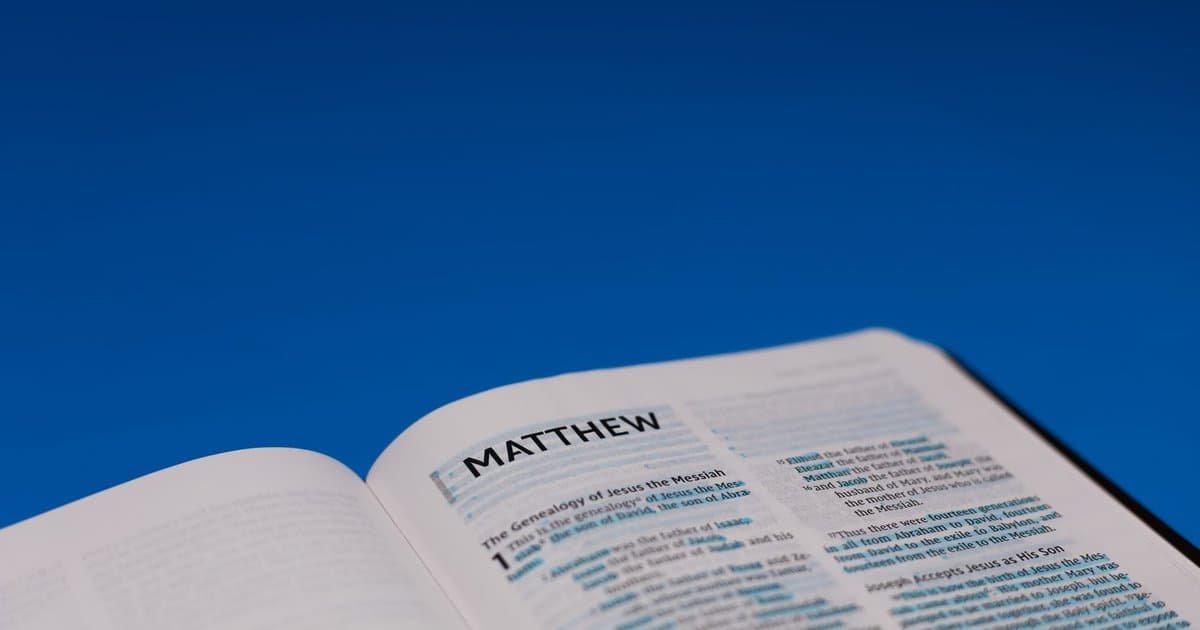
Open most Bibles and the Old Testament ends with the book of Malachi. Turn one page and the New Testament opens with Matthew and the birth of Jesus. It reads like a single step, one chapter to the next. But between those two pages sits a gap of roughly four hundred years. Whole empires rose and fell in that stretch. The world that Jesus was born into looked very different from the world Malachi knew, and the reason is what happened in those silent centuries. Most people read right over it without a second thought.
People call this stretch the silent years, or the intertestamental period. The name points to the fact that no book in the Protestant Old Testament covers it. After Malachi, the voice of the recognized prophets goes quiet in that tradition. For four centuries there is no new writing that made it into those pages. That does not mean nothing was written or nothing happened. It means the running story most readers follow simply pauses, then picks back up in a changed world. The silence is on the page, not in history.
When Malachi closed, the land of the Jews sat under Persian rule. That held for about a hundred years. Then a young Greek king named Alexander swept through and took the entire region in a few short years. His conquest spread the Greek language and Greek habits across the whole eastern world. After he died, his generals carved up his empire and fought over the pieces for generations. The Jewish homeland got caught in the middle, passed back and forth between rival kingdoms to the north and south. Ordinary people lived through wars they did not start.
One of those foreign kings tried to stamp out the Jewish faith by force. He banned their practices, defiled their temple, and pushed Greek worship in its place. That triggered a revolt led by a family later known as the Maccabees. The fight dragged on for years against a much larger empire. It was a small band standing up to a trained and seasoned army. In the end, the fighters won back the temple and cleaned it out for use again. That victory is the root of the festival of lights that Jews still keep today. For a while the people governed themselves again under their own rulers. It was the first taste of freedom they had known in centuries.
The freedom did not last. A new power was rising in the west, and it did not ask permission. Roman armies took the region and folded it into their growing empire. To manage the area, Rome propped up local kings who answered to them. One of those kings was Herod, the same ruler named at the start of the New Testament. So by the time the Gospels open, a Roman road system, a Roman army, and a Roman tax collector were all part of daily life. None of that existed when Malachi laid down his pen.
Language changed too, and that mattered more than it sounds. Because of Alexander, Greek became the common tongue of trade and travel across the region. During these years, Jewish scholars translated their scriptures into Greek for the first time. That translation let people who no longer spoke Hebrew read the old texts. It also became the version many early Christians would later quote. Copies of that Greek version traveled wherever the Greek language was spoken. By then, that was nearly everywhere across the region. So the groundwork for spreading a message widely was quietly laid long before there was a message to spread. The pieces were moving into place.
The religious world shifted as well. The Pharisees, the Sadducees, and other groups that fill the Gospels did not exist in Malachi's day. They took shape during these silent centuries as people argued over how to stay faithful under foreign rule. Synagogues, the local houses of gathering and teaching, spread during this time too. So did a deep hope for a coming deliverer who would set things right. By the time Jesus began to teach, the questions people asked him and the groups who challenged him were all products of those four hundred years. He stepped into a scene that had been set slowly, piece by piece.
None of this is hidden knowledge, but it rarely gets taught from the front of a room. That is a loss, because the gap explains so much. It shows why the New Testament world feels so different from the one before it. It answers where the Romans came from, why Greek shows up everywhere, and how the festival of lights ties in. Reading straight from Malachi to Matthew without knowing any of this is like walking into a film forty minutes late. The story still moves, but you miss why the room looks the way it does. The silent years were never really silent. They were just left off the page.