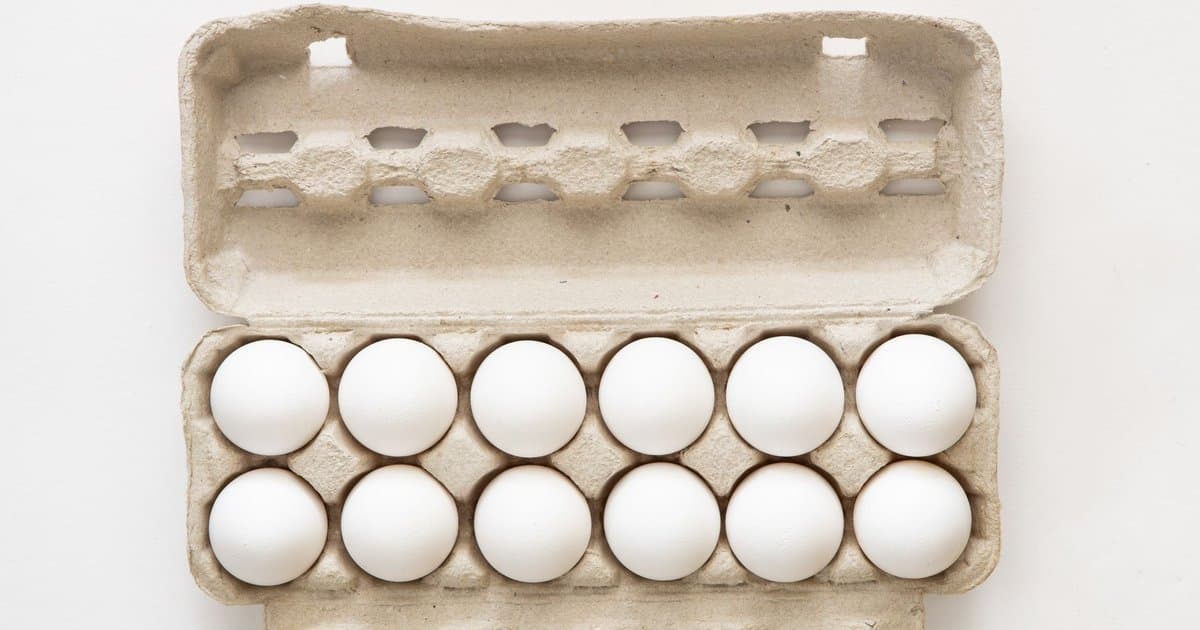
Most people read the date on an egg carton the same way they read a tombstone. Past this day, the eggs are dead, into the trash they go. That reading throws away a staggering amount of perfectly good food, because the date on the carton is not what almost anyone assumes it to be. The sell-by or best-by date is a marker for the store and a quality suggestion for you, not a safety cliff. Eggs do not suddenly turn dangerous the morning after that date passes. Understanding what the carton is really telling you can save you money and spare you from tossing food that was still fine.
The number to actually pay attention to is one most people never notice. Printed somewhere on the carton, often near the date, is a three digit code between 001 and 365. That is the Julian date, and it tells you the exact day of the year the eggs were packed. The code 001 means January first, and 365 means the last day of December, with every day in between counting up in order. This is the honest piece of information on the package, because it tells you how fresh the eggs truly were when they reached the shelf, not just when the store should pull them. Once you learn to spot it, you will never look at a carton the same way, and you can choose the freshest cartons in the cooler by simply comparing codes.
Properly refrigerated eggs stay good for a long stretch past the printed date, often several weeks past it. The reason is that the shell and the membranes inside are a remarkably effective barrier against the things that cause spoilage, as long as the eggs stay cold and consistent. Temperature is the real variable, not the calendar. Eggs left out on the counter age many times faster than eggs kept steadily cold, which is why the recommendation is to keep them in the main body of the refrigerator rather than the door, where the temperature swings every time someone reaches for the milk. Treat the cold chain as the thing that matters, and the printed date shrinks in importance.
When you do want to check an individual egg, there is a simple test that beats any date stamp. Fill a bowl with cool water and gently lower the egg in. A fresh egg sinks and lies flat on its side, because the air pocket inside is still small. As an egg ages, that air pocket slowly grows, so an older but still usable egg will sink but stand upright on one end. An egg that floats to the surface has a large enough air pocket that it is best to let it go. The float test works because it measures the actual condition of the egg in front of you, not a guess printed weeks ago by a machine that never met your refrigerator.
There is a smell check that is even more direct, and it has never failed anyone. Crack the questionable egg into a separate bowl rather than straight into your pan, and give it a sniff. A good egg smells like almost nothing. A spoiled egg announces itself instantly with a sharp sulfur smell that you will not second guess, and that is your clear signal to throw it out and wash the bowl. Cracking into a separate bowl first is a small habit that protects the rest of your ingredients, because one bad egg discovered in the bowl is a minor annoyance, while one discovered after it joins your batter ruins everything it touched. This matters most when you are baking with several eggs at once. Adding them one at a time through a separate bowl means a single bad egg costs you nothing, while cracking all of them straight into the mix puts your whole recipe at the mercy of the weakest one. The extra few seconds are some of the cheapest insurance in any kitchen.
The bigger lesson reaches past eggs. A huge share of household food waste comes from misreading the dates on packages as hard safety deadlines when most of them are quality estimates the manufacturer chose conservatively. Learning the difference between a true safety date and a suggestion is one of the most practical money skills in any kitchen. With eggs specifically, the Julian pack date tells you freshness, the printed date tells you the store's timeline, and a bowl of water plus your own nose tells you the truth about any single egg in question. Put those three together and you will stop throwing away food that was never spoiled, and you will trust your own judgment over a stamp that was never meant to be the final word.