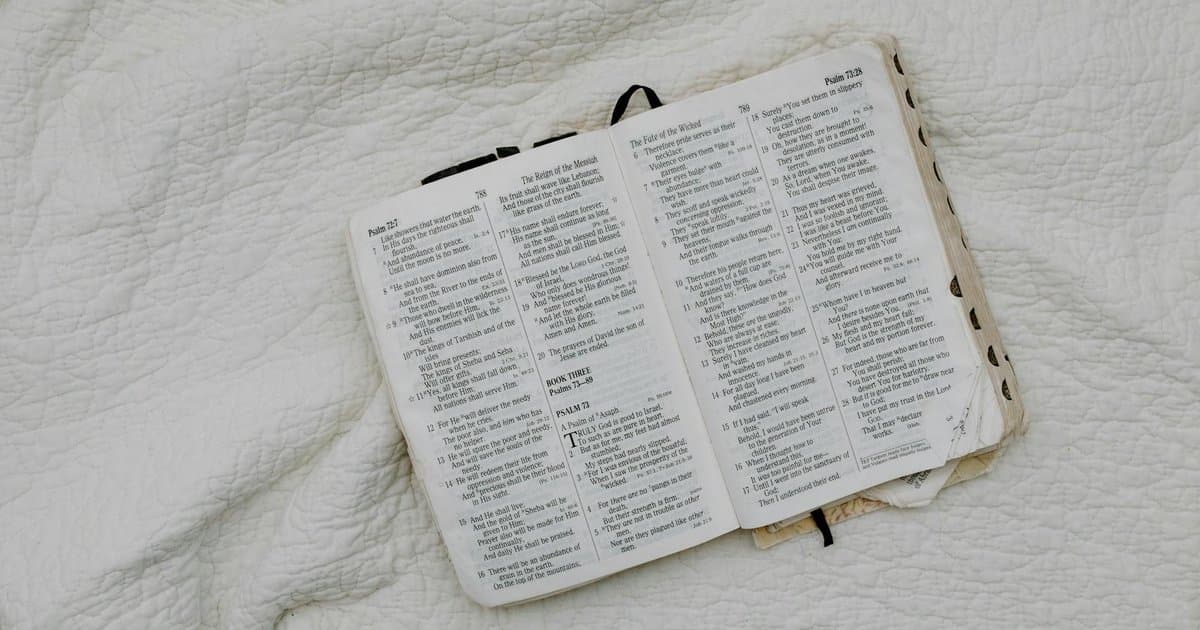
Most people who say they cannot pray are really saying they cannot find the words. They sit down to talk to God, run out of things to say in about thirty seconds, and conclude that something is wrong with their faith. Then they feel guilty, pray less, and the whole thing spirals. Here is the part nobody told them. There is a complete prayer book sitting in the middle of almost every Bible, written specifically to hand people the words they cannot find on their own. It is the book of Psalms, and for thousands of years it was exactly that, the prayer book and hymnal of an entire people. Somewhere along the way we started treating it as poetry to admire rather than prayers to pray, and we lost something in the trade.
The genius of the Psalms is that they cover the full range of what a human being actually feels. There are psalms of raw joy and there are psalms of bitter complaint. There are prayers written from the bottom of a pit and prayers shouted from a mountaintop. When you do not know how to pray because you are angry, there is a psalm for that, and it does not pretend you are calm. When you are grieving and cannot form a sentence, there are psalms that put words to the grief without rushing you past it. The Psalms refuse to make you fake a mood you are not in. They give you honest language for wherever you already are, which is the opposite of the polished performance many people think prayer requires.
This solves a problem that trips up a lot of believers, especially the ones who are honest about their inner life. Modern prayer often depends on feeling something first. You wait until you are in the mood, until the words come naturally, until you feel close to God, and then you pray. The trouble is that feelings are unreliable, and if you only pray when you feel like it, you will pray rarely and inconsistently. Praying the Psalms breaks that dependence. You can open to one and pray it out loud whether or not you feel anything, the way you might sing a song you know by heart. The words carry you. The feeling, when it comes, comes through the practice rather than before it.
There is also something steadying about praying words that millions of people have prayed before you. When you pray a psalm, you are not inventing private spirituality from scratch. You are joining a line that stretches back thousands of years and across every kind of circumstance, people in prison, people in palaces, people who were afraid and people who were grateful. The same words that gave them language are giving it to you. That connection takes the pressure off your own cleverness. You do not have to be original or eloquent. You just have to be honest enough to mean the words as you say them, and the words were built to be meant by ordinary people in ordinary trouble.
Starting is simpler than people expect, and overthinking it is the main thing that stops them. Pick one psalm and read it slowly, out loud, as if the words are your own prayer rather than someone else's poem. Some people work through a few each morning. Others keep one short psalm and return to it whenever words run dry. The shorter ones are a fine place to begin, and the well known ones are well known for a reason, because they have carried people through hard seasons for generations. When a line stops you, stay on it. Pray that single line a few times before moving on. You are not trying to finish the chapter. You are trying to pray, and the chapter is helping you do it. There is no wrong pace and no required posture, despite what the guilt may tell you. Some mornings you will pray through three psalms and other mornings you will barely finish one, and both of those count. The measure is not how much ground you cover but whether you actually mean the words as you say them. That standard is low enough for anyone to meet and high enough to matter.
What I want someone to hear, especially someone who has decided they are bad at prayer, is that the tool was always there. You did not need a better technique or a deeper feeling. You needed words, and the words have been printed in the middle of your Bible the whole time, waiting to be used the way they were meant to be used. Open to the Psalms the next time you sit down and cannot begin. Read one slowly. Let it say what you could not. The practice will outlast your moods, and over time it will quietly teach you how to pray on the days you thought you could not.