There is a piece of kitchen advice that gets repeated so often it feels like settled fact. The claim is that you should never cook with olive oil, especially extra virgin olive oil, because heating it destroys the oil and even makes it harmful. People point to its smoke point, warn you to save it for salads, and reach for other oils the moment a pan gets hot. It sounds careful and health conscious, which is why it spread so widely. The trouble is that the science behind it is thinner than the confidence behind it. When researchers actually test this, olive oil holds up far better than its reputation suggests.
To sort this out, it helps to know what a smoke point really is. The smoke point is the temperature at which an oil starts to visibly smoke in the pan. It became the go to number for judging cooking oils because it is easy to see and easy to measure. But smoke point turns out to be a weak predictor of how an oil behaves and how healthy it stays under heat. An oil can smoke and still remain fairly stable, and another oil can stay quiet while breaking down faster inside. Judging a cooking oil by its smoke point alone is a bit like judging a car by how loud the engine is.
What actually matters is something called oxidative stability, which is how well an oil resists breaking down when exposed to heat, air, and time. When an oil breaks down, it forms compounds that are genuinely not great to eat in quantity, and that is the real concern hiding under the myth. So the useful question is not which oil smokes first, but which oil resists breaking down the longest. This is where the common advice gets the answer backward. Extra virgin olive oil is one of the more stable cooking oils under normal heat, not one of the fragile ones. Its chemistry protects it in ways the smoke point number completely fails to capture.
Two features make olive oil surprisingly tough in the pan. The first is that it is high in monounsaturated fat, which is more stable under heat than the polyunsaturated fat that dominates many seed oils. The second is that extra virgin olive oil is loaded with natural antioxidants and polyphenols, the same compounds that make it taste peppery and green. Those antioxidants act like bodyguards, absorbing damage and slowing the breakdown of the oil as it heats. Several studies that heated olive oil to normal cooking temperatures found it produced fewer harmful compounds than expected and held its structure well. The very things that make good olive oil expensive are the things that help it survive the stove.
None of this means olive oil is indestructible, and honesty matters here. If you push any oil to very high temperatures for a long time, it will eventually degrade, and olive oil is no exception. Deep frying at extreme heat for hours is genuinely hard on any oil, and there the conversation changes. But almost nobody cooks that way at home, where sauteing vegetables, roasting, and pan cooking sit well within olive oil's comfortable range. For everyday heat, the oil is not sitting on the edge of danger, it is doing fine. The myth takes a real but narrow limit and stretches it into a rule that does not fit how people actually cook.
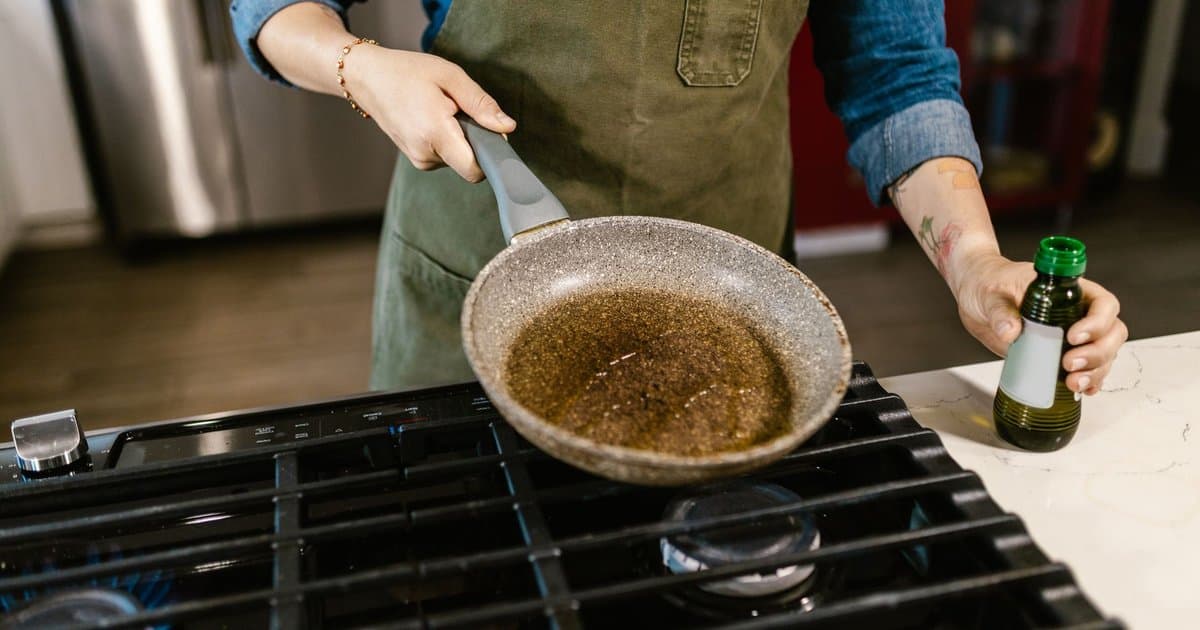
So here is how to think about it at the stove. For most home cooking, from eggs to roasted vegetables to a quick sear, olive oil is a perfectly good and stable choice. If you want the strong flavor and the most antioxidants, use a good extra virgin oil, and accept that very high heat will mellow some of its taste. Save the truly high heat, long duration frying for an oil built for that specific job if you do it often. Store your oil away from light and heat, since a rancid oil that went bad in the cupboard is a bigger problem than one that got warm in a pan. Buy oil you will actually use before it ages, because freshness matters more than the smoke point ever did.
The lesson here reaches past olive oil. A tidy number like a smoke point feels scientific, so it spreads fast and hardens into a rule nobody questions. The fuller picture, oxidative stability and antioxidants and how people really cook, is less catchy and closer to the truth. Cooking with olive oil is not the mistake the internet made it out to be, and treating it as poison the moment it warms up was never supported by the evidence. Use the oil, enjoy the flavor, and keep your heat reasonable. The calm answer, as usual in the kitchen, turns out to be the correct one.