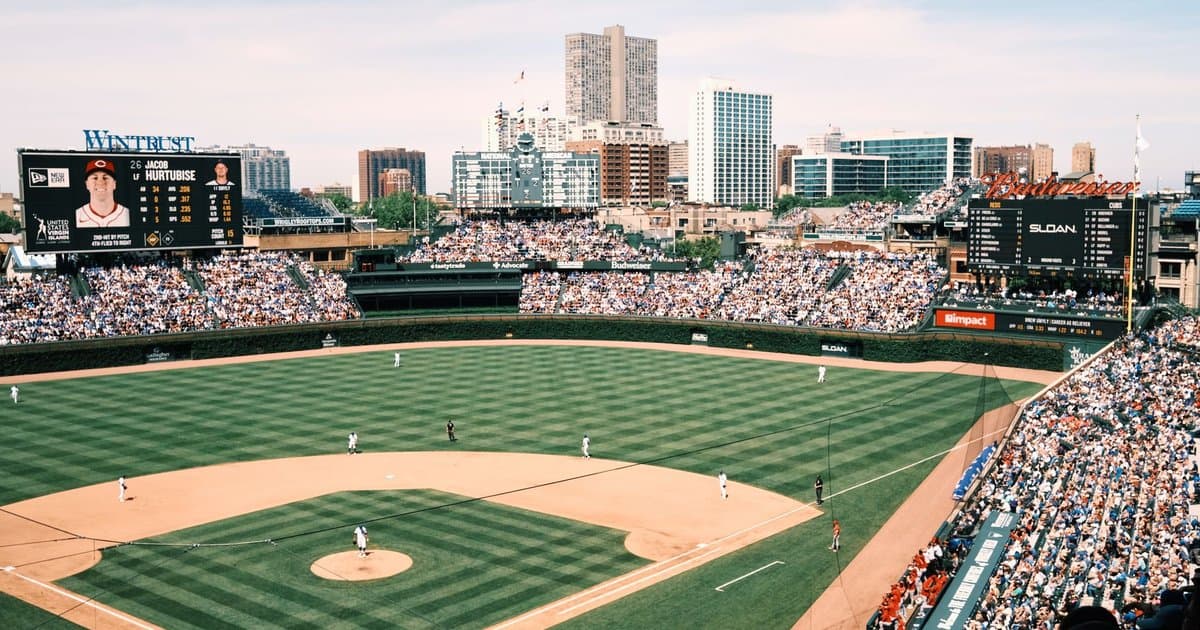
Watch a baseball game and the ball seems like a constant, one small white sphere at the center of every pitch. The truth is that no single ball lasts very long. A typical Major League game goes through somewhere between 90 and 120 baseballs. Over nine innings, that is a steady stream of fresh balls entering play and used ones heading for the bin. Most fans never count them, because the swaps happen fast and quietly. Once you know the number, the game looks a little different.
The biggest reason for the count is a simple rule about dirt. The moment a ball touches the ground in the infield, an umpire usually pulls it from play. A grounder, a bunt, a ball in the dirt on a wild pitch, all of them get tossed aside. A single at bat can burn through several balls this way. Dirt and scuffs change how a ball moves and how well a batter can see it, so the umpire keeps swapping in clean ones. That habit alone accounts for a big share of the pile.
Dirt is only part of it. Every foul ball into the stands is gone for good, kept by a happy fan and never returned. Home runs leave the park the same way, sailing over the wall and into someone's hands. Balls get scuffed, scratched, or knocked out of shape and are pulled before they can give anyone an edge. Pitchers are picky too, and will ask for a new ball if the one in their hand does not feel right. Add all of these together and the balls disappear quickly. The game simply eats through them.
It helps to look at how briefly a single ball stays in the game. On average, a ball is in play for only a handful of pitches before it is retired. Some balls last one pitch, a foul that sails into the seats and never comes back. Others survive a bit longer before a grounder ends their day in the dirt. Very few make it through a full at bat, and almost none last an entire inning. The ball you see on one pitch is often not the ball you see on the next. It is a fast rotation hiding in plain sight.
This was not always how the game worked. For a long time, teams squeezed as many innings as they could out of one dirty, softening ball. That changed after a tragedy in 1920, when a player named Ray Chapman was hit in the head by a pitch he likely never saw. The ball was dark with dirt and hard to pick up against the afternoon sky. He died the next day, the only on field death in Major League history. In the wake of it, the league pushed clean, easy to see balls into play, and the habit stuck for good.
There is one more strange step before any ball is used. A brand new baseball comes from the factory slick and shiny, which makes it hard to grip. So before every game, someone rubs each ball by hand with a special mud. The mud comes from a single secret spot along a river in New Jersey and has been used for generations. It takes the slippery shine off the surface without staining the leather or changing the color. Only after that rubdown is a ball considered ready for a pitcher to throw.
Now stretch that per game number across a whole season. With a couple thousand games played each year, and roughly a hundred balls used in each one, the totals climb into the hundreds of thousands. Add spring training, batting practice, and the minor leagues, and the figure grows far larger. Balls that never touch a real game still get used up in warmups and drills. It is a quiet, constant supply chain running underneath the sport. Most of it happens in places the cameras never bother to show.
None of this shows up in the box score, yet it shapes the game you watch. The clean ball is part of why modern hitters see the pitch so well and why the sport feels crisp. What looks like one unchanging object is really a steady parade of many. The next time a foul ball lands a few rows over, remember that it was probably headed for the bin anyway. That one is a keeper now, a souvenir instead of trash. And somewhere in the dugout, another clean ball is already waiting its turn.