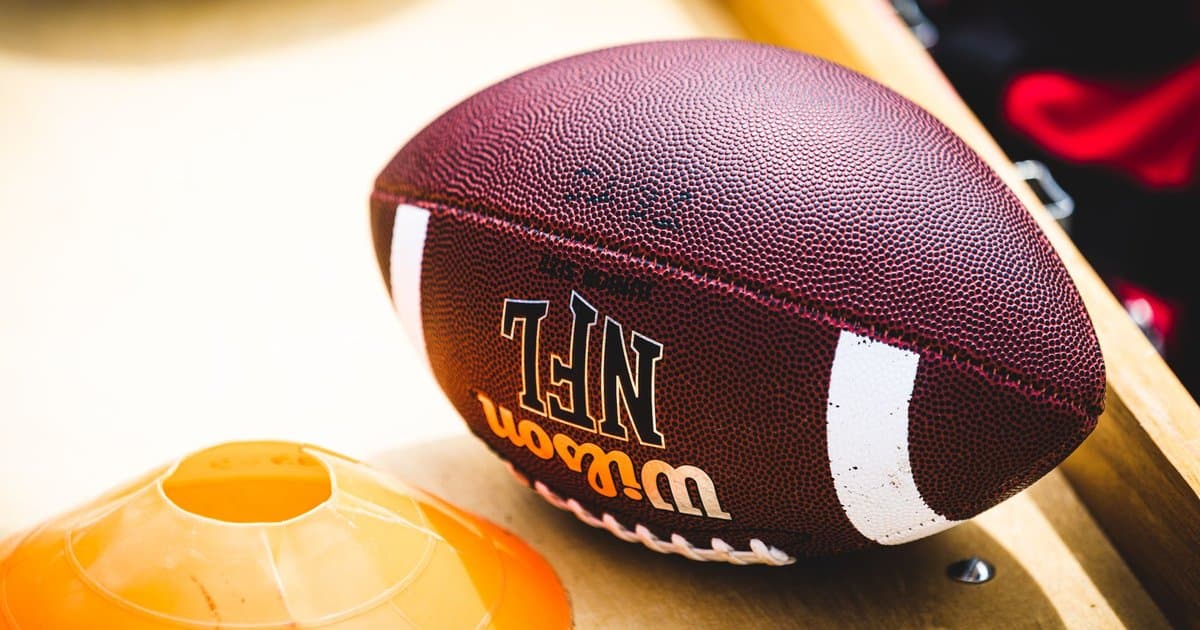
A football broadcast runs about three hours and ten minutes. The game clock says sixty minutes. The amount of time the ball is actually in play, moving, with players running, is roughly eleven minutes. That figure comes from a Wall Street Journal review of four telecasts published in 2010, and researchers looking at the question separately have landed in the same range. It is not a new finding either. Scientific American ran a similar count back in 1930 and reached a similar conclusion about how little of a football game is football.
The rest of the time goes somewhere, and the breakdown is the interesting part. Commercials take about an hour of the broadcast window. Replays get more airtime than live action does, roughly fifty six percent more according to that same review. The largest single block, around seventy five minutes, is footage of players standing around. Huddles, walking to the line, waiting for the play clock, milling near the sideline. That is the majority of what you watch when you watch a football game.
The instinct is to treat this as an insult to the sport. It is not. The eleven minutes are only readable because of everything wrapped around them. A snap that lasts six seconds carries meaning because you watched the down and distance appear, saw the personnel package trot on, heard why the coverage matters, and remembered the drive that set it up. Strip out the pauses and you get eleven minutes of noise. The empty time is where the story gets built, which is why the sport works on television better than sports with continuous play.
That structure is also a business. Every stoppage is inventory. A timeout, an injury, a change of possession, the two minute warning, a coach's challenge under review. Each one is a slot that can be sold, and the broadcast schedule is built around making sure enough of those slots exist and land in the right places. The pace of the game and the pace of the ad load are not separate systems. They were designed together over decades, and the modern television deal assumes both.
Compare it to other sports and the contrast sharpens. A soccer match runs about ninety minutes with the ball in play for somewhere near sixty of them, and the broadcast has almost nowhere to put a commercial except halftime. Basketball keeps continuous motion for long stretches. Baseball has more dead time than football fans like to admit, which is exactly why the sport added a pitch clock. Football is unusual not because it has pauses but because it monetized the pauses better than anyone else did.
There is a viewing lesson buried in the number. If eleven minutes is the actual product, then a recorded game watched with a fast forward button is not a lesser experience. Many fans figured this out years ago and now start a game an hour late so they can skip straight through. You lose the live conversation and the risk of a spoiler, and you gain back most of an afternoon. The same math explains why highlight packages and condensed replays have grown so fast. They serve the eleven minutes directly.
Coaches and players experience the ratio differently. For them the standing around is work. It is the substitution call, the front recognition, the audible, the sideline adjustment between series. The eleven minutes of live ball are the output of hours of preparation compressed into short violent bursts, and the recovery time between snaps is part of why the sport can be played at that intensity at all. Take away the huddle and you do not get more football. You get slower, worse football played by exhausted people.
The broader point applies well outside sports. Most systems that look inefficient from the outside are carrying hidden work in the gaps. A meeting that produces one decision may have needed the forty minutes of context around it. A workout with real intent has rest built into it on purpose. A long negotiation may turn on ninety seconds of actual agreement. Counting only the visible output and calling the rest waste is a common mistake, and it usually leads people to cut the thing that made the output possible.
Still, the number is worth knowing. It tells you what you are actually buying when you give up a Sunday afternoon, and it explains why the sport is built the way it is. Eleven minutes of live ball, an hour of ads, and a whole lot of men standing in a field deciding what to do next. Fans who love the game love the whole package, not the eleven minutes alone. But it is fair to know the ratio before you set aside the afternoon.