Sit in the stands and the game looks like it is played with one ball. A pitcher throws, a catcher returns it, and the rhythm feels closed. The reality is that a big league clubhouse prepares somewhere near ten dozen balls before first pitch, and most nights the game uses close to all of them. Estimates from teams and from the league put the typical count between eighty and a hundred and twenty. That is a few hundred dollars of equipment vanishing every evening. Once you know why, the whole operation behind the sport starts to make more sense. It is one of those numbers that reframes a thing you thought you understood.
The main reason is that balls leave play constantly. Any ball hit into the stands is gone, and a normal game sends dozens of foul balls into the seats. Home runs leave. Balls that touch the dirt get swapped out, because a scuff changes how air moves over the surface and how a pitch breaks. Umpires pull balls at their own discretion, and pitchers ask for a new one whenever the feel is off. Catchers toss balls out after a ball in the dirt without a second thought. Nothing about this is unusual, and it happens all night long.
The lifespan of a single ball is shorter than most fans guess. League figures reported in recent years put the average life of a ball in play at roughly two pitches. Some balls last an inning. Many never survive a single at bat. A pitcher who has a specific feel in mind may reject three in a row before he finds one he likes. Multiply that habit across two starting pitchers, several relievers, and nine innings, and the count climbs fast. The bag of balls the umpire wears is refilled several times a game.
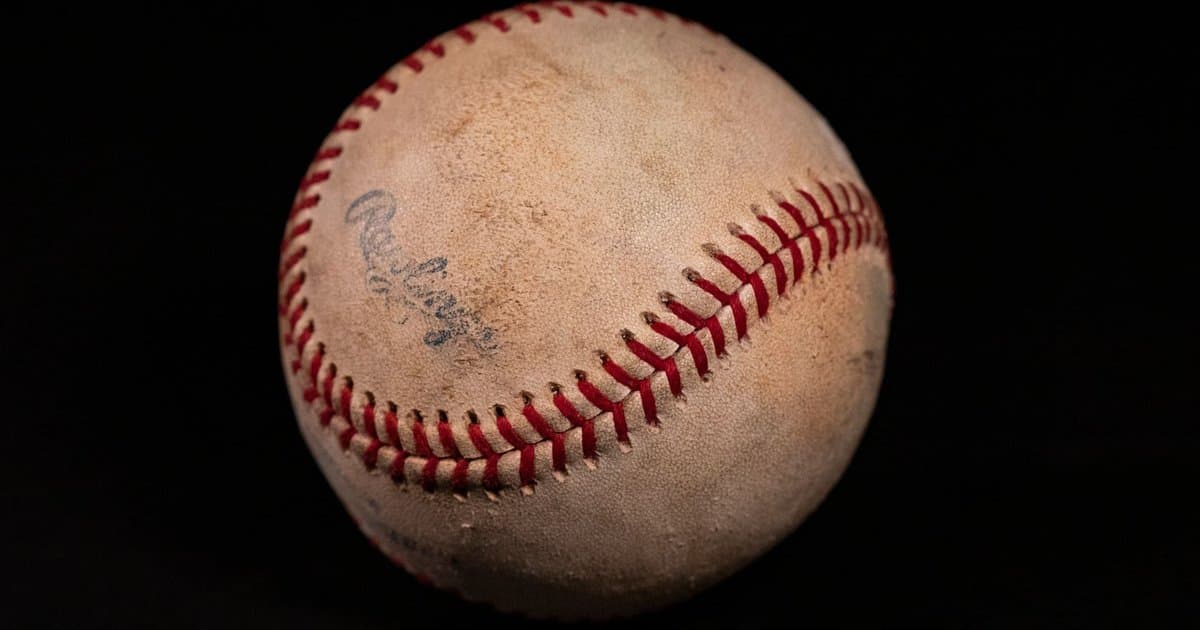
The balls themselves are made mostly by hand. Rawlings assembles them at a plant in Turrialba, Costa Rica, where workers stitch each one individually. Inside is a cork and rubber core called a pill, wrapped in yarn wound under tension by machine, then covered in two figure eight panels of cowhide. Every ball carries one hundred and eight double stitches in red waxed thread. A skilled stitcher takes several minutes per ball and can finish only a few dozen in a shift. The machine age never fully arrived for this one object, which is part of why it costs what it does.
Before any of those balls reach a pitcher, someone rubs mud on them. New baseballs come out of the box slick, and a slick ball is a dangerous ball. Since 1938 clubs have used Lena Blackburne Baseball Rubbing Mud, taken from a spot on a tributary of the Delaware River in New Jersey. The family that runs the business still guards the exact location and still collects the mud by hand. A clubhouse attendant works a small amount into each ball until the shine is gone and the leather grips. The league made the practice standard, so every ball in every park gets the same treatment.
Storage matters too. Humidity changes the weight and the bounce of a ball, so a park in a dry climate and a park on the coast were never playing with the same object. Teams in Colorado began storing balls in a humidor years ago to keep the ball from flying too far in thin air. The league later extended humidors to every ballpark so conditions would match. Umpires still inspect the game balls before they are put into play. It is a small piece of equipment management that quietly shapes scoring.
The balls that leave play do not all disappear. Many go to batting practice, where a scuffed ball is perfectly fine. Balls tied to a record, a debut, or a notable moment get pulled and tagged through the league's authentication program, which puts a numbered hologram on the ball in front of a witness. Some go to charity auctions and youth programs. The rest end up in a fan's hands, which is the reason a foul ball still causes a small riot in section 112. A piece of equipment becomes a souvenir the second it clears the railing.
Add it up and the cost is modest by the standards of the sport. A ball runs the clubs a few dollars each, so a night's supply lands in the hundreds. Against a payroll measured in millions, that is a rounding error. The number is still worth knowing because it shows how much invisible work sits under a simple game. Someone drove mud in from a riverbank, someone stitched leather by hand, and someone rubbed each ball down before anyone bought a ticket. Fans watch one ball at a time. The sport goes through them by the dozen.