The space inside your front door is the smallest room in your home and the one with the largest effect on how your days start. It is the last thing you touch on the way out and the first thing you face on the way in, which means it quietly shapes both your departure and your return. When that space is a pile of shoes, a tangle of cords, mail you have not opened, and a hook that lost its keys three weeks ago, every morning begins with friction. You spend two minutes hunting for the thing you need, you leave a little annoyed, and you carry that small stress into the rest of the day. Multiply that by every morning of the year and the cost stops being small. The entryway is not a decorating afterthought, it is a daily on-ramp, and most people let it work against them.
The reason this matters more than it seems is that mornings run on momentum, and friction kills momentum fast. The first ten minutes after you wake set a pace, and a smooth start makes the next decisions feel easier while a chaotic one makes everything feel heavier. When you cannot find your keys, your wallet, or the right jacket, you are not just losing time, you are spending mental energy on a problem that should not exist. That energy is finite, and every bit you burn searching for your shoes is energy not available for the work, the meeting, or the kids later. A cluttered entryway taxes you at the exact moment you have the least patience for it. That is why fixing it pays back more than the effort suggests.
The other hidden cost lands when you come home, and it is the one people overlook completely. Walking into a wall of clutter at the end of a long day tells your brain that the work is not over, that there is one more mess waiting for you. It is a small but real signal of disorder right at the threshold where you should be exhaling. Over time that signal builds a low hum of stress that you stop noticing but never stop feeling. A clear, calm entry does the opposite, telling you that you have arrived somewhere settled. The same three feet of space can either drain you twice a day or steady you twice a day.
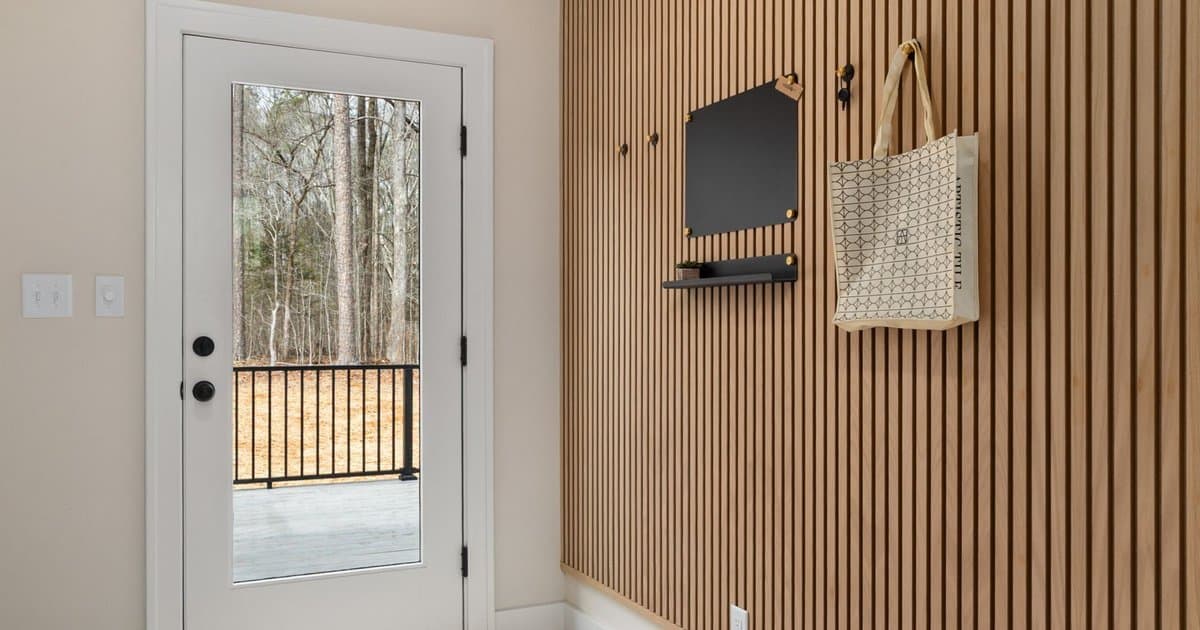
Fixing it does not require a renovation or a furniture budget, just a system that handles the handful of things you actually carry. Every functional entryway answers the same three questions: where do keys and small items go, where do bags and coats go, and where do shoes go. Give keys a single dedicated dish or hook so they land in the same place every time and never go missing again. Give bags and coats real hooks or a small rack instead of the back of a chair or the floor. Give shoes a defined zone, a tray or a low shelf, so they stop spreading across the walkway. The point is that nothing has to be decided in the moment, because everything already has a home.
The deeper principle is that you should design the space around the decisions you make most, not around how it looks in a catalog. You leave the house with the same few items almost every day, so the system only has to handle those well to transform your mornings. A landing spot for the daily carry, a place for the day's incoming mail so it never piles, and a clear floor are enough to remove most of the friction. Once those are in place, the space maintains itself because putting things away is now the path of least resistance. You are not fighting your own habits, you are building a track that your habits naturally follow. That is what makes the change stick instead of fading after a week.
The stakes here are not really about a tidy house, they are about how you feel at two of the most important moments of the day. The minutes when you leave shape your energy going out, and the minutes when you return shape your ability to actually rest. A space that works for you instead of against you gives you a calm exit and a calm landing, every single day, without you having to think about it. That compounds quietly into mornings that feel less rushed and evenings that feel more like home. Spend one afternoon setting it up and you buy back a small piece of peace every day after. Few changes that cheap pay off that consistently.