You have probably heard the creepy claim more than once. House dust, people say, is mostly made of dead human skin. It is the kind of fact that sticks because it is a little gross and easy to repeat. The image is hard to shake once you hear it. But like a lot of tidy facts, this one falls apart under a closer look. Dead skin is in your dust, yet it is nowhere near the whole story. The truth is both less disgusting and more interesting. It also happens to be far more useful once you know it.
Studies of household dust paint a much more mixed picture. Dead skin usually makes up something like twenty to fifty percent of the pile, not the huge majority people imagine. The rest is a jumble of very different things. You will find plant pollen, fabric fibers from clothes and furniture, and strands of human and pet hair. Add in soil tracked from outside, tiny bits of paper, and flakes of whatever the house is made from. There are even minerals and specks that drift in from far away. Dust is less a body and more a scrapbook of the whole room. Almost every surface in the house donates a little something to the pile.
A big share of dust does not even start inside your home. One study of houses found that a large portion of indoor dust was carried in from outdoors. Soil, pollen, and pollution ride inside on shoes, clothes, pets, and open windows. Roughly forty percent of the mix in that research traced back to outside sources. The other sixty percent came from indoor life, but that includes far more than skin. Cooking, fabrics, paper, and building wear all feed the pile. Your dust is part house and part neighborhood. What lands on your shelves is a mix of inside and outside life.
Why does any of this matter beyond winning a trivia point? Because what is actually in dust affects the air you breathe at home. Pollen and pet dander in the mix can set off allergies and irritate the lungs. Dust also collects heavier things you would rather not inhale, like traces of chemicals and metals. Some of those hitch a ride indoors on the same shoes that bring in soil. Knowing the real makeup helps you clean in ways that actually help. The dead skin myth, by contrast, tells you nothing useful. Cleaning blindly wastes effort you could spend where it counts.
The outdoor angle points to one of the simplest fixes there is. Since so much dust walks in on your feet, taking shoes off at the door cuts a real amount of it. A doormat at each entrance catches more before it ever spreads. These small habits do more than most people expect. They stop dust at the source instead of chasing it around later. A little friction at the threshold saves a lot of wiping inside. The door is your cheapest filter. Stopping dirt at the entrance beats fighting it in every room.
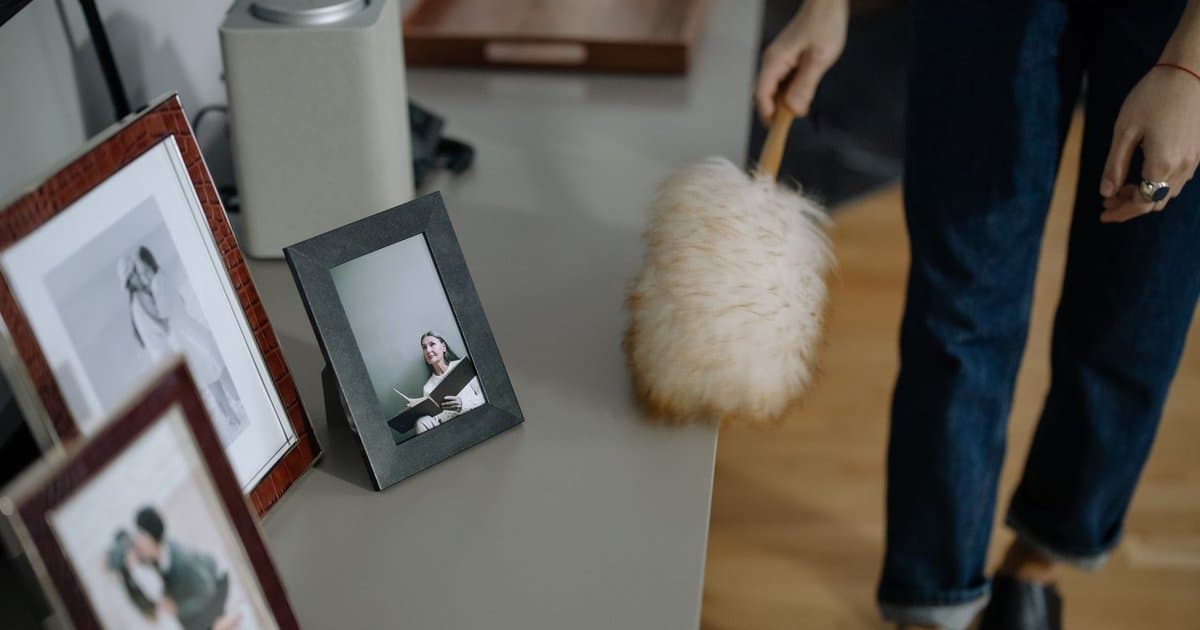
How you clean matters just as much as how often. A dry feather duster mostly lifts particles into the air and lets them resettle nearby. A damp cloth traps dust instead of scattering it, which actually removes it from the room. Vacuums with good filters pull fine particles out rather than blowing them back through the vents. Soft surfaces like rugs, curtains, and couches hold far more dust than hard ones. Cleaning those now and then makes a bigger difference than dusting a shelf again. Method beats effort when it comes to real dust. The right tools remove dust instead of just moving it around.
The myth probably lasts because it feels intuitive and a little shocking. We shed skin constantly, so it seems reasonable that it would pile up as dust. The shock value makes the claim fun to pass along at a dinner table. But intuition is a poor guide to something as complex as household dust. The real mix depends on where you live, the season, your floors, and whether you have pets. No single ingredient rules every home. A neat one line answer was never going to be right. Homes differ too much for one tidy claim to fit them all.
So the honest version is messier than the myth, and more useful too. Your dust is a record of your whole environment, indoors and out, skin and soil alike. That framing turns cleaning from a vague chore into a targeted one. Control what comes through the door, trap dust instead of stirring it, and hit the soft surfaces that hoard it. You will breathe easier and dust less often as a result. The dead skin story was memorable but mostly wrong. What replaces it is something you can actually act on.