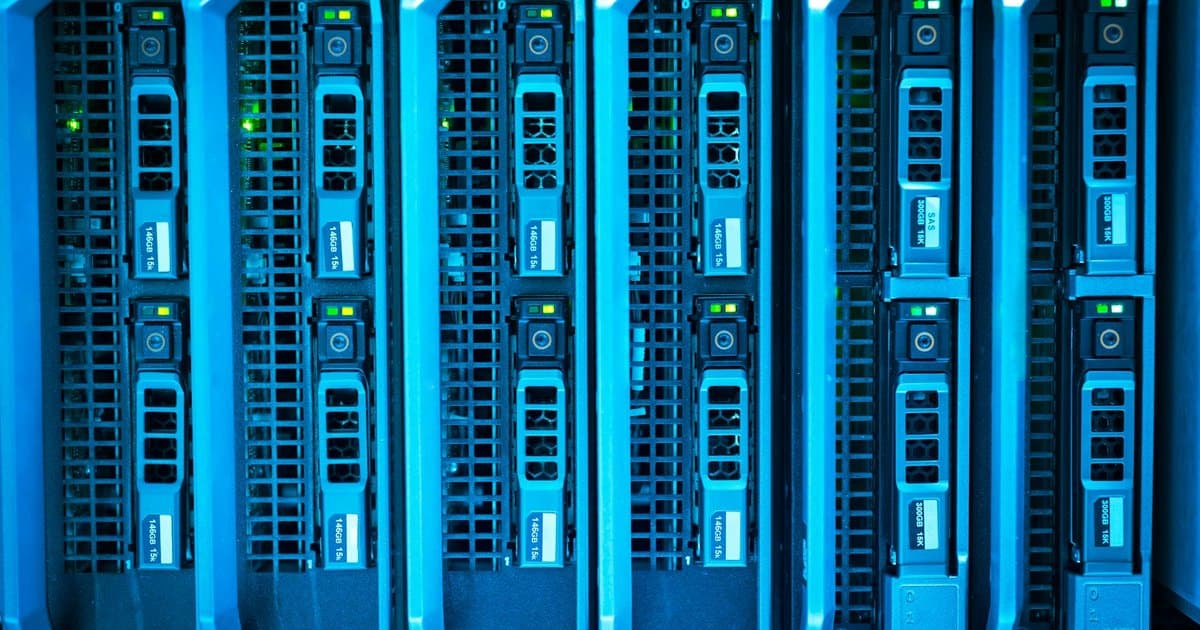
When you type a question into a chatbot and read the answer a second later, it feels like nothing happened. There is no fan spinning on your desk, no meter ticking up in your kitchen, no sign that anything physical took place at all. The work happened somewhere else, inside a building you will never see, filled with rows of servers that run hot enough to need constant cooling. That cooling is where the water comes in, and the numbers are larger than most people would guess. One widely cited estimate found that a single hundred-word response from a top model can use roughly 519 milliliters of water, which is about a standard bottle. Multiply that by the billions of prompts people send every day, and the small invisible cost stops being small.
The electricity side tells a similar story. Estimates for one chatbot query range from a fraction of a watt-hour to several watt-hours, depending on the model size, how long the answer is, and how efficient the hardware is. Older estimates put a typical query near 0.3 watt-hours, while newer and larger models have been measured closer to 18 watt-hours for a medium prompt. That is still a tiny amount compared to running your oven or your air conditioner. The problem is scale, not the single answer. When hundreds of millions of people lean on these tools all day, those tiny amounts stack into real demand on the power grid.
The water matters because data centers get hot, and heat is the enemy of electronics. Many facilities pull in fresh water, run it through cooling systems, and let some of it evaporate to carry the heat away. That water often comes from the same municipal supply that feeds homes and farms, which is why communities near large data centers have started asking hard questions. A facility built in a dry region competes with people and crops for a resource that was already tight. Some operators are switching to closed-loop systems and air cooling to cut the draw, but the older model of evaporative cooling is still common. The location of the building ends up mattering as much as the technology inside it.
Step back and the bigger picture comes into focus. Global data centers used an estimated 460 terawatt-hours of electricity in 2025, which is close to 1.8 percent of all the power the world consumed that year. The International Energy Agency projects that figure could pass 800 terawatt-hours by 2028 as more services build artificial intelligence into everything they offer. That growth is not theoretical. It shows up as new substations, new transmission lines, and new pressure on water systems in the towns that win or lose the bid to host these facilities. The convenience you feel is real, and so is the infrastructure underneath it.
None of this means you should feel guilty for using these tools. They solve real problems, save real time, and are not going away. What helps is understanding that digital does not mean weightless. Every answer has a physical footprint, even if you never see it, and the companies running these systems make choices every day about where to build and how to cool. As a user, the most honest thing you can do is stay informed and push for the operators in your area to report their water and energy use openly. Awareness is the first step toward accountability. The cost is hidden by design, but it does not have to stay that way.
It also helps to know that not every AI tool carries the same weight. A short factual query to a small, efficient model costs a fraction of what a long, creative request to a giant model does. The companies running these systems have strong reason to make them cheaper to operate, since power and water are real expenses on their balance sheets, so efficiency has been improving with each generation. Newer chips do more work per watt, and smarter software routes simple questions to lighter models. That progress is real, but it is racing against explosive growth in how often people reach for these tools. The footprint of any single answer is shrinking even as the footprint of the whole industry keeps climbing.
So the next time an answer appears on your screen in a blink, remember the building you cannot see. Picture the servers running hot, the water moving through the pipes, the power flowing in from the grid. None of that is a reason to stop using the technology, and it is not a call to panic. It is a reminder that the cloud is made of concrete, copper, and water, and that the things we call weightless almost never are. The more clearly we see that, the better the decisions we will make about how this technology grows.