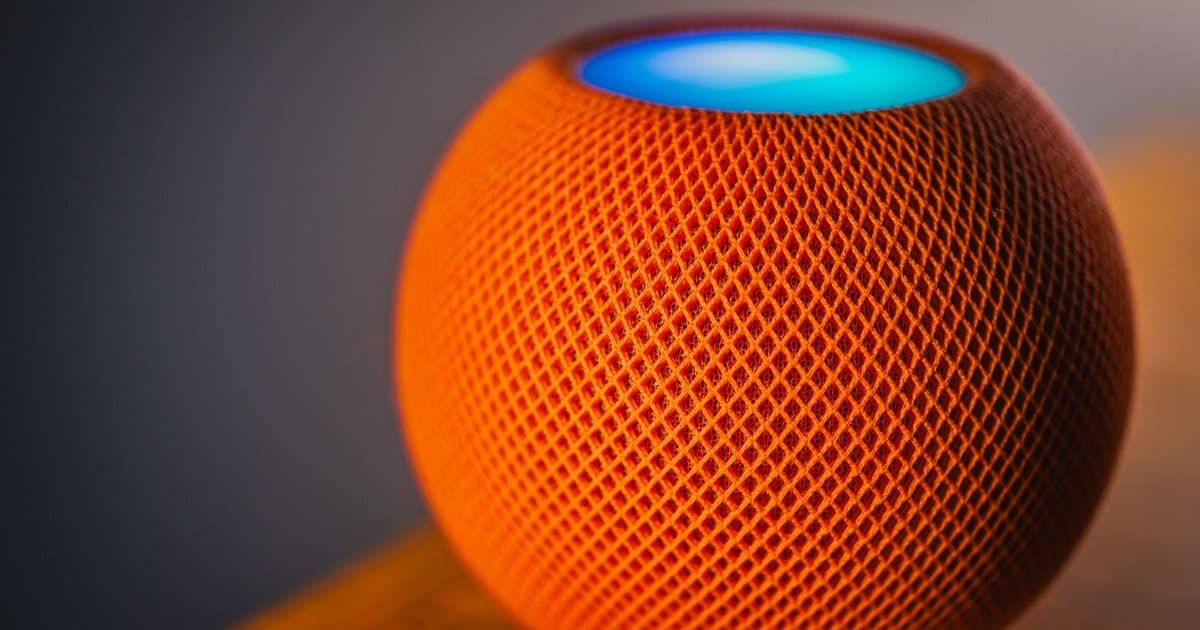
Almost everyone who owns a smart speaker has had the same quiet thought. You are talking about something random, a vacation or a pair of shoes, and later an ad for it shows up, and you glance at the little device on the counter. Is it listening to everything I say. The honest answer is more interesting than a simple yes or no. Your speaker is not secretly taping your whole life and shipping it off in the background. But what it actually records and stores is more than most people assume, and the gap between the two is worth understanding.
Here is how these devices really work. A smart speaker is always listening, but only in a narrow sense. Its microphone is on, and it is constantly processing sound right there on the device, listening for one thing, the wake word. That is the Alexa or the Hey Google that turns it on. Until it hears that specific phrase, the audio is handled locally in a short rolling buffer and is not sent anywhere. Think of it like a lifeguard scanning a pool, watching everything but only reacting when something specific happens. So in normal moments, your conversation is not leaving the room.
The moment changes when the wake word is detected. Once the device thinks it heard its name, it starts recording in earnest and sends that clip up to the company's servers to figure out what you wanted. That is how it can answer a question or set a timer. Here is the part people miss. That recording does not vanish once your request is handled. In many setups it is saved, tied to your account, and stored on company servers as a history of the things you have asked. Unless you have changed a setting, that log can stretch back for months or years.
Now the real catch, which is accidental triggers. Wake word detection is not perfect, and the device mishears its name more often than you would guess. A word on the television, a phrase in a conversation, or a sound that rhymes with the wake word can flip it on. When that happens, the speaker records a snippet of whatever you were saying and sends it off, even though you never meant to talk to it at all. Studies that tracked these devices found them waking up by mistake many times a day in a normal household. Those unintended clips get stored right alongside the ones you meant to create.
Then there is the detail that unsettled a lot of people when it came out. For years, the major companies used real human workers to listen to a sample of these voice recordings, in order to check the software and train it to understand speech better. That means a stranger, often a contractor, could have listened to a clip from your kitchen, including some of those accidental captures. The companies described this as a small and routine part of improving the product, and after public pushback they gave users clearer ways to opt out. But it confirmed that these recordings are not just numbers in a database. Sometimes a person is on the other end.
So why does a stored pile of voice clips matter. On its own, a request to play music is harmless. Over time, though, a detailed log of what you ask, when you are home, and what you are curious about becomes a rich profile that can feed advertising and guesses about your life. That history can also be pulled into a legal case, since recordings on a company server can be requested by courts. And anything stored in one place can be exposed if that company suffers a data breach. The risk is not that the device is spying on your every word. It is that the record it does keep adds up.
The good news is that you hold more control than you think. Every major platform lets you open your account, review the voice recordings it has saved, and delete them, and most now offer a setting to delete them automatically after a few months. You can usually turn off the option that lets humans review your clips, and you can shut off saving voice recordings altogether. The physical mute button on the speaker cuts the microphone entirely when you want a private conversation, and placement helps too, since a bedroom is a more sensitive spot than a hallway. Spend ten minutes in those settings once. It is the difference between a device that serves you and one that quietly keeps a diary you never agreed to.