Open most closets and you will find the same pattern. About a fifth of what hangs there does almost all the work. The rest sits untouched for months, tags on, still waiting for the right day. Surveys of shoppers keep landing near the same split, where roughly eighty percent of wear comes from twenty percent of the clothes. You already know this without the numbers. There is the shirt you reach for every week and the one you have worn twice since you bought it. The closet is full, and still the choice each morning comes down to a handful of pieces.
The useful way to think about clothes is cost per wear, not price on the tag. Take what a piece cost and divide it by the number of times you actually wear it. A forty dollar pair of jeans worn two hundred times costs twenty cents a wear. A hundred dollar jacket worn three times costs more than thirty dollars each time you put it on. Suddenly the cheap thing you wear constantly is the bargain, and the pricey thing you saved for is the waste. This one number changes how a purchase looks. It moves the question from can I afford this to will I really use this.
So why do closets fill with clothes people never wear? A lot of it comes down to buying for a life you imagine instead of the one you live. You picture the event, the trip, or the version of yourself who needs that outfit, and you buy for that picture. Sales make it worse, because a markdown feels like a win even when you had no plan for the item. Trends push in the same direction, since a piece that feels current in spring can feel dated by fall. Each buy makes sense alone, and together they crowd the closet with things that do not fit your actual days. The pile grows, and the small set you truly wear stays about the same size.
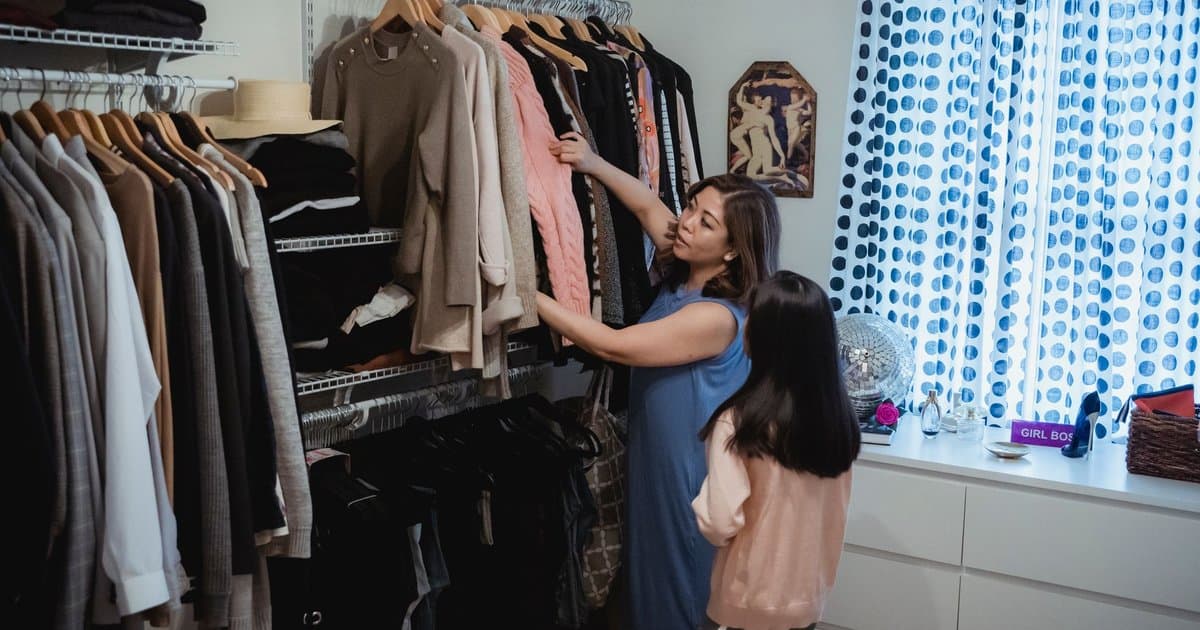
This is why a packed closet can still feel empty. When most of what you own does not match your real routine, having more options does not help. You scan a full rail and see very little that works for the day in front of you. More choices can make the decision harder, not easier, and the morning turns into a small daily stress. The clothes that do fit your life get worn thin while the rest just take up space. That feeling of having nothing to wear is not about quantity. It is about the gap between what you own and what your week actually calls for.
The way clothes are made and sold pushes the whole cycle faster. Low prices make it easy to buy on a whim, since no single item feels like a real cost. Stores now turn over styles in weeks, so there is always something new to pull you back. A ten dollar top is built to be bought fast and thrown out faster, not to last for years. That math works for the seller and against you, because the true cost shows up in a closet full of stuff you barely use. Cheap per item can be very expensive in total. Buying less but better is the boring answer, and it is also the one that saves money over time.
One response to all this is the capsule wardrobe, which is just a small set of pieces that work together. The idea is to own fewer things, in colors and cuts that mix, so most combinations make sense. When items share a palette, a handful of pieces can cover far more outfits than a closet twice the size. You stop buying orphans, which are the things that go with nothing you already own. Getting dressed gets faster because the choices are all good ones. It is less about strict rules and more about buying with the rest of your closet in mind. Fewer, better, and matched beats more, cheaper, and random almost every time.
You can test all of this on your own closet in an afternoon. Turn every hanger backward, and over the next few months turn it the normal way only after you wear the piece. What still hangs backward is your untouched eighty percent, laid out in plain sight. You do not have to purge in a rush, but the picture is hard to argue with. Before the next purchase, ask how many times you will really wear it and where it fits in what you own. If the honest answer is a few times a year, treat it as a want, not a staple. That one pause in the store is the whole game.
None of this is about owning less for its own sake. It is about spending on the clothes that carry your week and skipping the ones that only look good in a story you tell yourself. The small set you reach for is telling you what you actually like and need. Buy more in that direction and less everywhere else. Your closet gets lighter, your mornings get simpler, and your money goes toward things you use. The goal is not a perfect wardrobe. It is one where the twenty percent you love makes up more of what you own.