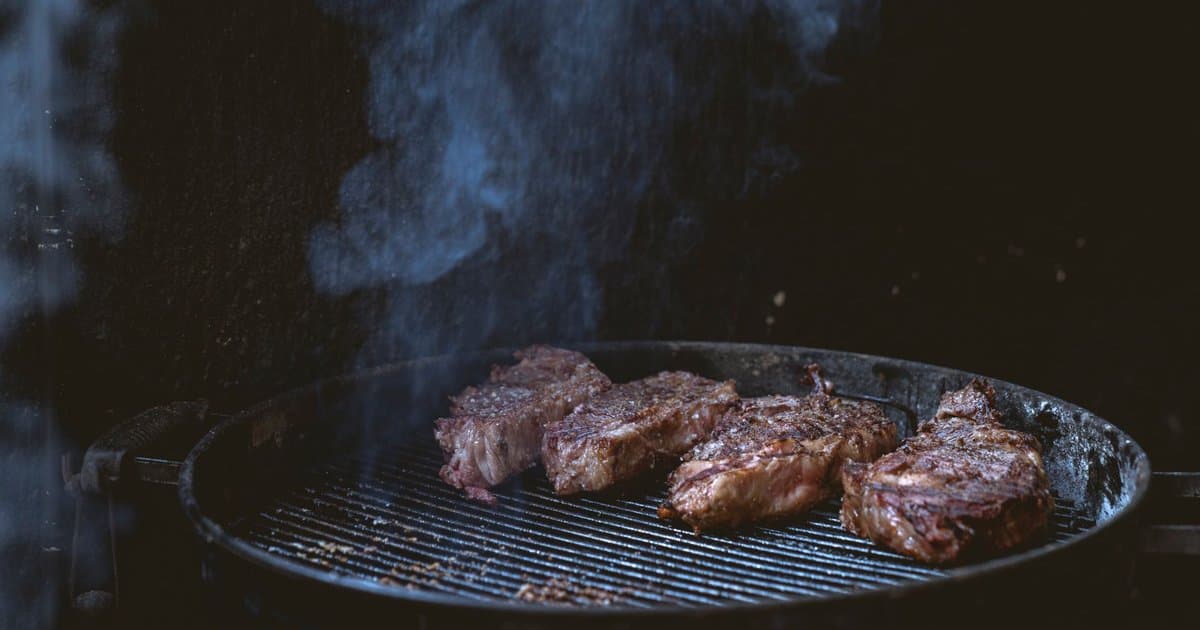
You buy a good cut, heat the pan, drop the steak in, and instead of a deep brown crust you get something gray and steamed looking. It tastes fine but it looks sad, like it never made contact with real heat. People blame the meat or the stove, and they are almost always wrong. The reason your steak comes out gray instead of seared is moisture, and once you understand how that works you can fix it every single time. The crust you want is a chemical reaction, and water is the thing standing in its way.
That brown crust has a name, the Maillard reaction, and it only happens when the surface of the meat gets hot enough and dry enough. The reaction needs temperatures well above the boiling point of water to really get going. Here is the problem. As long as there is liquid sitting on the surface of the steak, that surface cannot climb past the boiling point, because the energy from the pan goes into turning water to steam instead of browning the meat. You are not searing. You are boiling the outside of your steak in its own moisture. The gray color is the visible proof that the surface never got dry enough to brown.
The first culprit is a wet surface straight from the package. Steak holds surface moisture, and if you slap it into the pan still damp, you are guaranteeing a steam bath. The fix takes thirty seconds. Pat both sides hard with paper towels until the surface looks matte rather than shiny. For an even better result, salt the steak and leave it uncovered in the fridge for an hour or longer, which pulls moisture to the surface and lets it dry, leaving a tacky exterior that browns beautifully. Dry surface in, brown crust out. It really is most of the battle.
The second culprit is a pan that is not actually hot. People hear do not burn it and keep the heat too low, then wonder why nothing happens. A cool or even medium pan cannot deliver energy fast enough to outrun the moisture the meat keeps releasing, so you sit there steaming. The pan needs to be properly preheated before the steak ever touches it, hot enough that a drop of water skitters and vanishes. Cast iron and heavy stainless hold that heat far better than thin nonstop pans, which dump their temperature the second cold meat lands. If the pan sighs quietly instead of giving a loud sizzle, it was not ready.
The third culprit is crowding. This one catches people cooking for a family. You fit two or three steaks plus maybe some vegetables into one pan to save time, and you have just sabotaged all of them. Every piece of food releases moisture as it cooks, and a packed pan traps that steam with nowhere to go. The temperature crashes and the whole thing turns into a gray braise. Give each steak room, leave space around it, and cook in batches if you must. A crowded pan steams. An open pan sears. That space is not wasted, it is the entire point.
The fourth culprit is flipping too soon and too often. A crust needs uninterrupted contact to form, and if you keep lifting and turning the meat, you never let the surface stay put long enough to brown. Lay it down, leave it alone, and let it build color before you move it. It will release from the pan on its own when the crust is ready, and fighting to pry it up early is a sign it needs more time. Patience here is doing real work even though it looks like doing nothing. The steak is browning in the seconds you are tempted to fuss with it.
Put these together and the gray steak disappears for good. Dry the surface well, get the pan genuinely hot, give the meat space, and leave it alone long enough to color. A little fat with a high smoke point helps carry the heat into the surface and fills in any low spots on the meat. None of this requires a better cut or a fancier stove, just an understanding of what was actually going wrong. The crust was never out of reach. It was hiding behind a film of water you can wipe away in under a minute.