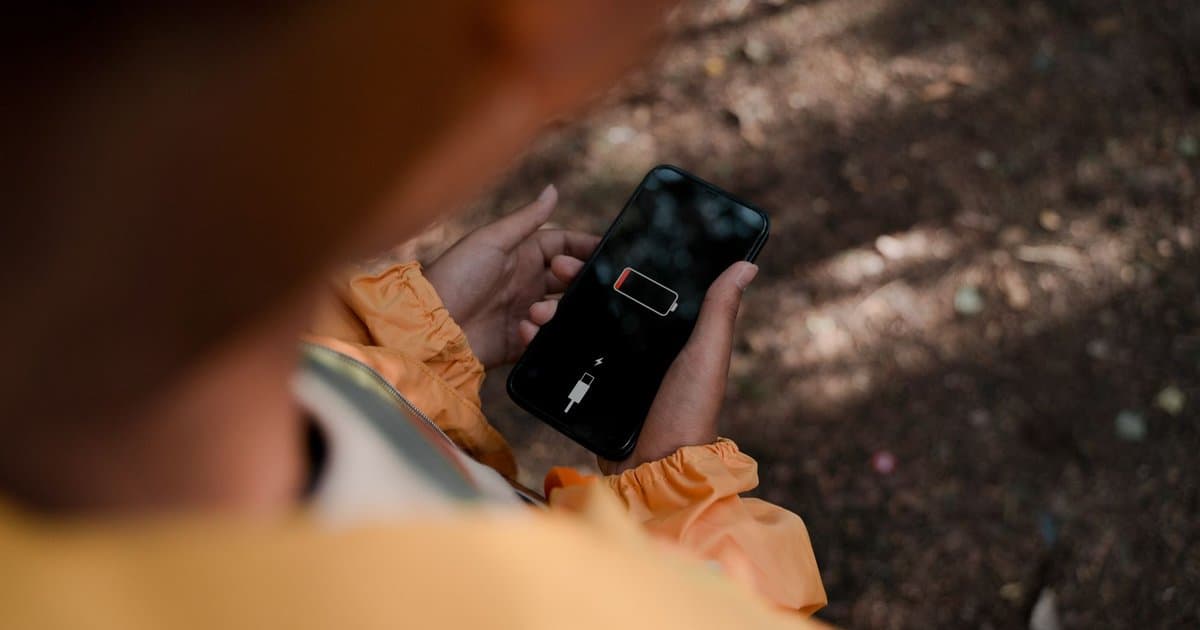
You step outside on a freezing morning, pull out your phone, and watch the battery jump from forty percent to a dead black screen in minutes. It feels like a malfunction, like the phone is broken or the battery is finally giving out. The truth is more reassuring and more interesting than that. Your phone is doing exactly what the laws of chemistry say it should do in the cold. Nothing is wrong with the device, and in most cases nothing permanent has happened. Understanding why turns a frustrating moment into a problem you can actually manage.
Every modern phone runs on a lithium ion battery, which works by moving charged particles between two ends of a cell through a liquid in the middle. That movement is a chemical reaction, and chemical reactions slow down when they get cold. When the temperature drops, the particles move more sluggishly and the internal resistance of the battery rises. The result is that the battery cannot deliver power as quickly as your phone is demanding it. The energy is still in there, it just cannot get out fast enough to keep up. So the phone reads the voltage drop, assumes it is nearly empty, and shuts down to protect itself.
This is why the drop often looks so dramatic and so sudden. The battery percentage your phone shows is an estimate, not a direct fuel gauge, and the cold throws that estimate off badly. Your phone guesses how much charge is left based partly on the voltage it sees, and cold weather pushes that voltage down even when plenty of energy remains. So the number can fall off a cliff, going from a comfortable figure straight to shutdown with almost no warning. The good news is that the missing charge usually was not lost at all. Bring the phone back into a warm room and the percentage frequently climbs back up on its own.
The temporary cold problem is harmless, but heat is where real damage happens. Lithium ion batteries hate sustained high temperatures far more than they hate the cold. Leaving a phone on a hot dashboard or charging it inside a thick case in a warm room ages the battery permanently. Each exposure to high heat shaves a little capacity off for good, which is why an old phone often holds less charge than it did when new. Cold slows a battery down today, but heat shortens its life forever. If you want a battery to last for years, protecting it from heat matters far more than protecting it from a chilly walk.
There are a few simple habits that make winter much easier on your phone. Keep the device in an inside pocket close to your body rather than an outer jacket pocket or a bag, since your body heat keeps it in a workable range. Avoid charging a phone that is still very cold, because charging a frozen battery can cause real harm, so let it warm up first. If a phone dies in the cold, do not panic and assume it is broken, just warm it gently and try again before charging. Resist the urge to warm it quickly with a heater or hot air, since a fast temperature swing is its own kind of stress. Small adjustments like these prevent almost all of the winter frustration.
This same chemistry shows up far beyond your phone. Electric car owners notice their driving range shrinks in winter for exactly the same reason, because the battery cannot deliver power as freely in the cold. Laptops, tablets, and even the tiny batteries inside wireless earbuds all follow the rule, slowing down when the temperature falls. Camera batteries are a well known headache for photographers shooting outdoors in winter, which is why many of them carry a spare warming in a pocket. The pattern stays consistent because the underlying technology is the same across nearly every device you own. Once you know the cause, the fix never changes, which is to keep the battery near body temperature whenever you can.
So the next time your phone quits on a cold morning, you can skip the panic entirely. The battery is not failing, the chemistry inside it is simply moving slower than the cold demands. The energy is still there, waiting for the temperature to climb back into a range where it can flow freely. Keep the device warm, treat it gently, and save your real worry for the summer heat that actually ages it. Most people have the seasons backward, fearing the cold morning while ignoring the hot car that does the lasting harm. A battery that spends its summers cool will outlast one that spends a single afternoon baking on a dashboard. A little understanding of what is happening inside the case goes a long way. Your phone is not betraying you in the cold, it is just obeying the same physics that governs everything else.