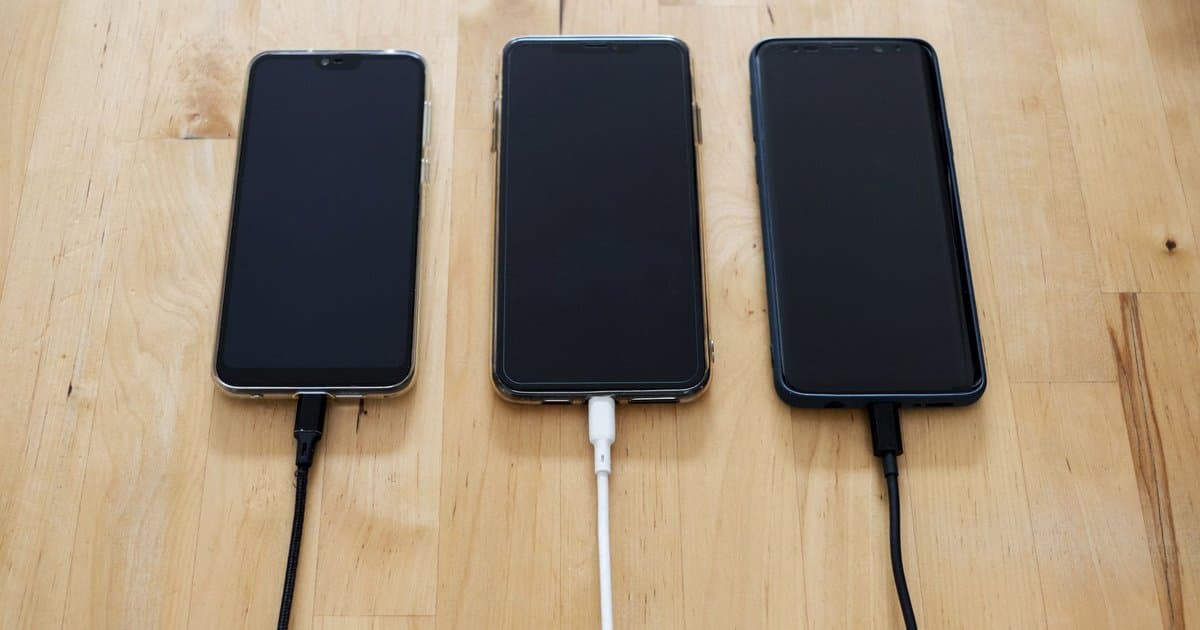
You plug in overnight, glance at the screen in the morning, and see it stalled at eighty percent instead of a full charge. Your first thought is that something is broken, or that the charger is failing, or that the phone is finally starting to die. None of that is happening. Your phone paused on purpose, and it did so to protect the one part of the device that quietly decides how many years you get out of it. The battery is not a fuel tank that simply fills and empties. It is a chemical system that ages, and the last twenty percent of a charge is where it ages fastest.
To see why, you have to understand what is actually inside. Nearly every modern phone runs on a lithium ion battery, which stores energy by shuffling lithium between two layers every time you charge and drain it. That shuffling is not perfectly clean. Each cycle wears the materials down a little, and the wear speeds up under two conditions the battery hates. The first is being held at a very high charge, close to one hundred percent, for long stretches. The second is heat. Push both at once, which is exactly what an overnight charge to full in a warm room does, and you are running the battery through its most stressful state for hours at a time.
This is where the eighty percent pause comes from. Somewhere around that mark, the voltage inside the cell climbs into the range that accelerates aging. By parking the charge at eighty and holding it there, the phone keeps the battery out of its danger zone while you sleep. The feature has different names depending on your device, something like optimized battery charging or adaptive charging, but the idea is identical. The phone learns your routine, notices you tend to unplug around a certain time, and deliberately waits. It fills that last stretch to one hundred percent only in the final stretch before your alarm, so the battery spends as little time as possible at full.
Charge cycles are the other half of the story, and they explain why this adds up. A battery is rated for a certain number of full cycles before its capacity noticeably fades, often in the range of several hundred to around a thousand depending on the phone. A cycle does not mean one plug in, it means one full battery's worth of energy used, which might take a couple of days. Every time you top off from eighty to one hundred and back down, you are spending part of a cycle in the harshest part of the range. Keeping the battery roughly between twenty and eighty percent means each cycle does less damage. Over a couple of years, that is the difference between a phone that still holds a real charge and one that dies by mid afternoon.
Heat deserves its own warning because people underestimate it constantly. A battery sitting in a hot car, wrapped in a thick case while fast charging, or resting on a warm laptop is aging faster no matter what the percentage says. Fast charging itself generates heat, which is why some phones quietly slow the charge down when they sense the temperature climbing. That is not the phone being stubborn, it is the phone trading a few minutes now for months of life later. If you want to be kind to your battery, the simplest habit is to keep it cool. Charge it on a hard surface, out of direct sun, and take the case off if it runs hot during a fast charge.
None of this means you should live in fear of your charger. Occasionally charging to one hundred percent before a long travel day is completely fine, and the whole point of the optimization is that the phone handles the tradeoffs for you. Many newer phones now offer a setting that caps the charge at eighty percent all the time, which is worth turning on if you are usually near a charger anyway. If you are the type who lands at nine percent every night, you probably want the full charge and should not overthink it. The goal is not obsession, it is awareness. A few small habits stretch the useful life of the most failure prone part of the device.
It helps to remember why the battery matters more than almost any other spec. Processors and screens rarely fail. The reason most people finally replace a phone that still works fine otherwise is that the battery no longer lasts through a day. Slowing that decline is the closest thing there is to making a phone last longer for free. Manufacturers know this, which is why the charging behavior got smarter without most people ever noticing. The eighty percent pause is not a bug they forgot to fix. It is a quiet feature doing its job while you sleep.
So the next time your phone hangs at eighty, take it as a good sign rather than a fault. The device is reading your schedule and making a small chemistry decision on your behalf, one that pays off slowly and invisibly. You can leave it fully automatic, or you can lean in with a cap setting and a little attention to heat. Either way, understanding what is happening turns a confusing screen into a feature you can actually use. The battery is the part that wears out first, and now you know how to slow it down. That knowledge is worth more than any fast charger.