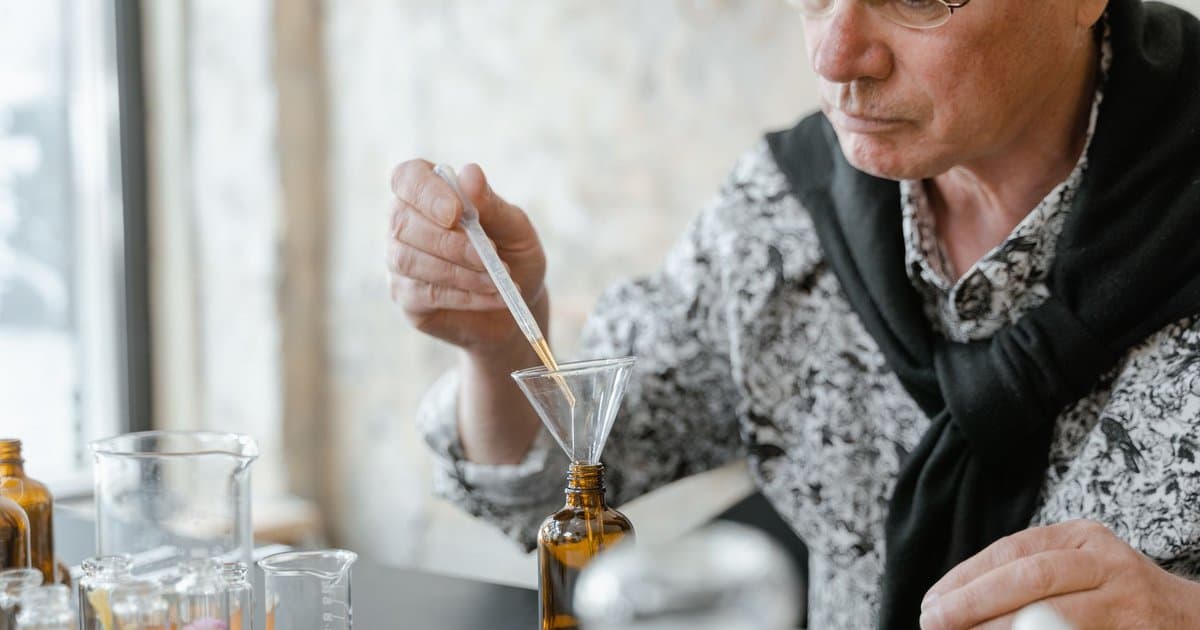
You spray your fragrance in the morning, you smell it for an hour, and by lunch it has vanished. Most people blame the perfume and assume they bought a weak one. Sometimes that is true, but more often the bottle is fine and the way it is being used is the problem. Fragrance is chemistry meeting your skin, your habits, and the air around you, and several quiet factors decide how long it stays. Once you understand what is actually happening when a scent fades, you can change a few things and get hours more out of the same bottle. The fix usually costs nothing.
The first thing to understand is concentration, because it is printed right on the box and almost nobody reads it. The words eau de toilette, eau de parfum, and parfum are not marketing fluff. They describe how much actual fragrance oil is in the liquid versus how much is alcohol and water. An eau de toilette is lighter and built to fade faster by design, while an eau de parfum holds more oil and lasts noticeably longer. Parfum, the most concentrated, can linger most of the day. If your scent disappears by noon, check what you are actually wearing. You may be using a light formula and expecting heavy duty performance from it, which is a mismatch no application trick can fully fix.
Then there is your skin, which matters more than people expect. Fragrance clings to oil, so naturally oily skin tends to hold a scent longer than dry skin does. If your skin is dry, the fragrance has less to grip and it lifts off into the air faster. This is why the same perfume can last all day on one person and barely an hour on another. The simple workaround is to give the scent something to hold onto. Applying an unscented moisturizer to the area first creates a slightly oily base that slows evaporation. A drier climate or a long day in air conditioning will also pull a scent off your skin faster, so the environment plays its part too.
Where and how you apply it changes everything, and this is where most people go wrong. Fragrance rises and warms off the body throughout the day, so spraying it on pulse points where blood runs close to the surface, like the wrists, the neck, and the inner elbows, helps it project and last. The warmth there gently pushes the scent out over hours. The famous habit of rubbing your wrists together after spraying actually works against you, because the friction and heat break down the top notes and burn off the lighter molecules faster. Spray and let it dry on its own. A common mistake is applying only to clothing, which can hold scent but does not interact with your skin chemistry the way the body does.
There is also the matter of what you are smelling versus what others smell, and this trips up a lot of people. Your nose adjusts to a constant scent within a short time, a process that simply means you stop noticing something that is always there. So the perfume that feels gone to you at noon may still be perfectly detectable to the person sitting across from you. Before you spray more and risk overdoing it, ask whether the scent is truly fading or whether you have just gone nose blind to it. Reapplying heavily because you cannot smell it yourself is how people end up wearing far more than they realize.
If you want a scent to genuinely last, layering is the most reliable trick. Using a matching scented body wash or lotion under the perfume builds the fragrance in stages, so even as the top notes burn off, the base keeps releasing slowly. Storing the bottle correctly helps over the long run too. Heat, light, and humidity break fragrance down, so a bottle that lives on a sunny bathroom shelf will weaken over months. Keep it in a cool, dark place like a drawer, and the juice itself stays true to how it smelled when you bought it. Small storage habits protect the investment you already made.
The type of scent you choose plays a role too, separate from its concentration. Lighter fragrance families, like fresh citrus and many florals, are built from molecules that lift off and fade quickly by nature, which is part of why they feel clean and bright. Heavier families built on woods, musks, and resins tend to sit on the skin far longer because those molecules are larger and slower to evaporate. If you genuinely need a scent to last through a long day, reaching for a warmer, deeper fragrance will get you further than fighting the chemistry of a light summer splash. This is not about one being better than the other. It is about matching the scent to how long you need it to perform, so your expectations line up with what the fragrance was designed to do.
So when your perfume disappears by noon, run through the list before blaming the bottle. Check the concentration, prep your skin with a little moisture, apply to warm pulse points, skip the wrist rubbing, and consider layering with a matching product. Most of these cost nothing and take seconds. The bottle on your shelf is probably better than you think. It just needs you to use it the way fragrance actually works instead of the way habit tells you to.