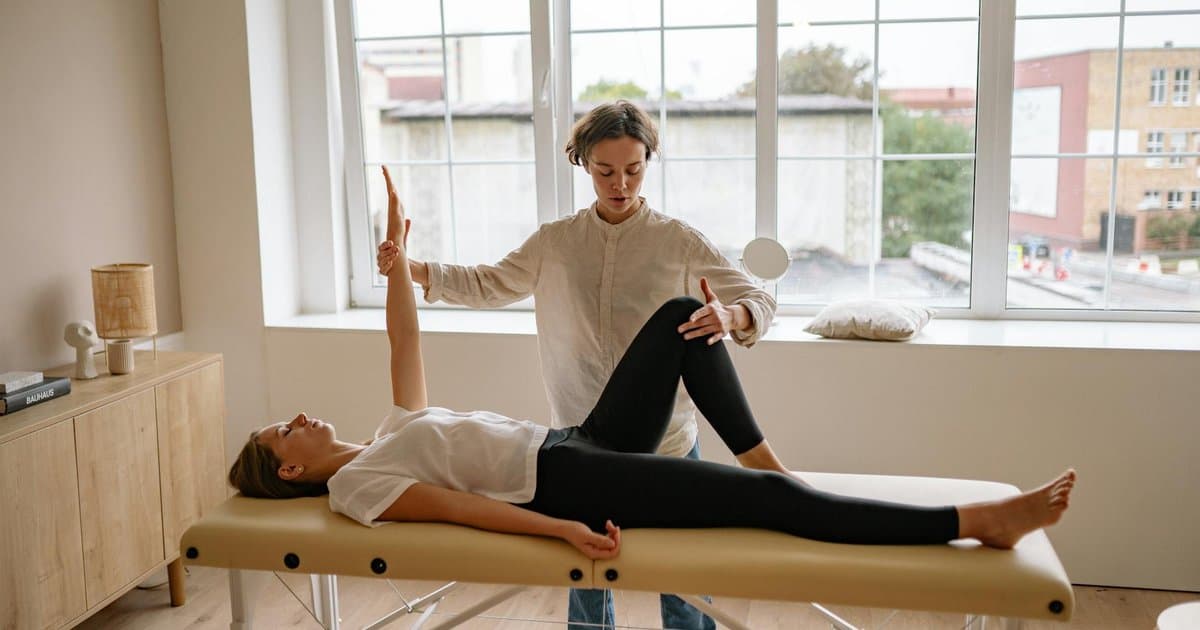
Lower back pain after a workout is one of the most common complaints gyms hear, and it almost never means what people assume it means. Most lifters interpret a sore back as a sign they need to baby it. They stop training the spine through hinges and squats, switch to machines, and protect the area the way you protect a sprained ankle. That approach makes the problem worse. A back that hurts after every workout is almost always under-trained, not over-trained. The pain is feedback that something else is failing, and the back is the one being asked to compensate.
Three patterns explain almost every case. The first is weak glutes. When the glutes cannot generate enough force during a hinge or a squat, the lumbar spine takes over. The pain you feel post-workout is the result of erector spinae muscles doing work the glute max should have done. Most desk workers have measurable glute weakness from sitting eight or more hours a day. A study published in JAB in 2022 found that 71 percent of recreational lifters tested below the threshold for adequate glute activation during a basic hinge pattern.
The second pattern is a poor hinge. A clean hip hinge looks like the hips moving backward while the spine stays neutral. Most people round at the lumbar instead because they were never taught to dissociate hip movement from spine movement. When you pick up a barbell off the floor with a rounded lower back, every rep loads soft tissue that should not be loaded. The cumulative damage shows up later that day as stiffness and ache. Filming yourself from the side during a Romanian deadlift will tell you the truth in 30 seconds. If the back rounds before the hips reach end range, the hinge is broken.
The third pattern is a weak anterior core. The midsection works as a unit. The deep core, including the transverse abdominis and the diaphragm, creates intra-abdominal pressure that protects the spine under load. When that pressure system is weak, the spine is exposed every time you lift something heavy. The fix is not crunches. The fix is anti-extension and anti-rotation work. Dead bugs, hollow holds, suitcase carries, and Pallof presses build the kind of core that braces under a barbell rather than just looks good in a mirror.
Most lifters need 90 days of targeted work to fix the underlying issue. The protocol is straightforward. Two glute days per week with hip thrusts at 3 sets of 8 to 12 reps and either Romanian deadlifts or kettlebell swings at 3 sets of 10. Two core days per week with dead bugs, side planks, and Pallof presses at 3 sets each. Hinge practice with an empty bar or a PVC pipe in front of every workout for 10 minutes. Reduce squat and deadlift load to 60 percent of working sets while the corrections are happening. The point of the deload is not weakness. It is making room for the new pattern to install before you load it heavy.
Position cues matter as much as the exercises. For deadlifts, the bar starts over mid-foot. Hips push back. Lats engage to pull the bar tight against the shins. Brace as if someone is about to punch your stomach. Drive the floor away rather than pulling the bar up. For squats, brace before you unrack. Sit between your hips, not behind them. Keep your ribs stacked over your pelvis. Most low back pain in squatting comes from a rib flare at the bottom that loads the lumbar instead of the glutes and quads.
Recovery between sessions also matters. Walking 8,000 to 12,000 steps per day on rest days keeps the lumbar tissue oxygenated and reduces stiffness from sitting. Hip mobility work for ten minutes a day on the worst sides will buy you range you cannot get from stretching cold. Sleep matters more than people credit. Seven hours minimum, eight is better, because most lumbar tissue repair happens in deep sleep. A foam roller across the upper back, not the lower back, releases thoracic stiffness that often causes the lumbar spine to compensate. Hydration is the third lever most lifters underrate. The discs in your spine are 80 percent water, and chronic mild dehydration leaves them less able to absorb load.
There are red flags that mean you should stop and see a doctor. Pain that radiates down one leg below the knee is a nerve sign. Pain that wakes you up at night and does not respond to position changes is a structural sign. Numbness or weakness in the foot needs immediate evaluation. Pain after a specific event, like dropping a heavy box or feeling a pop, deserves an MRI before you guess. Everything else, the persistent dull ache that shows up after every workout, almost always traces back to one of the three patterns above. The fix is not rest. The fix is better training.