The overhead press is the most honest lift in the gym. You cannot cheat it with momentum. You cannot lie to yourself about your range of motion. The bar either locks out over your head or it does not. Most men who train consistently can deadlift more than their bodyweight and bench respectably, but they cannot press their own bodyweight overhead for a single clean rep. The good news is that eight weeks of focused work changes that for almost everyone willing to put in the time.
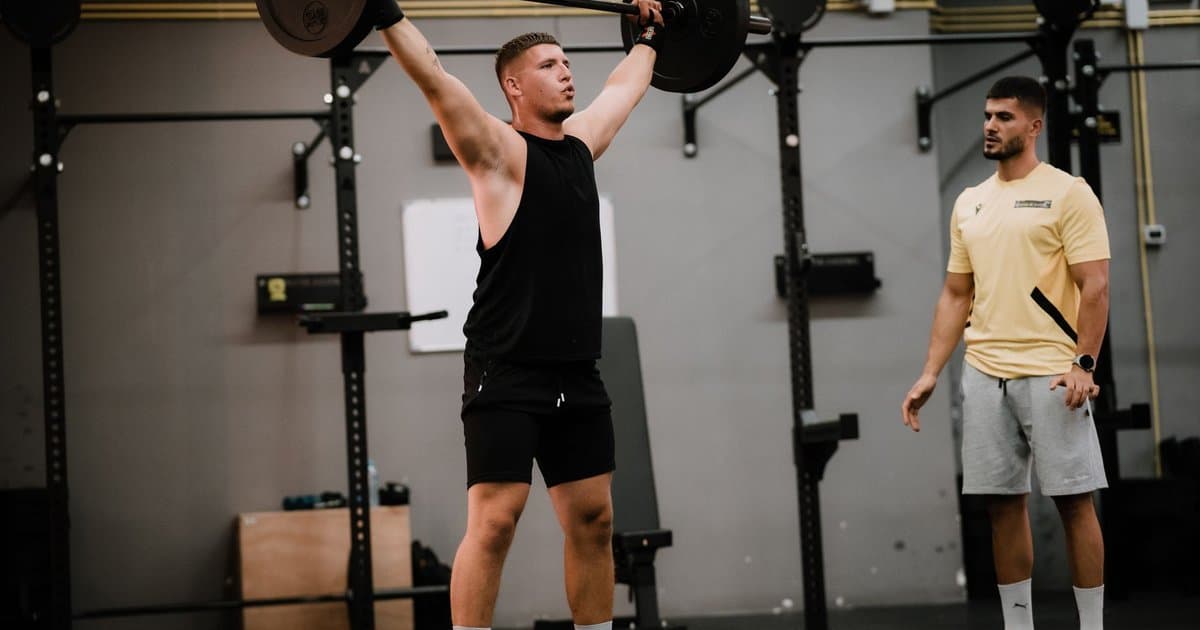
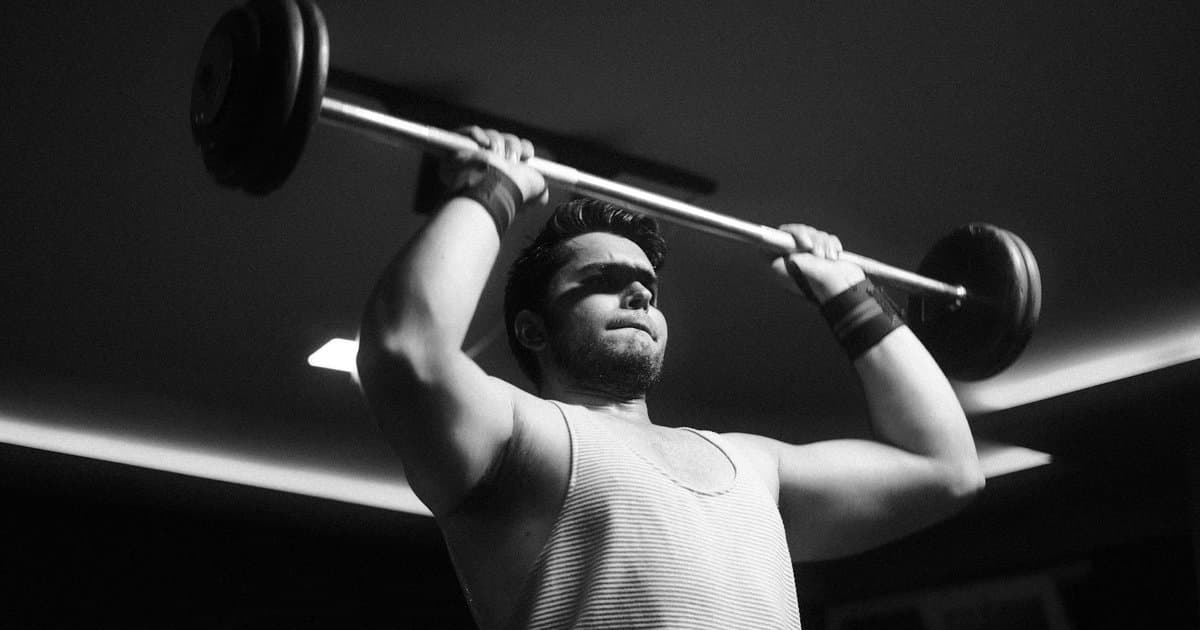
The first thing to understand is what a strict press actually means. Heels stay on the floor. Knees stay locked. Hips stay forward. There is no leg drive, no layback, and no push press. The bar travels from the front rack position up and slightly back, and your head moves forward through the window the moment the bar passes your forehead. If you cannot describe the lift this clearly, you are not pressing strict. You are pressing something close to it.
The biggest reason most lifters cannot press bodyweight is not strength. It is technique and frequency. The overhead press uses the entire posterior chain, the lats, the upper back, the obliques, the glutes, and yes, the shoulders and triceps. If your back is loose, your hips drift forward, or your bracing is weak, you will plateau at numbers that have nothing to do with what your muscles can actually produce. The fix is not more shoulder work. The fix is full body integration on every rep.
The eight week plan is built around pressing three times a week. Monday is your heavy day. You press for five sets of three reps starting at 75 percent of your current one rep max and adding five pounds per week. Wednesday is your volume day. You press for four sets of eight reps at 65 percent, with the goal of perfect bar path and controlled lockout on every rep. Friday is your variation day. You alternate between push press and seated dumbbell press to build positional strength and shoulder health.
Each session starts with the same warmup. Two minutes on the rower to bring your core temperature up. Then band pull aparts, scapular pulls, and overhead carries with a moderate dumbbell. Then five sets of three reps with the empty bar, focusing on the exact bar path you will use under load. This protocol takes ten minutes and pays back in stability under the heavy sets. Skip it and you will hit a wall by week four.
Accessory work is where most people overcomplicate things. Two movements per session. Heavy lat work with weighted chinups or pulldowns. Heavy tricep work with close grip bench, dips, or dumbbell skull crushers. That is the entire list. You do not need lateral raises six days a week. You do not need cable face pulls in every session. You need lats that can stabilize the bar overhead and triceps that can finish the rep at lockout.
Nutrition for this block is straightforward. You eat in a slight surplus, about two hundred calories above maintenance. You hit one gram of protein per pound of bodyweight every day. You sleep seven and a half hours minimum. If you try to run this protocol in a deficit, you will see your numbers stall around week three and you will quit. The press is a lift that rewards being slightly heavier and very rested.
The mental side is the part nobody warns you about. The press is a slow lift. You will not see twenty pound jumps. You will not have viral moments. You will add five pounds per week if you are lucky, and some weeks you will add nothing at all. The lifters who get to bodyweight on the press are the ones who can show up for a session that feels like a grind and treat it as a deposit. The lifters who quit are the ones who need to feel motivated to train.
By week six, the heavy sets will start to feel different. The bar will float off the rack instead of crushing you under it. Your lockouts will be sharper. Your warmups will feel light. This is when you start testing singles at the end of Monday sessions. Pick a weight five pounds above your previous best, set up, and execute the lift the same way you executed every rep for the last forty sessions. The PR will come.
If you weigh 180 pounds and have spent eight weeks training this protocol, you have a real chance at locking out your bodyweight by the end of the block. If you weigh 220 pounds, you may need twelve weeks instead of eight. That is fine. Adjust the timeline and keep the structure. The math is honest, and the lift is honest. Show up three times a week, brace harder than you think you need to, and watch what happens when you finally finish the rep you have been chasing.