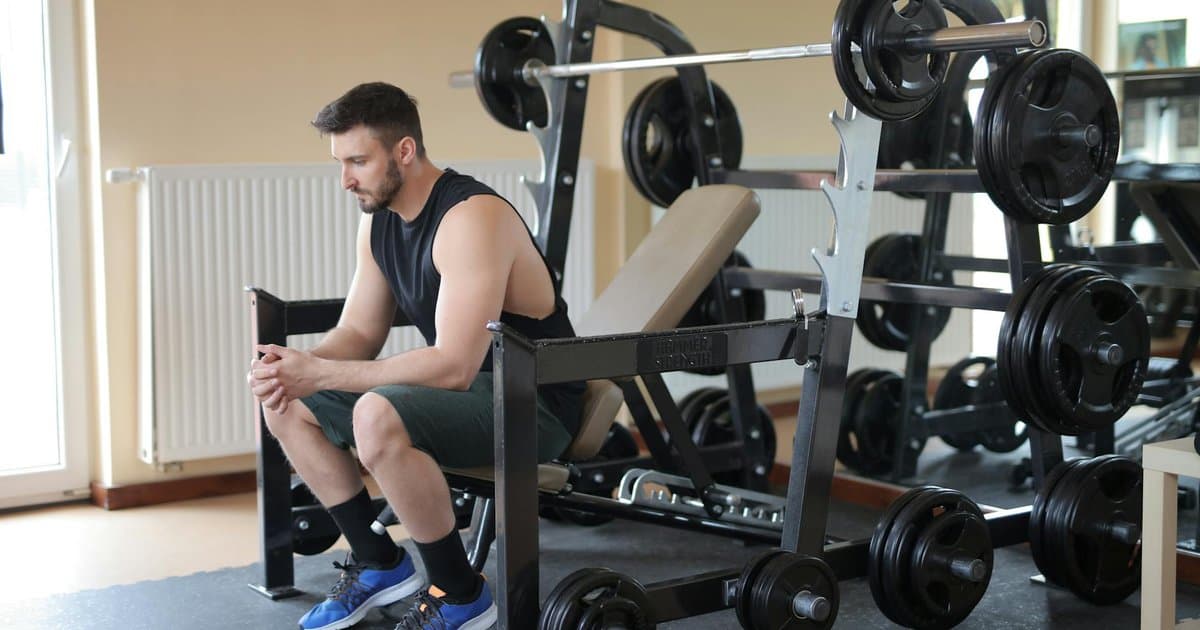
Walk through almost any gym and you will see people rushing back to the bar after thirty or forty seconds, phone still in hand, barely catching their breath. The idea that short rest periods are better got popular for a few understandable reasons. Bootcamp and circuit style classes built their whole appeal around keeping you moving and your heart rate high. Time is tight for most people, so cutting rest feels like a smart way to get more done in less time. There is also a vague belief floating around that staying breathless means the workout is really working. For building muscle and strength, though, that instinct usually works against you.
The clearest piece of evidence on this comes from a study published in 2016 in the Journal of Strength and Conditioning Research. Researchers took a group of trained men and split them into two groups running the exact same program. One group rested one minute between sets. The other group rested three minutes between the same sets. After eight weeks, the three minute group had gained more muscle thickness and more strength on both squat and bench press. The only thing that differed between them was how long they waited, and the longer wait won on every measure that mattered.
The reason comes down to what happens inside the muscle between efforts. Your body relies on a fuel system that uses stored phosphocreatine for short, hard bursts of work. That system needs roughly two to three minutes to refill most of the way back up. If you start your next set before it recovers, you simply cannot move as much weight or grind out as many reps. Over a full workout, those lost reps add up to noticeably less total work. Total work is one of the biggest drivers of muscle growth, so resting longer is not lazy. It is what lets you accumulate the volume that actually produces the result.
It helps to separate two goals here, because they overlap but are not identical. If you are chasing maximum strength, longer rest matters even more, since lifting near your limit drains that fuel system hard and your nervous system needs time to fire at full output again. If you are chasing size, you have a little more room, because moderate rest still lets you pile up enough quality reps to grow. Either way, the floor is far higher than the thirty seconds most people give themselves. Almost nobody building real muscle or strength is doing it on rushed, minute long breaks between heavy sets.
This does not mean every single set needs three full minutes. Smaller muscles and isolation moves like curls, lateral raises, or calf work recover faster, and sixty to ninety seconds is usually plenty for them. If your main goal is conditioning or fat loss rather than maximum size, shorter rests and a faster pace make good sense. Supersets that pair two muscles that do not compete, like a back exercise with a chest exercise, let you keep moving without hurting either lift. The point is to match the rest to the goal in front of you, not to rush everything by default.
Here is a simple way to set it without overthinking. For heavy compound lifts like squats, deadlifts, presses, and rows, give yourself two to five minutes. For accessory and isolation work, sixty to ninety seconds is fine. If you do not want to stare at a clock, use your breathing as the gauge instead. You are ready for the next set when your breath has settled and you feel like you could attack the weight again, not while you are still gasping. For very heavy low rep work near your true limit, lean toward the longer end of that range every time.
The honest tradeoff is time. Resting three minutes across five sets of three exercises adds up fast, and not everyone has ninety minutes to spend training. The fix is not to slash your rest on the big lifts that build the most. It is to cut the number of exercises and keep the quality high on the few that matter most. You can also pair non competing movements so you are resting one muscle while working another. A shorter session of fully recovered, heavy sets beats a longer one of rushed, watered down sets almost every time.
If your strength has stalled or your sets fall apart by the end, the fix might be the least exciting thing in the entire gym. Sit down, breathe, and wait. Give the big lifts the rest they need and let the small stuff move along faster. The research is not subtle on this one, and the change costs you nothing but a little patience. More rest, more weight on the bar, and more muscle built over time.