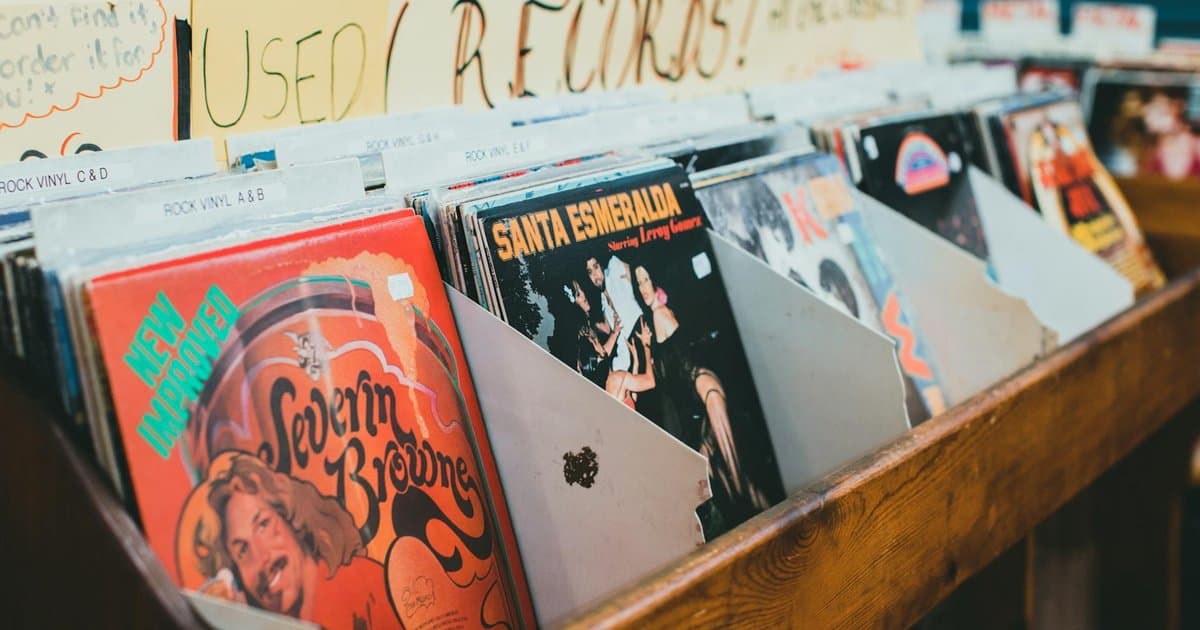
Walk into a Target, a Barnes and Noble, or any independent record shop in the country and you will see a wall of new vinyl from artists who were not even born when the CD peaked. Taylor Swift. Olivia Rodrigo. Bad Bunny. Tyler the Creator. Vinyl sales have grown every year for 18 straight years now. CD sales have declined every year since 2000. In 2022 vinyl revenue passed CD revenue for the first time since 1987, and the gap has only widened. The story behind that growth is bigger than nostalgia, and it explains something about what physical media still has to offer in an all streaming world.
The numbers from the RIAA mid year 2025 report make the comparison sharp. Vinyl revenue ran $1.4 billion against CD revenue of $400 million. Vinyl unit sales hit 49 million for the year while CDs moved 33 million. Streaming still dominates total US music revenue at $14.8 billion, but vinyl is now by a wide margin the fastest growing physical music format ever recorded. Independent record stores have grown from roughly 1,200 nationally in 2010 to over 2,000 in 2026. Pressing plants are backordered 4 to 9 months on new releases. None of this looks like a niche revival.
The assumption that vinyl is mostly for older collectors holding onto their youth turns out to be wrong. Luminate Music Data 2025 found that 50 percent of new vinyl buyers are under age 35, and 25 percent are under age 25. Taylor Swift's "The Tortured Poets Department" sold 859,000 vinyl copies in its first week alone. Olivia Rodrigo's "Guts" moved 295,000 vinyl units. Beyoncé's "Cowboy Carter" was pressed in five different color variants and most sold out within hours. Gen Z is not nostalgic for vinyl in any meaningful sense. They never had it the first time. They are choosing it now.
Three reasons explain why vinyl is working and why the CD never came back. First, vinyl is a real object. The 12 inch by 12 inch cover art is something you display, frame, and give as a gift. A jewel case full of plastic and a thin booklet is forgettable, and most people threw their CD collections out a decade ago. Second, vinyl is intentional listening. You put the needle down, you flip the record at the halfway point, you sit through the album in the order the artist meant it to be heard. Streaming is background. Vinyl is foreground. Third, vinyl is the only format that did not lose its scarcity story. CDs were always cheap and disposable from day one. Vinyl is treated as an artifact, often with limited pressings, colored variants, signed editions, and exclusive bonus tracks.
The artist economics tell a quieter story that matters more for the music industry. Streaming pays artists $0.003 to $0.005 per stream after platform and label cuts. A vinyl LP retails $25 to $40, with artist royalty in the $3 to $7 range depending on the deal. One vinyl sale equals roughly 1,500 to 2,000 streams in net revenue to the artist. For an artist with 100,000 superfans rather than 10 million casual listeners, vinyl is a meaningful direct to fan revenue line that streaming cannot match on its own. Taylor Swift's "Tortured Poets" vinyl revenue alone in its first week likely exceeded $20 million to her side of the deal. That is real money in an industry that has been squeezed for a decade.
The cultural pattern is bigger than music and worth paying attention to. In an economy where almost everything is streamed, subscribed, and intangible, a growing share of the population is willing to pay more for objects they can actually hold. Print magazines have stabilized after a decade of decline. Independent bookstores have added more than 200 net stores since 2020. Physical board games passed $14 billion in global revenue last year, growing faster than video games. The thread running through all of these is the same. When everything is rented from a platform, people start wanting to own something. When everything is digital, people want a thing.
Vinyl is not coming back as a niche curiosity for graying record collectors. It has been a growing market for 18 straight years and is now the dominant physical music format with no sign of slowing. The CD is a cautionary tale about what happens when a format is treated as utility rather than experience. Whatever industry you build in, ask whether your product is a thing people own or a service they rent. Ask whether it would survive a generation that never had it the first time and is choosing it on the merits. The market right now is paying more for the former than at any point in the last 25 years, and that pattern is unlikely to reverse in 2026.