Every year around this time, the media conversation briefly pauses to argue about a list. Not a chart or a ranking based on hard numbers, but a curated declaration of cultural weight. TIME's 100 Most Influential People is exactly that. And the 2026 edition, unveiled on April 15 and celebrated at a summit in New York City today, is worth paying attention to.
The four cover figures tell you something right away. Country superstar Luke Combs is on one cover, written about by Ed Sheeran. Actor Zoe Saldana is on another. Nikki Glaser, who hosted the Golden Globes earlier this year, is on a third. And Wagner Moura, the Brazilian actor best known internationally for Narcos, rounds out the covers. That combination of country music royalty, Marvel franchise power, standup comedy, and global prestige TV isn't an accident. It's a map of where cultural conversation is actually happening in 2026.
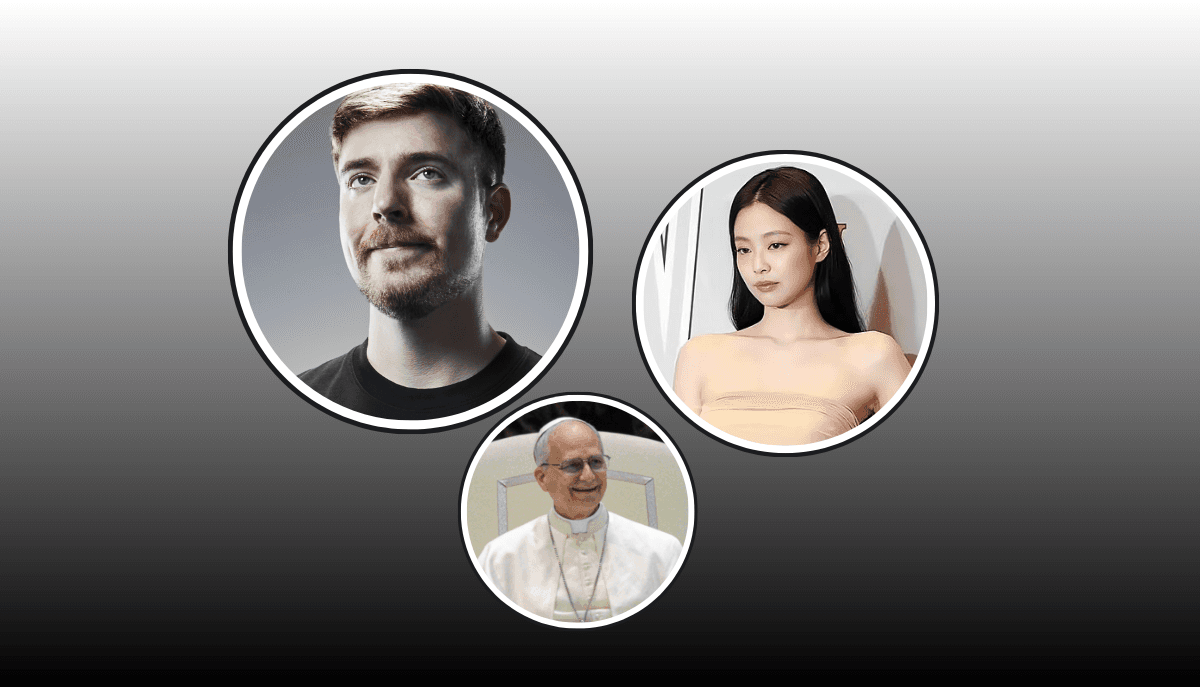
MrBeast is on the list, which surprises approximately no one. He has redefined what it means to have an audience. His subscriber counts and production budgets have made him genuinely comparable to traditional media companies, not just to other YouTubers. But his inclusion still signals something important: the platform has fully arrived. You don't get written about alongside sitting heads of state by accident.
Jennie from BLACKPINK is on the list, which signals something specific about where the music industry's global influence is sitting. K-pop has been a commercial force for years, but landing on TIME100 is a different kind of recognition. It says the editors believe she is shaping culture beyond the fandom. That argument is getting harder to dispute. Her solo career since BLACKPINK's pause has been deliberate, cross-market, and genuinely ambitious in a way that most Western pop stars aren't.
Pope Leo XIV is on the list too. That inclusion lands differently given where the Catholic Church has been publicly in recent months. His nomination from the college of cardinals came as a surprise to many observers, and his early statements on war, migration, and economic dignity have drawn attention from audiences well beyond the traditional Catholic press. TIME's editors clearly decided his voice is shaping something real.
The rest of the list, as always, mixes political leaders, scientists, athletes, and cultural figures in a way that's designed to feel comprehensive. Global leaders like Mark Carney, Claudia Sheinbaum, and Xi Jinping make the cut alongside Sterling K. Brown, Claire Danes, and Dakota Johnson. Hilary Knight, Team USA's hockey captain, is recognized. Ralph Lauren is profiled by Oprah Winfrey, which is one of those pairings that manages to feel both inevitable and genuinely interesting.
What the TIME100 is not is a ranking. It doesn't say these are the 100 most powerful people. It doesn't say they're the most admired or the most morally upright. The editors describe their criteria as influence, which is intentionally broad. That breadth is part of what makes the list useful and part of what makes it frustrating.
The criticism that always follows is predictable. Too many entertainers. Not enough scientists. Too American. These complaints have some validity every year. But the list's defenders would say it's not trying to be the definitive account of global impact. It's trying to capture who is shaping the culture and conversation right now, not over a lifetime.
What stands out in the 2026 edition is how many of the honorees represent long-term institutions rather than overnight moments. Luke Combs has spent nearly a decade building one of the most consistent fan relationships in music. Pope Leo XIV came into his role with decades of pastoral work behind him. MrBeast's dominance didn't start last year. The 2026 list has fewer breakout sensations and more people who have been quietly doing the work for years.
The TIME100 Summit today at Jazz at Lincoln Center in New York brought many of these figures together. Jonathan Groff performed. Gayle King interviewed Maria Sharapova. Victoria Beckham and Kate Hudson attended alongside Wyclef Jean. It is, predictably, an enormous event. Whether or not you agree with every name on the list, the summit matters because it creates a room where these conversations can happen directly. That kind of convening still has value even in a media landscape where everyone has a platform.
The most interesting question the 2026 list raises is the same one it raises every year: who's missing? The editors will always leave out someone whose influence will seem obvious in hindsight. That gap is part of what makes the list worth arguing about. And that argument, every April, is itself a reflection of how much the question of cultural power still matters.