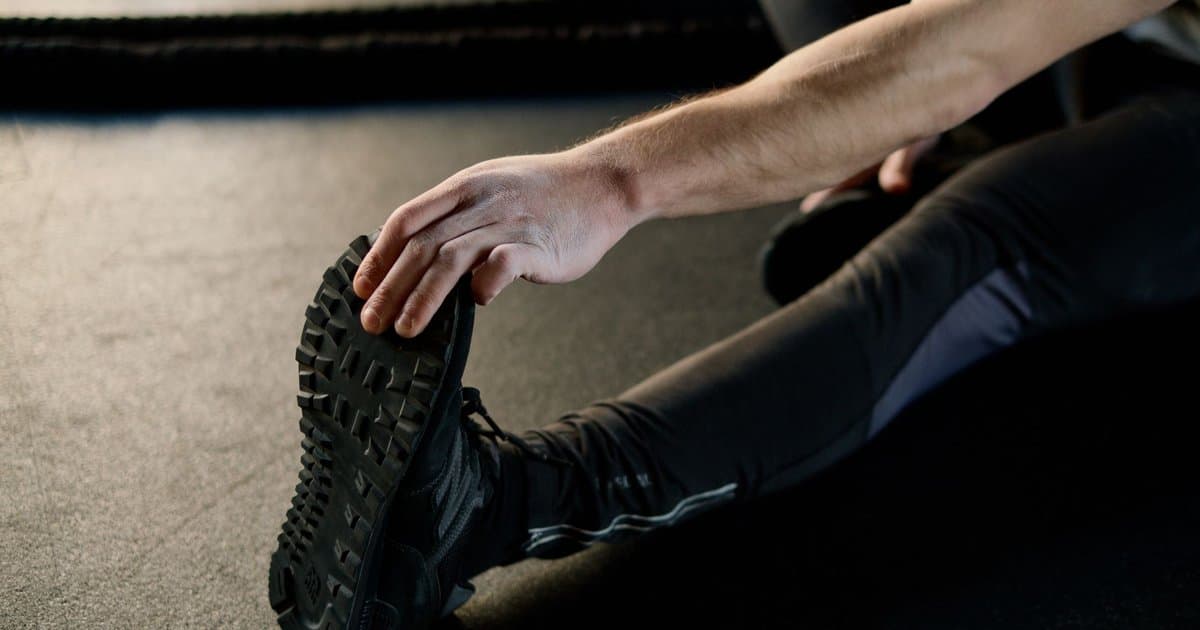
Most of us learned the same warm up in gym class. Reach for your toes, hold it, count to thirty, then switch sides. The idea was that a loose muscle is a safe muscle. That belief stuck for decades because it feels right. A tight hamstring feels like a risk, so we pull on it before we do anything hard. The problem is that the research does not back the habit. Long static holds before a heavy lift can cut the force you produce. The effect is small, but it has been measured over and over.
Static stretching means you take a joint to the end of its range and hold it there. Dynamic work is a different thing. You move through the range again and again without parking at the end. Leg swings, arm circles, body weight squats, walking lunges. Both raise blood flow and body heat. They do very different things to the muscle in the minutes right after. One leaves you looser and a little weaker for a short window. The other leaves you warm and ready to pull hard.
The numbers come from a large pile of work. A 2013 review by Simic and colleagues pooled results from more than a hundred studies on this one question. Maximal strength dropped by roughly 5.5 percent after a static stretch. Explosive power fell by close to 2 percent. Those look like small numbers on paper. They are not small when you are chasing a rep max or a start out of the blocks. A 2011 review by Behm and Chaouachi found the same pattern across a range of sports.
The dose matters more than most people think. Behm and a larger group of authors looked at this again in a 2016 review. Holds under 60 seconds did almost nothing to strength. The average loss there sat near 1 percent, which is noise for most lifters. Once holds run past 60 seconds on a single muscle, the drop gets real. So a quick 20 second hold before a set is not the villain here. A three minute quad hold before a squat session is a different story.
The other half of the old belief is that stretching prevents injury. That claim has been tested hard, and it has not held up. A review led by Thacker at the Centers for Disease Control in 2004 went through the evidence and found no clear drop in injury rates. A 2014 meta analysis by Lauersen and colleagues asked what does work. Strength training cut injury rates sharply. Balance work helped too. Stretching on its own did not show a real effect in that data.
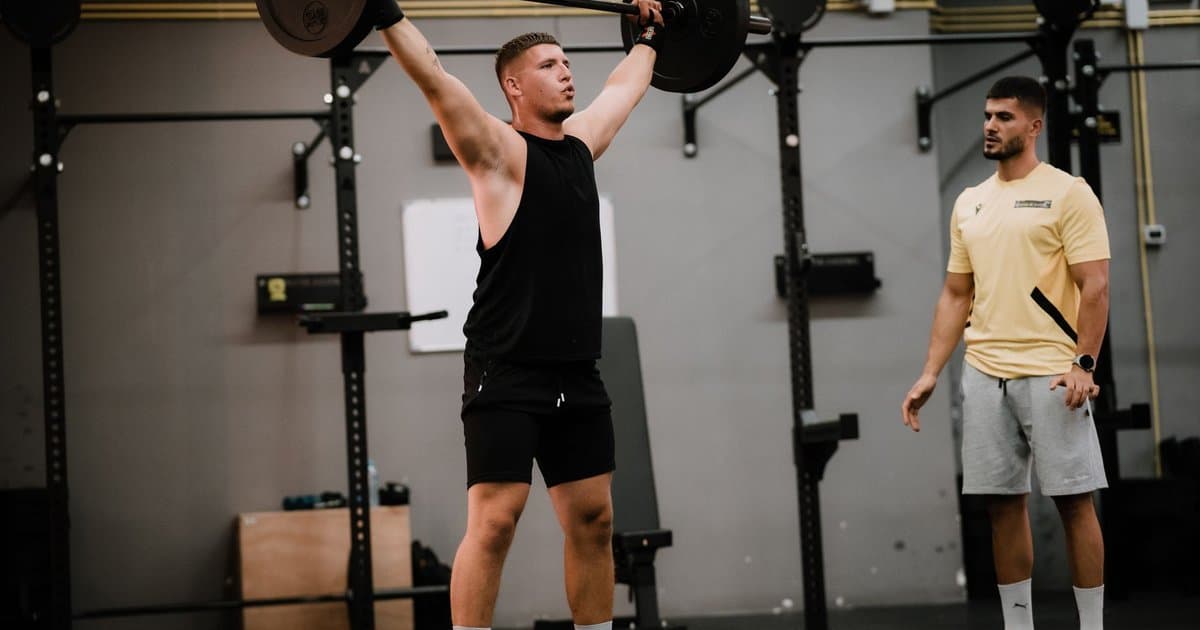
So what belongs in front of a hard session? Start with five to ten minutes of easy movement to raise your temperature. Then move through the exact ranges you plan to load, without holding at the end. Then warm up inside the lift itself with light sets that climb toward your working weight. That last part does more for your first heavy set than any stretch will. Your nervous system needs a rehearsal, not a hold. A bar path you have already traced three times is a bar path you can trust.
It helps to know why the drop happens at all. Researchers point to two things working together. The first is mechanical, and it has to do with stiffness in the muscle and tendon unit. A stiff tendon acts like a taut rope and passes force straight to the bone. Stretch it for a long time and it behaves more like a slack rope, so some of your force gets absorbed instead of moving the weight. The second is neural, meaning the signal your body sends to the muscle appears to soften for a short window after a long hold. Both effects fade within a half hour or so. That is why the timing of your warm up matters more than the content of it.
None of this makes static stretching useless. If you want more range of motion, it works, and it works well. Very little else does the job as cheaply. The fix is timing, not removal. Do the long holds after your session, or on a day when you are not training heavy. The American College of Sports Medicine points people toward that same pattern. Range you gain on an off day is still range you own on lift day.
The honest read is that this effect is small for most people. If you lift for your health and you like a stretch first, the cost is a rounding error you will never feel. If you compete, or you chase a number on the bar, a few percent is the entire margin. Either way you should know what the hold is doing to you. The gym floor is full of rules nobody has checked in twenty years. This is one of them. The answer turns out to be simple. Save the long holds for later, and warm up with the movement you are about to do.