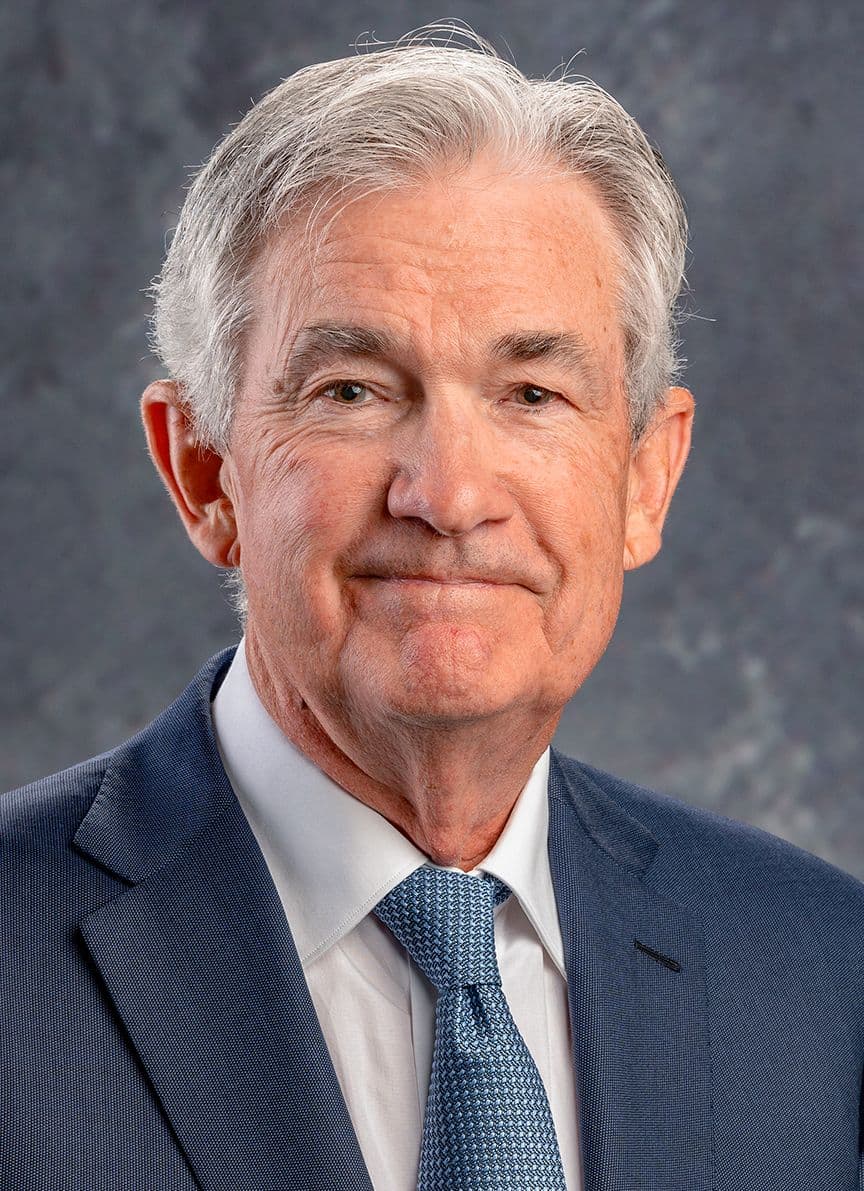
Federal Reserve Chair Jerome Powell ends his term as Chair tomorrow, Friday, May 15, 2026, closing an eight-year run in the top seat that spanned the pandemic, the 2022 inflation surge, and the slow-grind disinflation cycle that brought the federal funds rate from 5.50 percent down to its current 4.25 to 4.50 percent range. Powell does not leave the Federal Reserve entirely. He stays on the Board of Governors through his existing term, which runs to January 2028, retaining a vote on the Federal Open Market Committee. Kevin Warsh, confirmed by the Senate on Monday, May 11, by a 53 to 47 vote, takes the Chair role beginning Friday with a 14-year term as Governor that ends in February 2040.
The mechanics of the transition matter for what changes at the June 16 to 17 FOMC meeting, the first under Warsh's leadership. Powell will remain a voting member at that meeting and at every meeting through January 2028. The Chair, however, sets the agenda, leads the press conference, and shapes the staff briefing materials that frame each decision. Markets are currently pricing roughly a 64 percent probability of a 25 basis point cut at the June meeting, according to CME FedWatch data as of Tuesday, May 12. That probability has been remarkably stable through the confirmation process, which suggests traders expect continuity in policy direction even with a new voice at the top of the table.
Warsh, who served as a Fed Governor from 2006 to 2011 under Chairs Bernanke and Yellen, has spent his recent years writing and speaking about the limits of monetary policy and the risks of central bank balance sheet expansion. His public statements during the confirmation hearings emphasized a return to what he called rules-based discretion, a framework that prioritizes predictability and transparent reaction functions over discretionary judgment calls. Whether that philosophy translates into different rate decisions remains to be seen. The June dot plot, which records each Governor and regional Fed President's projection for the path of rates, will offer the first concrete read on whether Warsh's arrival shifts the committee's center of gravity.
For borrowers in Nashville and across the region, the immediate impact of the leadership change is muted. Mortgage rates track the 10-year Treasury yield, not the federal funds rate directly. The 10-year sits at roughly 4.36 percent as of Tuesday, and the 30-year fixed mortgage rate has held in the 6.75 to 7.10 percent range for the past four weeks. Small business lending tied to prime rate, currently 7.50 percent, would only move on an actual rate cut, not on a leadership change. The most likely near-term shift is in language, not in the cost of capital. Borrowers shopping rates over the next 30 days should expect the same range they have seen all spring.
The policy questions Warsh inherits are concrete. Headline inflation has been running between 2.6 and 2.9 percent year over year for the past five months, above the Fed's 2.0 percent target but well below the 9.1 percent peak in June 2022. Unemployment sits at 4.1 percent, slightly above the natural rate most economists place at 4.0. Job creation has slowed to an average of 142,000 per month, down from 198,000 a year ago. Wage growth runs at 3.7 percent year over year. None of these data points push strongly in one direction. The committee Warsh leads will debate the same balance of risks Powell faced last month.
The impact on specific communities depends on which channels matter most for them. Black-owned small businesses, which carry a higher share of variable-rate SBA and conventional small business loans according to Federal Reserve Bank of Atlanta data from 2024, would benefit from rate cuts more than the median borrower. Nashville real estate investors who use bridge financing and HELOCs feel rate moves within 30 to 60 days. Immigrant entrepreneurs in Davidson County, including the Haitian-owned business community concentrated in Antioch and parts of South Nashville, often rely on community development financial institution loans where rates are less sensitive to Fed moves but still respond on a six-month lag.
What to watch next is concrete and dated. Warsh's first public remarks as Chair are scheduled for Monday, May 18, at 10:00 a.m. Eastern at the Peterson Institute. The May Consumer Price Index release is set for Wednesday, June 11. The next FOMC decision lands Wednesday, June 17, with the press conference at 2:30 p.m. Eastern. Between now and then, the data and the new Chair's tone will set the framework for the rest of 2026.