The American housing market is undergoing a geographic reversal that would have been unthinkable three years ago. National home prices increased by just 1.1 percent over the past twelve months, according to the American Enterprise Institute, marking the slowest annual appreciation rate since the organization began tracking the data in 2012. The shift is being driven by what economists are now calling the "affordability economy," a structural rebalancing in which buyers are abandoning overpriced Sun Belt markets and flowing into Rust Belt cities where their money still buys something. The result is a housing map that looks almost exactly opposite to what it looked like during the pandemic boom. Markets that were once the hottest in the country are now among the coldest, and cities that were written off as economically irrelevant are posting the strongest gains.
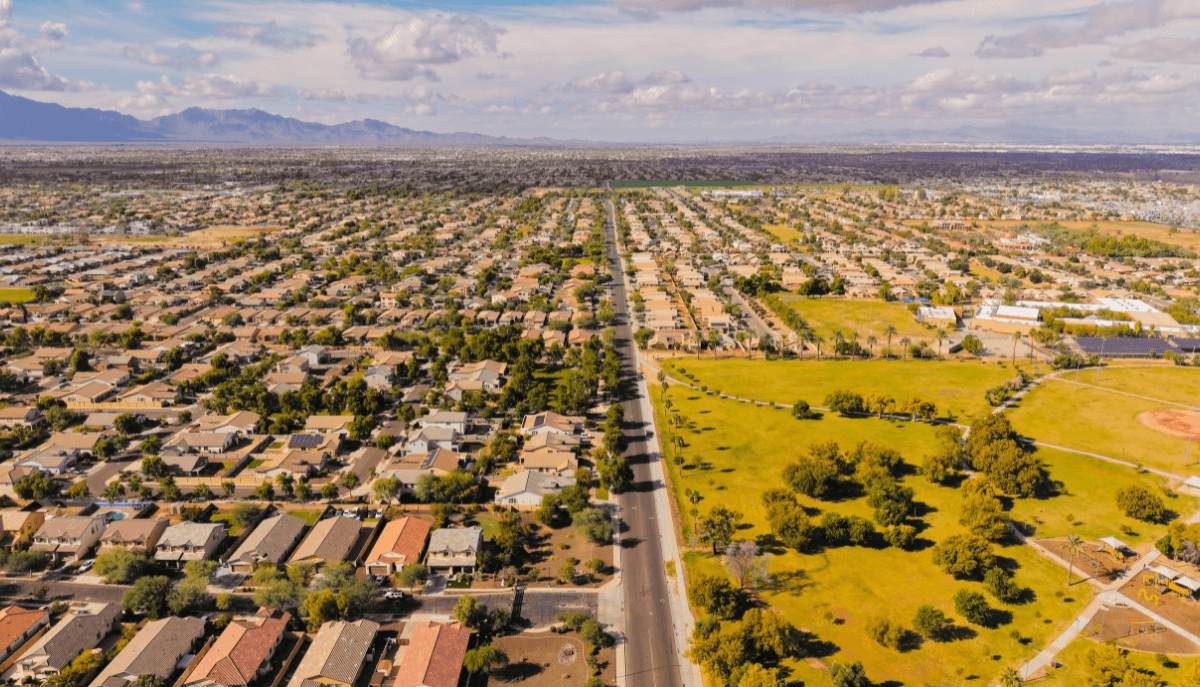
Cape Coral, Florida, recorded the worst performance among major metros with a 9.6 percent price decline. Miami, Austin, and Houston are sitting on inventory levels approaching or exceeding eight months of supply, a threshold that typically signals a buyer's market. These are cities that experienced massive population inflows during 2020 through 2023, driven by remote work flexibility, no state income tax in Florida and Texas, and a narrative that the Sun Belt was the future of American economic growth. Builders responded to that demand by constructing at a pace not seen in decades, and the supply has now caught up to and exceeded the demand that justified it. Prices that surged 30 to 50 percent in some neighborhoods are now giving back significant portions of those gains. Sellers are watching properties sit on the market for weeks, and 34.44 percent of listings nationally now include price cuts.
On the other side of the ledger, Kansas City posted the strongest appreciation at 8.6 percent. Pittsburgh and Cleveland both reported significant year-over-year growth. These Midwestern and eastern cities share a common profile: tight inventory, relatively affordable price points compared to coastal and Sun Belt markets, and local economies that have stabilized around healthcare, education, and logistics. They did not experience the speculative building boom that hit Florida and Texas, which means their supply remains constrained. Buyers who cannot afford a median-priced home in Nashville or Phoenix are finding that a similar home in Pittsburgh or Kansas City costs a fraction of the price, and the quality of life in those cities has improved enough to make the trade-off reasonable.
The macroeconomic backdrop is making the divergence sharper. Mortgage rates have risen to 6.46 percent, a seven-month high, driven in part by the economic disruption from the Iran conflict and its cascading effect on energy costs, inflation expectations, and Federal Reserve rate cut projections. At 6.46 percent, a buyer purchasing a $400,000 home is paying roughly $120 more per month than they would have at the 5.95 percent rate that prevailed in February. Consumer sentiment has fallen to 47.6 in April, a record low, reflecting broad anxiety about the direction of the economy. In that environment, affordability becomes the dominant factor in housing decisions. Buyers are not chasing lifestyle markets or speculative appreciation. They are going where they can actually afford to live.
The regional story has implications beyond individual homebuyers. State and local tax revenues in Sun Belt states that attracted wealth migration during the pandemic are now facing a correction. Florida absorbed $20.65 billion in adjusted gross income from new residents between 2019 and 2023, but the pace of inflows has slowed as the cost of living in Florida has risen to levels that undermine the original value proposition. Meanwhile, previously overvalued coastal metros like San Francisco, San Jose, and Los Angeles have slipped into what analysts call "undervalued territory," recording flat or slightly negative growth now but positioned as potential growth engines by 2027. The market is not simply cooling. It is reorganizing around a set of economic fundamentals that were temporarily distorted by pandemic-era conditions.
The AEI is projecting that by the end of 2026, single-family home prices nationally will be approximately 1 percent lower than at the start of the year, with further declines of 2 percent projected for both 2027 and 2028. If those projections hold, the United States will experience its first sustained period of national price depreciation since the recovery from the 2008 financial crisis. The difference this time is that the correction is not being driven by a credit crisis or a wave of foreclosures. It is being driven by affordability math that finally caught up to a market that had been running on cheap money and speculative momentum for too long.