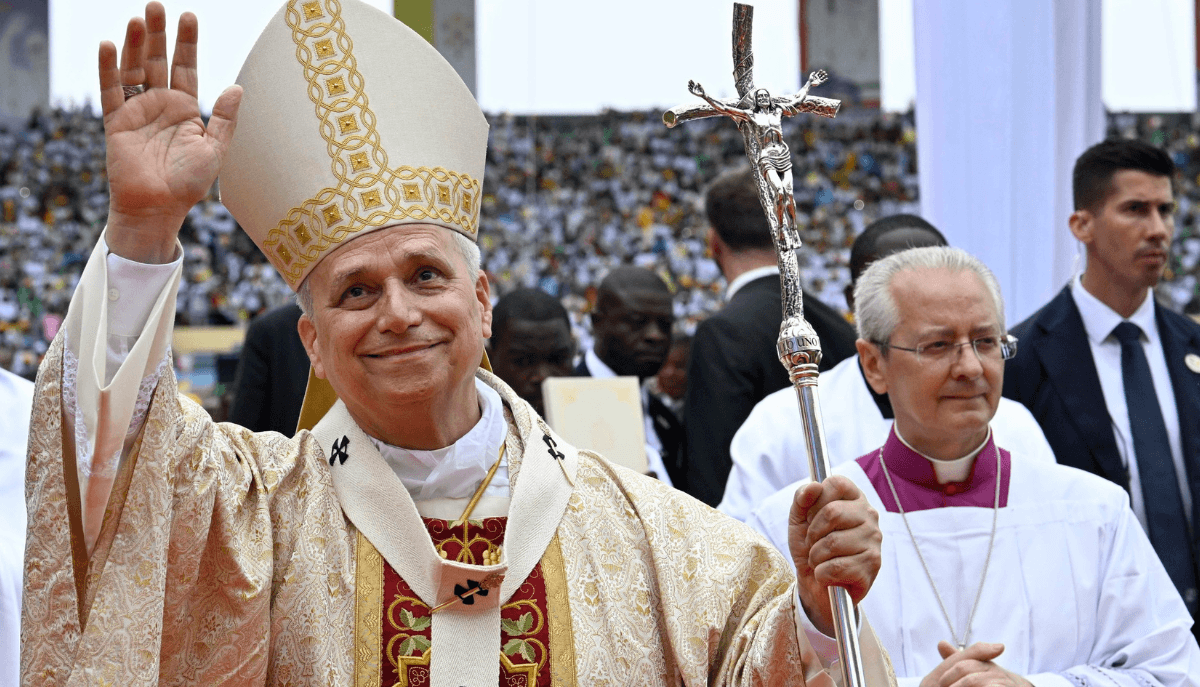
Pope Leo XIV is set to depart on Sunday for what will be his longest and most ambitious apostolic journey yet, an 11-day, four-nation tour of Africa that begins April 13 in Algiers. The trip will take the first American-born pope through Algeria, Cameroon, Angola, and Equatorial Guinea, covering 18 flights and more than 11,000 miles across the continent. It represents the first time a sitting pope has ever visited Algeria, and the first papal visit in decades to the other three nations on the itinerary. The journey comes at a moment when Catholic communities across Africa are growing rapidly while simultaneously dealing with the fallout from sweeping US foreign aid cuts that have disrupted humanitarian programs on the ground.
The opening stop in Algeria carries enormous symbolic weight. Pope Leo is scheduled to visit the Great Mosque of Algiers, one of the largest mosques in the world, in a gesture explicitly aimed at strengthening Christian-Muslim dialogue. Algeria's population is overwhelmingly Muslim, and the Catholic presence in the country is small, numbering only in the tens of thousands. But the Vatican has framed this visit as a statement about coexistence, not conversion. The pope is expected to address civil authorities and religious leaders in a series of meetings that focus on interfaith cooperation, migration policy, and the over-exploitation of natural resources across the Sahel region. These are not abstract theological talking points. They are the daily reality for millions of people living across North and West Africa.
From Algeria, the itinerary moves to Cameroon, where Leo will lead a peace meeting in the northwestern city of Bamenda on April 16. That region has been torn apart by armed conflict between Anglophone separatists and the Cameroonian military since 2017. The peace gathering will include testimony from a Mankon traditional chief, a Presbyterian moderator, an imam, and a Catholic nun. The format itself tells you everything about what the Vatican is trying to accomplish. This is not a ceremony. It is an attempt to put people from different communities in the same room, in a part of the world where that room has not existed for years. Cameroon is also one of the countries most affected by the recent rollback of American development assistance, with health and education programs losing funding almost overnight.
Angola is the third stop, and it represents the trip's emotional core. Roughly 58 percent of Angola's population identifies as Catholic, making it one of the most Catholic nations in sub-Saharan Africa. Pope Leo is scheduled to pray at the Sanctuary of Mama Muxima, a Marian shrine that has become one of the most important Catholic pilgrimage sites on the continent. Angola's Catholic community has deep roots stretching back to Portuguese colonial rule, and the church plays an active role in education, healthcare, and social services throughout the country. The visit will likely draw massive crowds in a nation where the church remains one of the most trusted institutions in public life.
The trip concludes in Equatorial Guinea, a small Central African nation whose economy was transformed by the discovery of offshore oil in the mid-1990s. Oil now accounts for nearly half of GDP and more than 90 percent of exports, according to the African Development Bank. But the wealth has not been evenly distributed, and the country has faced persistent criticism over corruption and governance. The pope's visit is expected to address both the economic realities and the spiritual needs of a country where rapid resource extraction has reshaped daily life for ordinary people. Catholic aid organizations operating in Equatorial Guinea have flagged concerns about declining international support as US aid programs scale back.
The timing of this trip is not accidental. Africa is where the Catholic Church is growing fastest, and it is also where the consequences of US foreign policy shifts are felt most directly. Several Catholic humanitarian organizations have reported that American aid freezes have disrupted food distribution, maternal health clinics, and educational programs across the continent. Pope Leo has not directly criticized the US administration, but Vatican officials have made clear that the Africa journey is intended to draw global attention to communities that are being left behind. The trip is as much a political statement as a pastoral one, and the world will be watching to see how the first American pope navigates that tension on African soil.